Raúl Castro: The Last Revolutionary
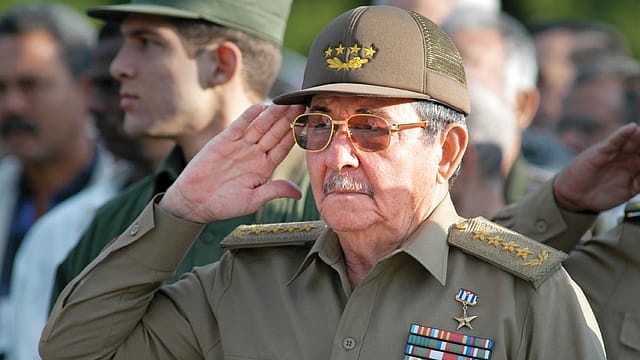
When the Trump administration did charge former Cuban leader Raúl Castro, it was for murder over the downing of two aircraft between Cuba and Florida in 1996. Castro, who had run the Cuban military and succeeded his brother Fidel at the helm in 2008, is almost 95 now and hasn’t had an official role in government and party since 2018. As president, he had overseen the brief thaw in relations with the US. But the death of four people, including three US citizens, in the 1996 crash is perhaps not the biggest charge that could have been brought against him although it might be the most practicable.
Cuban Americans and those who fled from the communist regime accuse the Brothers Castro, especially Raúl, of far worse. That said, the Trump administration can’t quite do a Venezuela with Cuba, notwithstanding its plight under the economic embargo. For one, President Miguel Díaz-Canel is defiant and the informal talks involving Castro’s grandson Raúl Guillermo Rodriguez Castro now seem doomed. For another, even if Raúl Castro somehow willingly visited the US to be tried or Washington coaxed Havana into cooperation, any rapprochement between the two would be anathema to the Cuban Americans Trump says he wants to help on a “humanitarian basis”.
A Hidden History of the US in 100 Objects

If it isn’t surprising that BBC wouldrethinkits100Objects concept in time for the 250th anniversary of the US Declaration of Independence, it’s equally unsurprising that the broadcaster would team up with Roman Mars, star host and creator of 99% Invisible, a popular podcast about architecture and urban planning, and author of the bestseller The 99% Invisible City: A Field Guide to the Hidden World of Everyday Design. When BBC wanted to do US history in 100 objects, it discovered Mars had already covered every story it was developing. Collaboration made sense, but with a caveat. This would be a history featuring “objects often not located in museums,” as Mars explained, with the product being “an audio portrait of the US with objects that are overlooked, mundane, thrown away, or misunderstood.” Such as? A screw that changed engineering and retooled global machinery. Or a coin from the Gold Rush thatended up in the Atlantic and jeopardised the American economy— probably a reference to the S.S. Central Americathat went down with $2 million (then) worth of freshly minted California gold and triggered the Panic of 1857. Sometimes history hides in plain sight; sometimes it sits at the bottom of the ocean.
City after Guardiola
Pep Guardiola is football’s hardest act to follow. As the Catalan leaves Etihad Stadium end of this season, with Arsenal having already won its firstPremier League in 22 years, Manchester City plans to bring in Enzo Maresca, another graduate of the Guardiola school who pulled Leicester City back to EPL and had a short but successful stint at Chelsea. Pep believes he couldn’t have asked for a worthier successor. The Italian was his assistant through City’s Treble-winning 2022-23 season. But the club, which won six of its 10 Premier League titles under the Spaniard and a Champions League, is stepping into the unknown, even as it faces 115 charges of alleged financial rule breaches.