Oil, Inflation, Chaos: How the Hormuz Blockade Could Hit India Hard
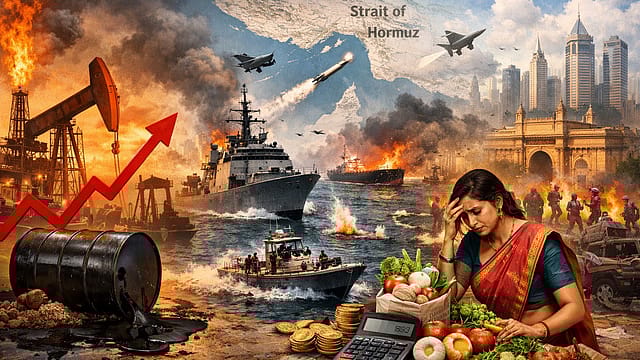
The Strait of Hormuz has become the world's most contested shipping corridor.
After US-Iran nuclear negotiations collapsed without a deal, the United States announced a naval blockade targeting vessels that paid tolls to Iran for passage through the strait.
The order was posted on 12 April, 2026, on Truth Social and declared effective immediately, with the US Navy directed to stop and interdict non-compliant ships, including in international waters beyond the strait itself.
For global shipping operators and energy markets, the consequences are already unfolding.
What is a naval blockade?
A naval blockade is a strategic military tool used to restrict maritime access to a region by deploying concentrated naval force, including aircraft carriers and destroyers, to intercept all vessels entering or leaving a sanctioned zone.

Zeroing In on ECI
09 Oct 2026 - Vol 05 | Issue 41
Constitutional legitimacy versus political opportunism
The goal is to cripple an adversary's revenue and supply lines without a full-scale invasion.
What triggered the US Navy blockade?
The breakdown of US-Iran nuclear talks was the immediate trigger.
The US objected to Iran charging ships a toll for Strait of Hormuz passage, reportedly describing the practice as illegal.
The blockade directly targets vessels that complied with those toll demands.
How does the US Navy blockade work?
The US Navy will block ships entering or leaving the strait and interdict vessels that paid Iran tolls.
The enforcement zone extends well beyond the strait into open international waters, significantly widening the operational scope.
Ships stopped face inspection, diversion, or cargo seizure.
What does this proposed US Naval blockade mean for India?
The proposed US naval blockade of Iran in the Strait of Hormuz, threatens to heavily impact India by jeopardizing energy security, driving up fuel prices, and increasing inflation.
With 80% of India’s crude oil imported, a blockade in this critical, volatile bottleneck could drastically increase import costs.
What are the legal risks for ships in the blockade zone?
Vessels near an active naval blockade risk cargo seizure, forced diversion, and forfeiture under prize law.
Ships that previously paid Iran transit tolls face particular exposure, as the US Navy blockade specifically targets them.
How does this affect global shipping costs?
According to Windward, insurance premiums spike immediately as standard cover is replaced with costly war-risk policies.
Rerouting adds fuel costs and delays. Charter party disputes over force majeure clauses are widely expected.
What happens to oil markets if the blockade holds?
Governments and shipping firms are already reassessing supply routes. A prolonged US Navy blockade would place sustained upward pressure on oil prices and freight rates worldwide.
The blockade has already reset the risk environment around one of the world's most critical waterways.
For global shipping, the question is no longer whether this disrupts trade, but by how much.
(With inputs from yMedia)