S&P Flags ‘Seismic Shock’ to Global Oil Trade from Hormuz Disruption
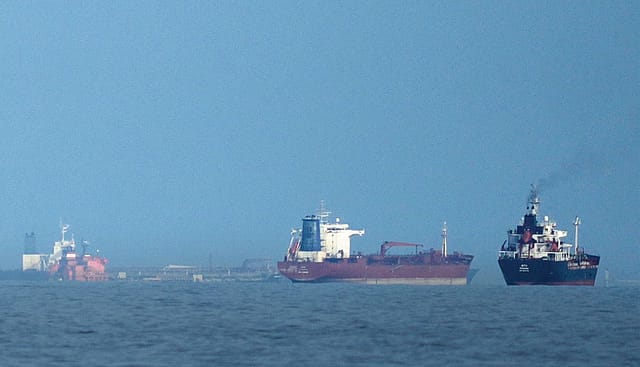
The world’s most critical oil chokepoint is under unprecedented strain.
As conflict in West Asia intensifies, the Strait of Hormuz has become a flashpoint, crippling global energy flows, triggering geopolitical brinkmanship, and raising urgent concerns for oil-dependent economies like India.
How Severe Is the Collapse in Hormuz Traffic?
The scale of disruption is staggering. According to S&P Global Energy, daily vessel crossings have plunged to fewer than 10 since March 2, compared to an average of 135 in February.
This sharp slowdown has choked one of the world’s busiest energy arteries. Typically, the strait carries 14.1 million barrels per day of crude and 5.4 million barrels of refined products, making it indispensable to global supply chains.
The congestion is equally alarming. Nearly 850 oil tankers are now clustered in the region, with daily tanker transits collapsing to just two to three vessels, down from the usual 60.

The Health and Wellness Issue
25 Sep 2026 - Vol 05 | Issue 39
What Does This Mean for Global Oil Supply?
The ripple effects are already visible across markets. Middle East Gulf crude shipments have dropped to 7.4 million barrels per day in March so far, less than half of late February levels.
An estimated 125 million barrels of crude oil remain stranded in the Gulf, awaiting clearance through Hormuz. This bottleneck signals a growing disruption that could tighten global supply and push volatility higher.
During a webinar, S&P Global Energy described the situation as a “seismic shock” for marine transport and upstream sectors.
Even if a ceasefire emerges, recovery will not be immediate. As one speaker noted, normalization could take months.
How Is India Being Impacted?
For India, the crisis is particularly significant. Nearly 90 per cent of its LPG imports and about 42 percent of crude oil imports pass through the Strait of Hormuz.
With the route effectively disrupted, India faces heightened energy vulnerability. However, S&P noted a strategic shift: India’s Russian crude purchases have intensified, reducing dependence on Hormuz-linked supplies.
Will the Situation Return to Normal?
Signals from regional leadership suggest otherwise. Mohammad Baqer Qalibaf issued a stark warning, stating: “The Strait of Hormuz situation won't return to its pre-war status.”
His remarks underscore the possibility of a prolonged structural shift in global energy logistics rather than a temporary disruption.
What Role Are the US and Allies Playing?
The crisis is unfolding against a backdrop of escalating tensions involving United States, Israel, and Iran.
Tulsi Gabbard defended Donald Trump’s decision-making, stating: “Donald Trump was overwhelmingly elected by the American people to be our President and Commander in Chief. As our Commander in Chief, he is responsible for determining what is and is not an imminent threat, and whether or not to take action he deems necessary to protect the safety and security of our troops, the American people and our country.”
She further added: “The Office of the Director of National Intelligence is responsible for helping coordinate and integrate all intelligence to provide the President and Commander in Chief with the best information available to inform his decisions.”
And emphasized: “After carefully reviewing all the information before him, President Trump concluded that the terrorist Islamist regime in Iran posed an imminent threat and he took action based on that conclusion.”
Meanwhile, Trump projected confidence about restoring control over the region, saying:
“It won't be, I don't believe, too long. We're knocking the hell out of the coast. It's basically the coast and the water. And it won't be too long.”
However, the absence of support from NATO adds another layer of uncertainty to the unfolding situation.
What Lies Ahead for Global Energy Markets?
The Strait of Hormuz crisis is no longer just a regional disruption, it is rapidly evolving into a defining moment for global energy security.
With supply chains strained, geopolitical tensions rising, and recovery timelines uncertain, the world may be entering a new phase where energy routes, alliances, and dependencies are fundamentally reshaped.
(With inputs from ANI)