War, Diplomacy, and the Clock That Ticks Differently in Tehran
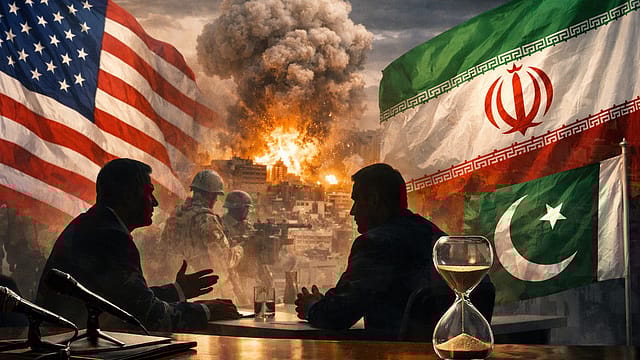
There is something almost theatrical about a war that pauses long enough for both sides to negotiate a one-page document, then resumes firing while they argue over its footnotes.
The United States and Iran appear to be doing precisely that.
According to a report by The Wall Street Journal, citing people familiar with the matter, the two countries could resume negotiations as early as next week in Islamabad.
Both sides are said to be working through mediators on a 14-point memorandum of understanding intended to establish the framework for a month-long negotiating process aimed at ending the conflict.
The proposed draft covers Iran's nuclear programme, reducing tensions in the Strait of Hormuz, and possible arrangements for transferring Iran's highly enriched uranium stockpiles to another country.
Should negotiations advance, the initial one-month dialogue period could be extended by mutual agreement.
However, several major issues remain unresolved, with the scope of potential sanctions relief for Tehran emerging as one of the principal sticking points that could complicate or delay progress.
Is the Strait of Hormuz Ceasefire Already Falling Apart?
The diplomatic maneuvering unfolds against a backdrop of renewed hostilities. Efforts to end the war appeared to stall as the two sides traded fire in the Gulf on Friday, marking the biggest flare-ups in fighting in and around the Strait of Hormuz since a ceasefire began a month ago.

Open Minds 2026
26 Jun 2026 - Vol 05 | Issue 26
The power of ideas and arguments in 50 portraits
The United Arab Emirates also came under renewed attack on Friday.
Compounding Washington's difficulties is an uncomfortable intelligence assessment.
A CIA analysis, first reported by The Washington Post, concluded that Iran could withstand a naval blockade of its ports for roughly another four months before suffering severe economic pressure.
A U.S. official familiar with the matter confirmed the finding to Reuters, suggesting that American leverage over Tehran remains limited precisely at the moment both sides are attempting to chart a way out of a conflict that has grown increasingly unpopular with U.S. voters.
Washington is currently awaiting Tehran's formal response to a U.S. proposal that would officially end the war, before talks on more contentious issues, including Iran's nuclear programme, can begin in earnest.
On Friday, speaking to reporters before travelling to a dinner at his golf course in Sterling, Virginia, President Trump said, "We'll hear from them supposedly tonight," when asked whether Washington had received any response from Tehran.
When pressed on whether he believed Iran was intentionally delaying the process, Trump said he was uncertain, adding, "We'll find out soon enough."
Earlier the same day, U.S. Secretary of State Marco Rubio, speaking to reporters in Rome, offered a similar note of cautious expectation. "We should know something today," he said. "We're expecting a response from them."
For now, the negotiations are caught in the peculiar limbo that defines this conflict: a framework is being written for talks about talks, while guns continue to fire along the world's most critical oil shipping lane.
Whether Tehran responds tonight, next week, or not at all may well determine whether Islamabad becomes the venue for a breakthrough or simply another dateline in a longer, grimmer story.
(With inputs from ANI)