Iran Floats New Peace Plan to US via Pakistan, Offers Strait of Hormuz Reopening
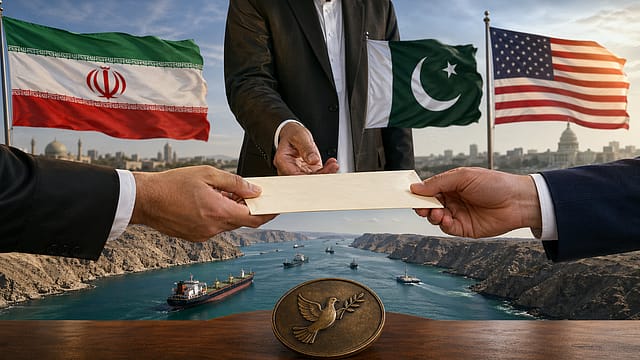
In a significant diplomatic manoeuvre aimed at de-escalating regional tensions, Tehran has reportedly submitted a "new proposal" to Washington through Pakistani intermediaries.
According to a report by news outlet Axios, the Iranian offer outlines a framework to "reopen the Strait of Hormuz and end the war," signalling a potential breakthrough in the protracted conflict.
The diplomatic initiative surfaces at a time when peace efforts have largely stalled.
US President Donald Trump recently remarked that Tehran could "call" Washington should it wish to negotiate, while maintaining his firm stance that Iran must never acquire nuclear weapons.

Losing Memory
16 Oct 2026 - Vol 05 | Issue 42
The making of a medical and social emergency
This momentum for direct talks appeared to wane after the White House cancelled a scheduled visit to Islamabad by envoys Steve Witkoff and Jared Kushner.
Why is Iran’s new proposal to the US facing resistance over nuclear demands?
The move was widely interpreted as a sign of "dissatisfaction with Tehran's earlier offer," further complicating the path to a resolution.
Central to the current impasse is the American demand that Iran cease uranium enrichment for a minimum of ten years and relocate its current nuclear stockpile abroad.
However, the report indicates that Iran's Foreign Minister Abbas Araghchi informed mediators during the weekend that there is currently "no consensus within the Iranian leadership" regarding a response to these specific requirements.
The framework delivered via Pakistan suggests a "two-stage plan" that seeks to address the maritime crisis and the US naval blockade as a priority.
This latest proposal envisions either a "prolonged period" of ceasefire extension or a "permanent end to the war."
Under this arrangement, nuclear discussions would only "begin only at a later stage," specifically after the maritime passage is cleared and the blockade is removed.
Will the US respond to Iran’s new proposal amid ongoing uncertainty?
While Axios reports that the White House has officially "received the proposal," it remains "unclear whether the United States is willing to explore it."
In recent days, Abbas Araghchi has been engaged in shuttle diplomacy between Pakistan and Oman, and is scheduled for further high-level talks with Vladimir Putin in Russia on Monday.
This regional outreach comes as the American leadership remains sceptical of long-distance diplomacy.
On Sunday, President Trump expressed his reluctance to deploy a negotiating team, stating, "I see no point of sending them (US negotiators) on an 18-hour flight in the current situation. It's too long."
(With inputs from ANI)