Meet The ‘Living Nostradamus’: The Man Who ‘Predicted Covid’ is Warning About The Next War
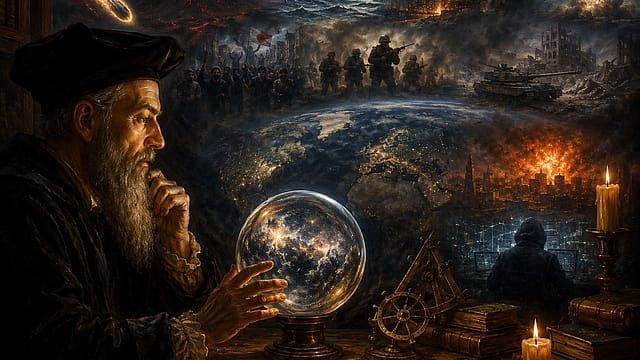
Brazilian psychic Athos Salomé, widely known as the Living Nostradamus, is no longer just a viral curiosity. His warnings about AI-driven cyberattacks, satellite blackouts, and energy warfare are gaining serious traction across global media and defence circles. He argues that the next world war will not be announced with gunfire or troop deployments but will arrive quietly, through corrupted data, collapsed networks, and manufactured confusion. At a time when the world already feels deeply unstable, his predictions are proving difficult to dismiss.
Who Is the 'Living Nostradamus'?
Athos Salomé is a Brazilian psychic and self-described futurist who earned his nickname through predictions that reportedly came true. He claims to have predicted the COVID-19 pandemic and the death of Queen Elizabeth II. His 2026 warnings have since drawn millions of views and intense global debate.
What Does He Mean by an 'Invisible War'?
Salomé's most discussed forecast centres on what he calls an invisible war. He describes coordinated attacks on digital systems rather than conventional combat, warning of selective intelligence blackouts where attackers confuse nations rather than destroy them. In his words, a superpower could be weakened simply by being made to "see the wrong reality", as per The Sunday Guardian.

Greening the Future
23 Jul 2026 - Vol 05 | Issue 30
Securing a sustainable India
Could AI Become a Weapon of Mass Confusion?
According to Salomé, AI will not merely assist future warfare but drive it. He foresees AI systems generating false military intelligence while governments hand critical decisions to automated platforms. Cybersecurity specialists have independently issued similar warnings, noting that AI-powered surveillance tools are already reshaping defence strategies worldwide.
Is the Iran Conflict the Opening Move of Something Bigger?
Salomé argues current tensions involving Iran are not primarily about territory. According to The Economic Times, he believes the deeper objective is weakening Iran's ability to supply discounted oil to China, limiting Beijing's industrial strength without triggering direct superpower confrontation.
What Other Threats Has He Flagged for 2026?
Beyond Iran, Salomé has warned of major cyberattacks targeting banking and healthcare infrastructure, space-based disruptions creating blind zones in global monitoring, and a surge in AI-generated deepfakes and propaganda. Each scenario already features in mainstream cybersecurity literature.
Why Do Predictions Like His Resonate Deeply Right Now?
The real significance of the Living Nostradamus phenomenon may not lie in whether Athos Salomé is right. It lies in what his growing audience reveals about how unprepared the world feels for conflicts already taking shape.
(With inputs from yMedia)