Natasha Doll: The Viral Toy That Has the World Asking Deeply Uncomfortable Questions About Race
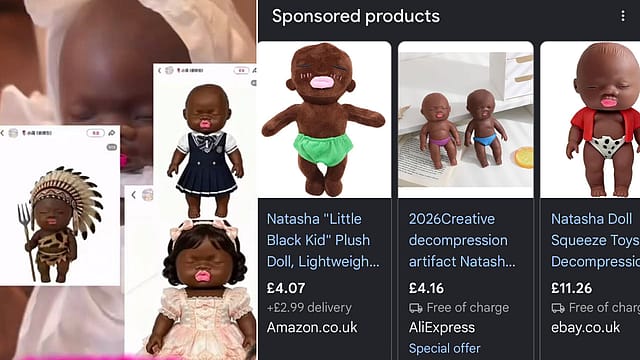
A stress-relief toy shaped like a dark-skinned baby has ignited a fierce global debate about racism and the limits of online entertainment.
The Natasha doll, which originated on Chinese social media platforms, went viral for all the wrong reasons, with users filming themselves beating, stretching, boiling, and stomping on it.
What began as a squeeze toy trend has raised serious questions about racial dehumanisation, algorithmic complicity, and the damage such content causes to real communities.
Losing Memory
16 Oct 2026 - Vol 05 | Issue 42
The making of a medical and social emergency
What Is the Natasha Doll?
The Natasha doll is a baby-shaped squeeze toy made from slow-rising memory foam or soft thermoplastic rubber.
The most popular version is dark-skinned and features exaggerated racial characteristics. It first gained traction on Chinese platforms like RedNote and Douyin before spreading globally.
Why Did It Become a Social Media Trend?
The Natasha doll trend is entirely driven by engagement. Shock value performs well on social media, and algorithms reward content that provokes strong reactions.
Creators pushed boundaries further by filming increasingly violent scenarios, packaging harmful content as harmless entertainment to maximise views.
Why Are People Finding It Offensive?
The doll's appearance, combined with video captions reinforcing racial stereotypes, has drawn widespread condemnation.
According to Hong Kong Free Press, members of Hong Kong's Black community described some videos as "absolutely diabolical." Critics argue the trend normalises the dehumanisation of Black bodies by framing abuse as entertainment.
What Harm Does It Cause to Children?
The psychological impact is a central concern. According to “Ebony”, Dr. Elizabeth Dania, a psychiatric nurse practitioner in New York, warned that when Black children repeatedly see images resembling them being beaten and discarded for entertainment, it shapes how they see themselves and how they believe the world sees them.
Is There a Darker Pattern Behind Trends Like This?
A 2022 BBC investigation found that children in sub-Saharan Africa were reportedly paid to perform scripted, degrading videos for Chinese social media audiences.
Observers note a troubling pattern of Black children being used as props for online entertainment.
What Are Authorities Doing About It?
China's Consumers Association and the State Administration for Market Regulation have stepped in to remove violent videos, with schools in mainland China banning the doll. However, the product remained available on Taobao after these interventions.
The Natasha doll controversy is unlikely to be the last of its kind. Until platforms apply consistent standards to racially charged content and manufacturers are held accountable, the cycle is likely to repeat.
(With inputs from yMedia)