Who Is Mojtaba Khamenei? Hardline Cleric Takes Charge of Iran’s Islamic Republic
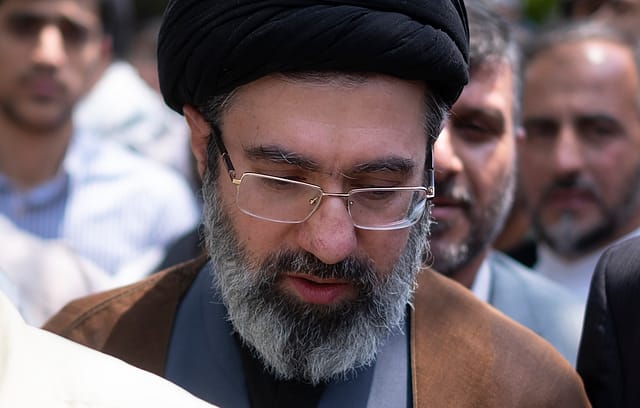
Iran has entered a new and uncertain phase in its political history. After days of deliberation, the country’s powerful Assembly of Experts has chosen Ayatollah Seyyed Mojtaba Hosseini Khamenei as the third Supreme Leader of the Islamic Republic. The appointment places the son of the late Ayatollah Ali Khamenei at the pinnacle of Iran’s clerical system and signals a decisive choice by the ruling establishment to maintain ideological continuity at a moment of regional conflict and internal strain.
Who Is Iran’s New Supreme Leader?
Ayatollah Seyyed Mojtaba Hosseini Khamenei, widely considered more hardline than his father, has been formally declared the new leader of Iran’s Islamic Revolution.
The announcement came late Sunday night following deliberations by the Assembly of Experts, the clerical body constitutionally tasked with appointing the country’s supreme authority.
In its official statement, the body said: "By a decisive vote, the Assembly of Experts elected Ayatollah Seyyed Mojtaba Hosseini Khamenei as the third Leader of the sacred system of the Islamic Republic of Iran."

Zeroing In on ECI
09 Oct 2026 - Vol 05 | Issue 41
Constitutional legitimacy versus political opportunism
The decision marks one of the most consequential leadership transitions in the Islamic Republic since the revolution.
What Shaped Mojtaba Khamenei’s Early Life?
Born in 1969 in Mashhad, Mojtaba Khamenei is the second son of the late Supreme Leader Ayatollah Seyyed Ali Khamenei, who led Iran for nearly four decades.
He spent his early years in Tehran and studied at Alavi School, a prestigious institution closely associated with many intellectual and political figures of the Islamic Republic.
His youth unfolded during one of the most turbulent chapters in Iran’s modern history. At just seventeen, during the Iran-Iraq War, he volunteered for combat and served on the front lines as part of the Habib ibn Mazaher Battalion of the 27th Mohammad Rasulollah Division in Tehran. The experience reportedly deepened his commitment to the ideological foundations of the Islamic Revolution.
How Did He Rise Through Iran’s Religious Establishment?
Following the war, Mojtaba Khamenei turned to religious scholarship. In 1989 he moved to Qom, Iran’s leading centre of Shiite learning, to begin advanced seminary studies.
He spent years studying Islamic jurisprudence and the principles of Islamic law under senior scholars. Over time, he participated in the highest levels of seminary lectures dedicated to independent juristic reasoning.
Within clerical circles he developed a reputation for intellectual discipline. Observers in Iran’s religious establishment have often described him as a meticulous scholar with a structured understanding of Islamic sciences, while US President Donald Trump once labelled him "unacceptable."
Several religious authorities in Qom have praised his analytical approach to religious scholarship.
What Personal Tragedies Marked His Family Life?
In 1997, Mojtaba Khamenei married Zahra Haddad Adel. The couple had three children, two sons and a daughter.
His personal life, however, has been marked by tragedy. His wife was reportedly killed in the February 28 attack that also resulted in the death of his father, a moment that profoundly altered the leadership landscape of Iran.
What Role Did He Play During His Father’s Rule?
For much of his father’s tenure as Supreme Leader, Mojtaba Khamenei operated largely behind the scenes.
He participated in consultations with senior officials and contributed to discussions on policy areas including economic stability, technological development, agricultural modernisation and housing.
Despite his influence, he kept a deliberately low public profile, focusing on academic and institutional work within Iran’s religious establishment. He also built strong relationships with clerics in Qom and Mashhad and supported initiatives aimed at strengthening Iran’s seminary system.
Why Do Analysts See His Appointment as a Hardline Signal?
His elevation comes at a moment of intense geopolitical tension.
According to analysts cited by the Times of Israel, the choice of Mojtaba Khamenei sends a clear signal about the direction of Iran’s leadership.
They say the appointment of a deeply hardline cleric, whose wife, mother and other family members were reportedly killed in US-Israeli strikes—indicates that Tehran sees confrontation rather than compromise as its path forward.
As one analysis noted, the move suggests Iran’s leadership has rejected any prospect of compromise and believes the system must endure through confrontation, revenge and resilience.
What controversies and sanctions surround him?
Mojtaba Khamenei has long opposed reformist factions that advocate engagement with the West. In November 2019, the US Treasury Department imposed sanctions on him. The designation accused him of representing the then Supreme Leader in an official capacity despite never holding an elected or formally appointed government position.
The Treasury also said the former Supreme Leader had delegated part of his leadership responsibilities to Mojtaba Khamenei. According to the department, he worked closely with the commander of the Islamic Revolutionary Guard Corps-Qods Force and the Basij Resistance Force to advance what it described as destabilising regional ambitions and oppressive domestic policies.
Reports have also claimed he has access to luxury properties in London and financial accounts in the United Kingdom, Switzerland and Liechtenstein.
What Does His Leadership Mean for Iran?
Mojtaba Khamenei now assumes power during one of the most volatile periods in the Islamic Republic’s history.
Supporters within the establishment argue his appointment ensures continuity in the ideological and institutional legacy built by Iran’s previous leaders.
The role he now occupies sits at the very centre of Iran’s political system. The Supreme Leader holds final authority over all matters of state, serves as commander-in-chief of the armed forces and oversees the powerful Islamic Revolutionary Guard Corps.
With decades of clerical training and long experience within Iran’s governing institutions, Mojtaba Khamenei’s leadership will shape the direction of the Islamic Republic at a moment when both regional tensions and global scrutiny are intensifying.
(With inputs from ANI)