End of an Era: Inside the Life and Death of Ayatollah Ali Khamenei
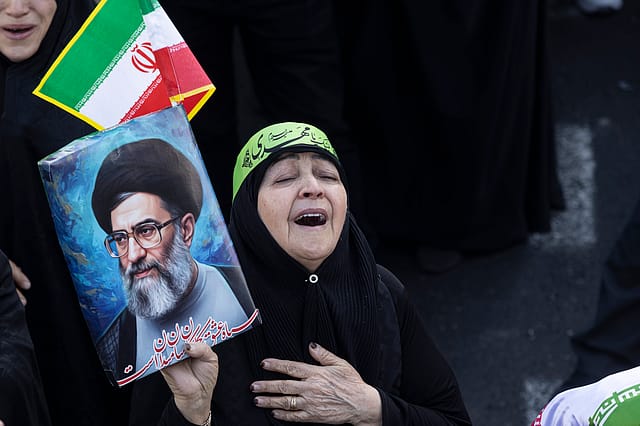
Ayatollah Ali Khamenei ruled Iran as its supreme leader from 1989 until his death on February 28, 2026. He was reportedly killed in a US-Israel strike targeting Iran’s senior leadership. Over nearly four decades, he controlled the military, judiciary, intelligence services, and nuclear policy.
Khamenei’s death ends the longest continuous leadership in the Islamic Republic and leaves Iran facing its most uncertain transition since 1979.
Here is a deeper insight into the man and the system he built.
Where Did Khamenei Belong To?
Khamenei was born on July 16, 1939, in the holy city of Mashhad, the second of eight children in a poor clerical household. He began Quranic studies at age four and moved to Qom to study under Ruhollah Khomeini, whose anti-imperialist ideology defined his worldview for life.

Zeroing In on ECI
09 Oct 2026 - Vol 05 | Issue 41
Constitutional legitimacy versus political opportunism
His selection as supreme leader was met with heavy suspicion from clerical elites, given his youth and limited religious credentials.
Was He the Architect of the Islamic Revolutionary Guard Corps’ "State Within a State"?
Yes. Under Khamenei, the Islamic Revolutionary Guard Corps (IRGC) expanded far beyond its military role. It gained influence over intelligence, strategic weapons, and large sectors of Iran’s economy. The IRGC became the regime’s primary security pillar and the supreme leader’s most reliable instrument of control.
How Did the 1981 Assassination Attempt Define His Paranoia?
In June 1981, a bomb exploded during a political meeting, severely injuring Khamenei and paralysing his right arm. The attack reinforced his distrust of internal and foreign opponents. As Iran’s supreme leader, he relied heavily on loyal security institutions and maintained strict control over access and information.
Why Did the "Leader of the Oppressed" Face So Many Uprisings?
Despite presenting himself as a defender of the poor, Khamenei presided over repeated waves of protest. Major demonstrations in 2009 and 2022 challenged the legitimacy of clerical rule. Security forces, including the Basij militia, were deployed to restore order, reflecting the regime’s dependence on coercive power.
What Was the Strategic Logic Behind His Nuclear Brinkmanship?
Khamenei publicly insisted Iran’s nuclear programme was peaceful. At the same time, uranium enrichment and missile development gave Iran strategic leverage. The programme strengthened Iran’s bargaining position in negotiations while reinforcing deterrence against military threats.
How Did Ayatollah Ali Khamenei Consolidate Absolute Authority?
As Iran’s supreme leader, he appointed military chiefs, judiciary heads, and members of powerful clerical councils. These institutions controlled elections, legislation, and national security. This structure ensured that ultimate authority remained with the supreme leader rather than elected officials.
How Did Ayatollah Ali Khamenei Die?
On February 28, 2026, US and Israeli forces launched coordinated strikes under Operation codename Epic Fury by the United States and Lion's Roar by Israel, targeting Iranian leadership and military facilities, an attack that killed Ayatollah Ali Khamenei. Iranian authorities confirmed his death soon after. State media reported that his daughter, son-in-law, and a grandchild were also killed in the strike, weakening speculation of a hereditary Khamenei succession.
Who Inherits the Throne Now?
Iran’s Assembly of Experts will appoint the next supreme leader. Until then, a temporary Leadership Council comprising President Masoud Pezeshkian, Chief Justice Gholam-Hossein Mohseni-Ejei, and cleric Ayatollah Alireza Arafi has assumed his duties. Mojtaba Khamenei and senior clerics remain possible contenders, but the outcome remains uncertain.
Is "Khamenei-ism" Possible Without Khamenei?
Khamenei built a dual-pillar system of clerical legitimacy and military power, acting as the "hydraulic press" that held competing factions in a tense equilibrium. Without his singular authority, the Islamic Republic faces a structural identity crisis as the IRGC moves to transcend its role as a shield to become the absolute master.
His death in the February 2026 strike removed the central balancer, leaving a vacuum that could trigger the definitive metamorphosis of the Iranian state.
(With inputs from yMedia)