Tehran Power Play: Regime Change or Hardline Continuity After Ayatollah Ali Khamenei?
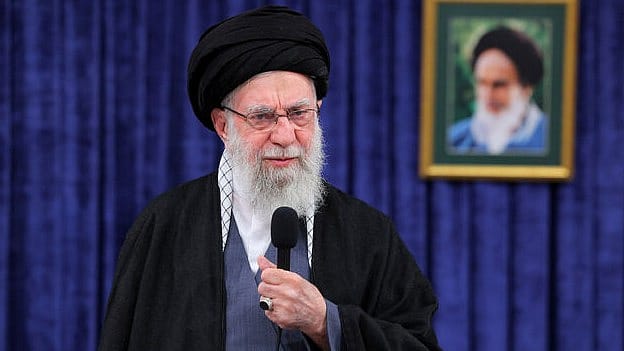
Iran stands at a pivotal juncture.
Iranian state media has confirmed that Supreme Leader Ayatollah Ali Khamenei was killed in joint US-Israeli strikes on Tehran, triggering mourning at home, celebrations in parts of the diaspora, and intense global scrutiny over who will inherit the Islamic Republic’s most powerful office.
A 40-day mourning period has been announced. Yet behind the official solemnity lies a far more urgent question: who succeeds Khamenei and what happens to Iran’s administration?
How Did Ayatollah Ali Khamenei’s Death Unfold?
Reports first emerged from Israeli sources. According to The Jerusalem Post, senior Israeli officials were informed that Khamenei had been killed in an airstrike and that his body was found under the rubble. Reuters cited an unnamed senior Israeli official saying the Supreme Leader was dead.
Look Who's Talking Regime Change
23 Oct 2026 - Vol 05 | Issue 43
Iran initially neither confirmed nor denied the reports. Earlier on Saturday, Israeli Prime Minister Benjamin Netanyahu said there were “growing signs” that Khamenei had been killed.
In a video statement, Netanyahu said, “There were many signs indicating Iran's Supreme Leader Ali Khamenei is no longer, without explicitly confirming his death. Khamenei's compound had been destroyed, and Revolutionary Guard commanders and senior nuclear officials had been destroyed.”
US President Donald Trump went further. On Truth Social, he wrote, “Khamenei, one of the most evil people in History, is dead. This is not only Justice for the people of Iran, but for all Great Americans, and those people from many Countries throughout the World, that have been killed or mutilated by Khamenei and his gang of bloodthirsty THUGS.”
“He was unable to avoid our Intelligence and Highly Sophisticated Tracking Systems and, working closely with Israel, there was not a thing he, or the other leaders that have been killed along with him, could do,” Trump added.
Trump also warned, “The heavy and pinpoint bombing, however, will continue, uninterrupted throughout the week or, as long as necessary to achieve our objective of PEACE THROUGHOUT THE MIDDLE EAST AND, INDEED, THE WORLD.”
Iranian state media later confirmed that the 86-year-old leader had been killed at his office in Tehran.
Who Holds Power Now And How Is a Successor Chosen?
Under Iran’s constitution, the Supreme Leader must be a senior cleric under the doctrine of vilayat-e faqih, or guardianship of the Islamic jurist. The position — held by Khamenei since 1989 after he succeeded Ruhollah Khomeini — carries ultimate authority over the military, judiciary and key state institutions.
At the centre of the succession process is the Assembly of Experts, a body of senior ayatollahs elected every eight years. It is constitutionally tasked with appointing the Supreme Leader and, in theory, can dismiss him — though it has never done so.
Analysts suggest that in the immediate aftermath, a temporary leadership council may govern. Barbara Slavin of the Stimson Center told Al Jazeera, “There will probably be a council that will be set up to run the country. It may already have been running the country, as far as we know.”
In practice, succession will likely be shaped by powerful insiders before formal endorsement by the Assembly.
Among names long mentioned as possible successors are Mojtaba Khamenei, the late leader’s son, and Hassan Khomeini, grandson of the Islamic Republic’s founder. Other influential clerics — including former judiciary chief Sadiq Larijani, senior cleric Mohsen Araki, Tehran Friday prayer leader Ahmad Khatami, and judiciary chief Gholamhossein Mohseni Ejei — are also seen as key players.
However, Reuters noted that no current figure commands Khamenei’s level of authority. Any successor may struggle to assert control over powerful institutions such as the Islamic Revolutionary Guard Corps, especially after reports that several top commanders were killed in the strikes.
Will the Regime Consolidate Or Collapse?
Even before official confirmation, celebrations were reported in parts of Iran and abroad. Iranian activist Masih Alinejad posted, “A video of Iranian people celebrating inside Iran, Am I dreaming? Hello, new world.”
In another video, she said, “Every morning I wake up reading that my people are being killed by Ali Khamenei. But this is the first morning in my life that I get the good news and I want to run. I want to just run and shout, and shout out of joy,”
Exiled crown prince Reza Pahlavi urged unity and dismissed any succession attempt as illegitimate.
“My fellow compatriots, Ali Khamenei, the bloodthirsty despot of our time, the murderer of tens of thousands of Iran's bravest sons and daughters, has been erased from the face of history,” he wrote. “Any attempt by the remnants of the regime to appoint a successor to Khamenei is doomed to fail from the outset. Whoever they place in his stead will have neither legitimacy nor longevity.”
He added, “This is your final opportunity to join the nation, to help ensure Iran's stable transition to a free and prosperous future, and to take part in building that future.”
Pahlavi further said, “The death of the criminal Khamenei, though it does not avenge the blood that has been spilled, may serve as a balm for the wounded hearts of the grieving fathers and mothers… Remain vigilant and prepared. The time for a widespread and decisive presence in the streets is very near.”
Meanwhile, Iran’s UN ambassador described the strikes as “an unprovoked and premeditated aggression”, accusing the US and Israel of attacking “civilian populated areas in multiple large cities of Iran, where millions of people reside”.
The conflict continues to escalate, with retaliatory strikes reported across the region. United Nations Secretary-General António Guterres warned that “Military action carries the risk of igniting a chain of events that no one can control in the most volatile region of the world.”
Iran has never faced a leadership transition under direct foreign military assault. The coming days will determine whether the Islamic Republic consolidates power under a new cleric — or whether Khamenei’s death becomes the catalyst for a deeper transformation.
For now, the question dominates Tehran’s corridors of power: who succeeds the Supreme Leader — and can they hold the system together?
(With inputs from ANI)