US-Iran Ceasefire: Why Trump Called It a “Favour to Pakistan"
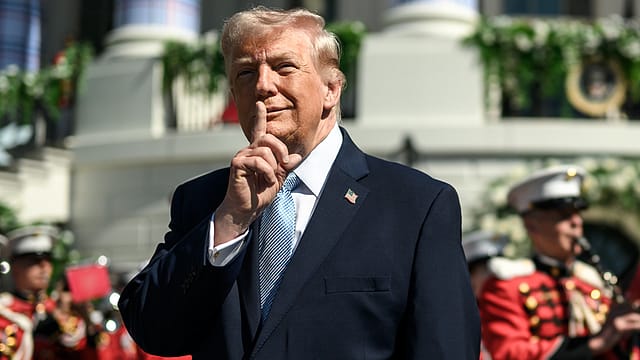
US President Donald Trump said the decision to pause hostilities with Iran was not entirely voluntary but influenced by international pressure and diplomatic requests.
Speaking aboard Air Force One after his China visit, Trump said, "We really did the ceasefire at the request of other nations. I wouldn't have really been in favour of it, but we did it as a favour to Pakistan. They are terrific, the Field Marshal and the Prime Minister. I mean, President Xi and I agree on many things."
The ceasefire, announced on April 7, followed a month of heightened tensions after US-Israeli strikes on Iran in late February. The pause was aimed at creating space for broader diplomatic engagement in West Asia.
What role has Pakistan played in the negotiations?
Pakistan has positioned itself as a mediator between Washington and Tehran, facilitating communication and attempting to broker a longer-term solution.
Trump’s remarks suggest that Islamabad’s diplomatic efforts played a key role in pushing the ceasefire forward. However, the situation appears more complex beneath the surface.
Despite publicly acknowledging Pakistan’s role, there are signs of unease within the US administration. According to reports, some officials are questioning whether Pakistan has accurately conveyed messages between the US and Iran, particularly regarding Washington’s dissatisfaction with the pace of negotiations.
The report also indicates concerns that Pakistan may have presented a more favourable version of Iran’s stance than what actually exists, raising doubts about its neutrality as a mediator.

Exclusive: To the Heavens and Back
19 Jun 2026 - Vol 04 | Issue 76
Shubhanshu Shukla relives the space odyssey that put India into orbit
Is the ceasefire stable, and what happens next?
Trump signalled that the ceasefire may be fragile and possibly temporary. He emphasised that the US still holds a strong strategic position.
He said, "I'm not asking for any favours because when you ask for favours, you have to do favours in return. We don't need favours. We've wiped out their [Iran's] armed forces essentially. We may have to do a little cleanup work because we had a little month-long ceasefire, but we have a blockade that's so effective; that's why we did the ceasefire."
This suggests that while diplomacy is ongoing, military options remain on the table.
A key strategic concern remains the Strait of Hormuz, a crucial global oil route. Trump indicated that China could influence Iran on this issue, referencing his talks with Xi Jinping.
He stated, "He [Xi Jinping] can ask them to put pressure because I don't need favours. I think he will. I think automatically he'd like to see it [Hormuz] opened up. He gets about 40 per cent of his energy, or his oil, from the Strait. We get none."
Why is Pakistan’s role being questioned?
While Pakistan continues to present itself as a neutral intermediary, Trump’s rejection of Iran’s response—reportedly delivered via Pakistani channels—has added to scepticism.
There is a growing perception within sections of the US administration that Pakistan may be “playing both sides,” trying to maintain influence with both Washington and Tehran simultaneously.
This dual approach could complicate peace efforts, especially if trust in the mediation process erodes.
The bottom line
The ceasefire reflects a mix of diplomacy, pressure, and strategic calculation. While Pakistan has emerged as a key intermediary, questions over its reliability could shape the next phase of US-Iran engagement. Trump’s remarks underline that the truce is tactical—not necessarily permanent.
(With inputs from ANI)