Where Is Mojtaba Khamenei? Iran’s New Ayatollah Remains Unseen as Trump Questions His Future
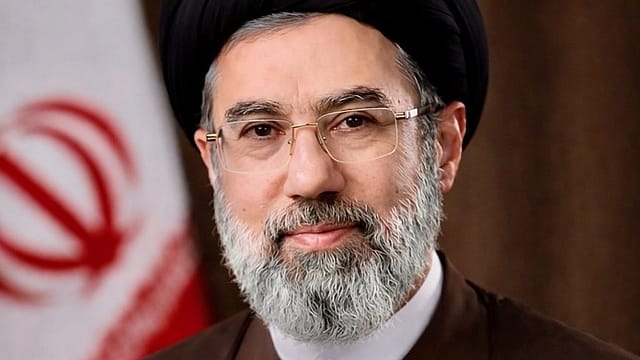
Nearly four days after Iran named Mojtaba Khamenei as the country’s next Supreme Leader, his whereabouts and the circumstances surrounding his elevation remain shrouded in mystery.
The 56-year-old cleric has not appeared before supporters or shared a video address since his appointment. Neither he nor his office has issued a written statement. Iranian state media has instead relied on archival footage to introduce the new leader.
Reports in Iran’s state media indicate that Khamenei was likely injured in the ongoing US-Israeli strikes on Iran, which the Iranian regime has named the Ramadan War. Iran’s state television has referred to him as “Jaanbaz of Ramadan”, meaning an “injured war veteran”.

Zeroing In on ECI
09 Oct 2026 - Vol 05 | Issue 41
Constitutional legitimacy versus political opportunism
The possibility that he was wounded could explain the absence of an in-person or video address to the nation. However, the lack of even a written statement has added to the uncertainty.
Even though Mojtaba Khamenei remains unseen, public pledges of allegiance continue to emerge.
Videos from Tehran show that the historic Valiasr Square now features a mural depicting the younger Khamenei receiving a flag from his father, the late Supreme Leader Ali Khamenei, while the founder of the Islamic Republic, Ruhollah Khomeini, looks on.
The Valiasr Square mural, often used to portray state narratives, is viewed as an attempt by the theocratic regime to project the handover of power as seamless. The imagery comes despite the contradiction of a father-to-son succession in a system born from a revolution against monarchy.
Iranians also rallied in Tehran on Tuesday to pledge allegiance to their new leader. The rally was reportedly organised in response to remarks by Donald Trump claiming that Iran’s new leader should be chosen with his approval.
"We want to show that the leader of Iran is chosen by Iranians themselves," a protestor told RT.
Why does Donald Trump believe Mojtaba Khamenei may not “live in peace”?
Trump on Tuesday expressed concern over the appointment of Mojtaba Khamenei, saying he does not believe the newly appointed leader of the Islamic Republic will be able to “live in peace” as US military operations in the region against the regime continue.
Amid speculation about his whereabouts, a US media report said an elite counterterrorism unit has been deployed to protect the new Ayatollah following the assassination of his father.
The force, known as NOPO, has been assigned to safeguard the leader, according to a Fox News Digital report.
"With Khamenei gone, NOPO will likely now be protecting Mojtaba Khamenei," Ali Safavi, an official with the Foreign Affairs Committee of the Paris-based National Council of Resistance of Iran, told the publication.
The NOPO force, formed in 1991, had the 28th Ruhollah Division as its “nucleus”, according to Safavi, and typically handles hostage rescue operations. "Its task was not to protect Khamenei", he added.
For most of his 56 years, Mojtaba Khamenei maintained a low profile within the Islamic Republic while building networks of influence across Iran’s security apparatus, its clergy and among wealthy business elites.
He is the second-eldest son of Ali Khamenei, the Supreme Leader who was killed in the opening hours of the US-Israel onslaught on Iran nine days ago.
Mojtaba’s rise comes as Iran’s Islamic regime confronts what many see as the most serious existential threat in its nearly 50-year history.
His leadership also faces deep domestic opposition. In recent years, thousands of Iranians have protested against the Islamic Republic, condemning what critics describe as the impunity with which his father’s regime targeted and killed citizens and political opponents, along with widespread financial cronyism and corruption.
His appointment signals that the regime is unlikely to concede to Trump’s demand that Iran surrender and suggests that Mojtaba Khamenei may continue his father’s hardline approach to governance, prioritising Islam and an anti-US foreign policy.
(With inputs from ANI)