The ‘Fart Walk’ Is Real, and Experts Say It Actually Works. Here’s How
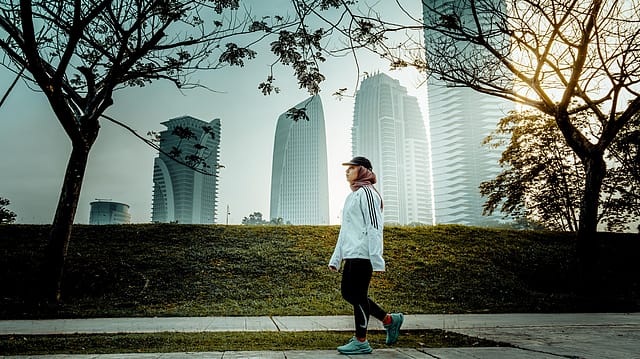
One of the most talked-about wellness trends of the moment requires nothing more than stepping outside after dinner and letting nature take its course.
Just a walk, and the willingness to pass gas without apology.
The internet has a name for it: the fart walk. And before you dismiss it as yet another social media gimmick dressed up in the language of biohacking, know this: health experts are paying attention.
The practice was first coined by Mairlyn Smith, a 70-year-old cookbook author who has made it her mission to spread the gospel of dietary fibre and post-dinner strolls on social media.
Videos tagged with #fartwalks began circulating widely, and what started as one woman's candid evening ritual became a full-blown viral phenomenon.
What Exactly Is a Fart Walk and How Long Should It Last?
A fart walk is a slow, relaxed stroll taken after eating, lasting anywhere from five to twenty minutes. It demands no athletic ability, no elevated heart rate, and no gym membership. Weight loss is not the point.

Global By Design
29 May 2026 - Vol 04 | Issue 73
Is the future of fashion Indian?
The goal, simply put, is to help the body digest food more comfortably and release the gas that naturally accumulates during digestion.
To understand why this works, it helps to understand what the body is doing after a meal. Once you finish eating, the body shifts into what scientists refer to as the "rest and digest" phase.
The parasympathetic nervous system takes over, digestive enzymes begin processing nutrients, and the muscles lining the digestive tract start pushing food forward through rhythmic contractions known as peristalsis.
Simultaneously, healthy gut bacteria get to work fermenting dietary fibre sourced from fruits, vegetables, nuts, seeds, and whole grains.
That fermentation produces gas. It is a normal, unavoidable byproduct of a functioning digestive system. The trouble arises when that gas does not move efficiently, leading to bloating, abdominal pressure, and the general discomfort of feeling uncomfortably full.
How Does a Fart Walk Help Move Food and Gas Through Your Body?
Walking, experts say, helps keep things moving, both food and gas, through the digestive tract with greater ease.
Cultures across the world have understood the value of a post-meal walk for centuries. In Italy, the evening stroll is a cherished social ritual known as ‘la passeggiata’.
In China, an ancient proverb holds that taking a hundred steps after each meal will carry you to the age of ninety-nine. What is new is the scientific scrutiny being applied to this age-old instinct.
A review of seven studies found that light-intensity walking significantly reduced postprandial glucose and insulin levels, the blood sugar spike that follows a meal, when compared to sitting still.
The fart walk arrives at a moment when gut health has become something close to a cultural obsession.
Continuous glucose monitors, once the domain of diabetic patients, are now being worn by wellness enthusiasts tracking their metabolic responses to every bite.
Researchers and doctors are only beginning to map the full significance of the microbiome and the digestive system to overall human health, and the public, it seems, is hungry for answers.
Against that backdrop, the fart walk offers something refreshingly unglamorous: a reminder that the body has its own intelligence, and that sometimes the most effective intervention is simply to get up, go outside, and walk around the block.