#WarDiary: Empathy and Eros in Tel Aviv Bunkers
It was a bright and cheerful morning, and there was a delicious chill in the air. The sea outside my hotel room in Tel Aviv exuded serenity and an other-worldly repose. The sky was ethereally blue, the kind of blue that chases morning-after blues away. Just when another beautiful day was unfolding, a screaming air red siren shattered the quiet. At around 8 am Israel time on February 28, life and the world changed for millions of people in Israel and the ambient region.
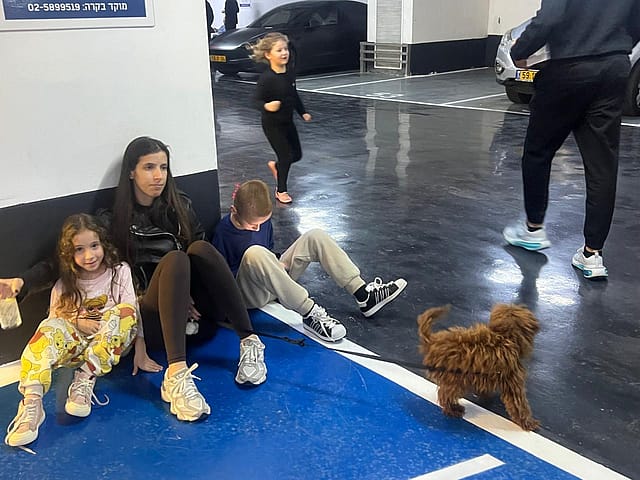
The siren rang stridently, followed by a booming SOS asking us to rush to the nearest bunker. For me, it meant taking the staircase from my 10th floor hotel room to the cark park basement that doubled up as a bunker and bomb shelter. I ran as fast as I could, making sure I didn’t trip. Once inside the bunker, it was a different world. There were more than 200 people from at least 20 different countries. Men, women, children, dogs – fears writ large over their faces – huddled around in bunkers – trying to process how they were hurled into an insane war without any advance notice. Most of the people in the bunker were tourists, who were looking forward to a lazy Saturday morning breakfast and a romp around town, the beaches, the sun and the sea.
Look Who's Talking Regime Change
23 Oct 2026 - Vol 05 | Issue 43

The US-Israel joint strike on Iran, and the relentless cycle of vicious revenge strikes that followed, precipitously buried their holiday, transforming them from excited revellers to morbid and morose people desperately praying for their life. In an instant, they became supplicants, beseeching their God for another day of breathing and living. The first few minutes were terrible, but then they realised they were not isolate sufferers. A mystical sense of community and empathy enveloped them and bound a diverse motley group of people into a closely-knit community, bound by shared anxiety and concern. People who would have otherwise looked through you at the breakfast table or in the hotel lobby, now looked at you and chatted like a long-lost friend. Terror and togetherness cohered. In those few intermittent hours in bunkers, a sense of solidarity and being in the same boat was overwhelming and perhaps redeemed those despairing moments.
Wings of Eros
It was not just empathy; eros, always lurking in the corner, also spread its wings. As the day wore on and night descended, the bunker became a fraternity of sorts; besieged by an implacable enemy, strangers bonded in an atmosphere of conviviality and camaraderie. An Israeli young couple sang and danced, with desperate abandon, converting the bunker into a makeshift disco. This was Saturday night, and they were not going to miss all that fun! Many young Israelis invoked the Purim holiday by shouting "Adloyada!" The night before, there was Purim party, similar to the Holi festival in India. Purim harks back to a phrase from the Talmud, according to which Jews must drink until they can't distinguish between two of the holiday's main protagonists: Haman the cursed and Mordecai the blessed. Now, we didn’t know who was cursed and who was blessed – we were in it together.
Another couple huddled tight, holding hands, and played peppy music in their car, parked in the basement-cum-bomb shelter. Many of them took their mattress and pillow to the basement and tried to sleep there. In the shadow of death, eros had spread its net far and wide. Love and death, eros and thanatos, are inextricably fused. “We will die by love, if not live by love, proved mysterious by this love,” as John Donne wrote beautifully in The Canonization. The Jews know all too well this mystical kinship of love and death. Or as a verse from Shir haShirim (Song of Songs), goes: ‘Ki azah chamavet ahavah,’ -- ‘for love is stronger than death’ (8:6).
For me, an itinerant writer, journalist and a poet-in-hiding, the bunker turned out to be the inferno that my soul has been thirsting for ages; a transit passage where I could self-flagellate, before I could migrate to higher regions of the spirit – a purgatory before the angels could shepherd me into Paradiso. Not sure if the world can be read as an enactment of Divine Comedy. History repeats itself twice, first time as a tragedy, second time as farce and third time, if you are lucky as a comedy. There was nothing much to laugh about – the mania and the mayhem was beyond redemption. I drank as much whisky, wine and arak as I could, and leavened it with shots of espresso. Between countless cups of coffee and missiles streaking the nighttime sky in carnival colours, I sneaked in some “me moments,” reflecting on this Place called Time and what it means to dwell in this unhinged world. Poems come unbidden in times like these.
When the bombs
are falling,
the night sky is lit up
In a carnival of colours
and death is so near
That you want to cuddle up tight
and vanish
in the abyss
Of bliss.
there is no before, or after
Only me and the dark laughter.