US Floats Donbas-for-NATO Deal: What It Means for Ukraine, Russia and Zelensky
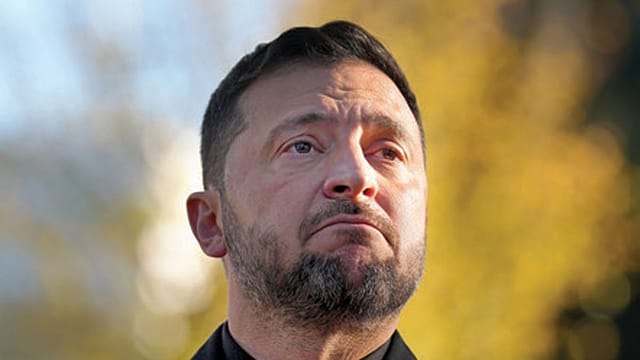
A question raised by American negotiators has placed the central contradiction of the Ukraine war on the negotiating table.
“What if Ukraine joins NATO? Would Ukraine withdraw from Donbas?”
According to Ukrainian President Volodymyr Zelensky, US officials asked this during the latest American-mediated attempt to end Russia’s invasion. It was the first time, he said, that NATO membership had been linked directly to a Ukrainian withdrawal from the remaining part of Donbas under Kyiv’s control.
Washington has not publicly presented a completed peace proposal. Zelensky described a question floated during negotiations, without a detailed territorial map, timetable, enforcement mechanism or commitment from NATO’s other members. Reuters, BBC, AP and several European outlets have independently reported his disclosure.
The question is momentous because it tries to exchange the two things Russia and Ukraine value most. Vladimir Putin wants the whole of Donbas. Ukraine wants NATO’s protection.

The Wealth Issue 2026
06 Nov 2026 - Vol 05 | Issue 45
Portraits of Dreamers and Doers under 35
Giving each side one of those objectives sounds like the architecture of a compromise. In practice, it may produce a deal that neither side can accept.
What Did the US Propose to Zelensky?
The latest US-brokered talks between Ukrainian and Russian officials took place in Abu Dhabi, the first such negotiations in nine months. They ended without a major political breakthrough, although the two sides agreed in principle to a prisoner exchange involving more than 1,000 people.
US envoys Steve Witkoff and Jared Kushner subsequently met Putin in Moscow and Zelensky in Ireland. The Ukrainian president then revealed the American question about NATO and Donbas.
Zelensky said he had repeatedly told the Americans that Ukraine would not withdraw from its territory. His response changed when NATO membership entered the discussion.
“That is why I believe NATO is back on the agenda,” he said.
He also described the package he would need before consulting the Ukrainian people: concrete security guarantees from NATO and the European Union, the right to maintain a large and properly funded military, sufficient weapons, long-term financial support and a funded reconstruction plan.
Zelensky said Ukraine would not recognise the occupied territories as Russian. Any arrangement would therefore resemble a military withdrawal or indefinite freezing of the territorial dispute rather than the legal surrender of Ukrainian sovereignty.
This is the first crucial fault line in the proposal. Russia wants sovereignty over the territory. Ukraine may, under sufficient pressure and with credible guarantees, consider accepting Russian control without recognising Russian ownership.
How Much of Donbas Would Ukraine Have to Give Up?
Donbas consists of the Donetsk and Luhansk regions. Russia occupies almost all of Luhansk and most of Donetsk, but it has failed to conquer the entire region despite fighting there since 2014.
Estimates have placed the Ukrainian-held portion of Donetsk at roughly 15 to 20 per cent, although the front continues to move. Russia controls more than 90 per cent of the wider Donbas region.

The remaining Ukrainian-held territory includes part of the “fortress belt”, an interconnected defensive zone built around Sloviansk, Kramatorsk, Druzhkivka and Kostiantynivka.
These cities are more than points on a map. They contain fortified positions, road and rail connections, logistics hubs and elevated terrain that Ukraine has defended for years. Russia has paid heavily for incremental advances towards them. Ukrainian withdrawal would hand Moscow territory that its army has been unable to seize.
Why Ukraine’s Donbas Fortress Belt Matters
The fortress belt forms the backbone of Ukraine’s defence in northern Donetsk. Its cities and surrounding positions help block Russian movement towards the west and northwest.
Russia has pressed Kostiantynivka and threatened Sloviansk and Kramatorsk with air and drone attacks. Yet the full defensive line remains outside Moscow’s control. Reuters reported in July that Russian troops were grinding towards Kostiantynivka while their advances across much of the wider front had slowed.
A negotiated withdrawal would save Russia the cost and uncertainty of fighting through these positions. It could also free Russian troops for deployment elsewhere.
For Ukraine, the danger extends beyond the loss of cities and land. If the security arrangement later collapsed, Russian forces would begin any renewed offensive from positions closer to Ukraine’s central regions. Kyiv would therefore need a guarantee strong enough to replace the deterrent value of the territory and fortifications it was surrendering.
Can Ukraine Join NATO With Territory Under Russian Occupation?
There is no sentence in the North Atlantic Treaty that automatically bars a country with occupied or disputed territory from joining.
Article 10 says NATO members may unanimously invite any European state capable of advancing the treaty’s principles and contributing to the security of the North Atlantic area. Ukraine would consequently need the approval of every NATO member, followed by ratification under each country’s domestic process. The United States cannot grant Ukrainian membership on its own.
The larger difficulty concerns Article 5.
An armed attack against one NATO member is treated as an attack against them all. Each ally must assist, although the treaty leaves individual governments some discretion over the form of that assistance.
If Ukraine joined while Russia occupied recognised Ukrainian territory, NATO would have to define the geographical scope of its guarantee. Otherwise, Ukraine could theoretically enter the alliance with Article 5 already engaged.
One possible precedent is West Germany. It entered NATO in 1955 while Germany remained divided. The alliance protected the territory controlled by the West German government. German reunification later extended NATO territory eastwards.
That precedent shows that political division does not make membership legally impossible. It does not provide a simple template for Ukraine. West Germany was not fighting an active war against East Germany when it entered NATO.
A Ukrainian arrangement would probably require NATO to protect territory under Kyiv’s effective control while maintaining that the occupied regions legally remain Ukrainian. Any attempt to recover them by force might have to sit outside the alliance guarantee.
Such language would be extraordinarily difficult to negotiate. It would also need to be precise enough to prevent Moscow from testing NATO through infiltrations, sabotage, drone attacks or ambiguous incursions.
Why Putin May Reject the Donbas-for-NATO Deal
This is the proposal’s greatest contradiction.
Putin has spent years describing Ukrainian NATO membership as an existential threat. Moscow demanded Ukrainian neutrality before launching the full-scale invasion in February 2022. Russia has also sought restrictions on Ukraine’s armed forces and a wider rollback of NATO’s military presence in Eastern Europe.
The American formula would give Russia the rest of Donbas. It would simultaneously place the remainder of Ukraine under NATO’s collective-defence umbrella, preserve a powerful Ukrainian military and move the alliance’s protected frontier along Russia’s border.
Putin could present the acquisition of Donbas as a victory. The price would be a historic strategic setback for the Kremlin.
Recent talks offer no evidence that Moscow has accepted this exchange. Putin continues to demand all of Donbas, Ukrainian neutrality and wider negotiations over Europe’s security architecture. Kremlin representatives have also indicated that the NATO-for-Donbas question was not discussed with Witkoff and Kushner during their Moscow meeting.
Russia may therefore be interested in the territorial half of the formula while rejecting the security half.
Can Zelensky Legally Give Up Ukrainian Territory?
Zelensky cannot make that decision alone.
Article 73 of Ukraine’s Constitution states that alterations to the country’s territory must be decided exclusively through an all-Ukrainian referendum. Ukrainian law also prevents a national referendum from being held while martial law is in force.
That creates a formidable sequence of problems.
A ceasefire may have to precede the lifting of martial law. The legal framework for a referendum would then have to be activated. Millions of Ukrainians living abroad, internally displaced citizens and people from occupied territories would need a credible way to participate.
The wording would be decisive. Ukrainians might reject a question asking them to give Russia Donbas while supporting one that offered to stop fighting along the current line without recognising Russia’s annexations.
Would Ukrainians Accept the Loss of Donbas?
Public opinion already reflects that distinction.
An October survey by the Kyiv International Institute of Sociology found that 61 per cent considered withdrawing from all of Donbas in exchange for Western security guarantees categorically unacceptable. Only 35 per cent were prepared to consider it.
A separate September KIIS survey found that 69 per cent would support an immediate ceasefire on the existing front if Ukraine did not legally recognise Russia’s annexations, continued strengthening its military and retained its path towards the EU and NATO.
The polling suggests that Ukrainians are willing to consider freezing the war along its present front. Most remain opposed to ordering their army out of land Russia has failed to conquer.
NATO membership could change that calculation because it is far stronger than an undefined Western assurance. Zelensky would still need to show that the guarantee was real, immediate and supported by every alliance member.
Ceasefire, Withdrawal or Legal Surrender: What Is Actually Being Discussed?
Three territorial outcomes are frequently collapsed into the phrase “ceding Donbas”.
The first is de facto control. Russia keeps the areas it currently occupies, but Ukraine and its partners continue to recognise them as Ukrainian.
The second is Ukrainian military withdrawal. Kyiv pulls back from the remaining Donbas territory without recognising Russian sovereignty.
The third is legal cession. Ukraine formally changes its borders and recognises the whole region as Russian territory.
The American question appears closest to the second option. Russia is pursuing the third. That gap contains the core negotiation.
A ceasefire on the current front would leave much of the fortress belt with Ukraine. A full withdrawal would give those positions to Russia. Legal recognition would validate Moscow’s attempt to change borders by force and create consequences far beyond Ukraine.
Washington may believe NATO membership is valuable enough to secure Ukrainian acceptance of a withdrawal. Kyiv will first want to know precisely what membership means, when it begins and whether every ally is prepared to defend the territory Ukraine retains.
Could the Donbas-for-NATO Formula End the Ukraine War?
For Ukraine, the proposal asks whether future security is worth surrendering present defences.
For the United States, it tests whether NATO membership can be used as negotiating currency after years in which Washington treated it as too escalatory.
For Europe, it could create a new alliance frontier beside Russian-controlled territory.
For Putin, it offers a chance to obtain the remaining Donbas without conquering it. The price would be the permanent admission of most of Ukraine into the Western military alliance he has tried to keep away.
This is why the American question should not yet be mistaken for a peace plan. A workable plan requires an agreed map, an enforceable ceasefire, NATO consensus, Ukrainian public approval and Russian acceptance of the security arrangement. None of those elements exists yet.
The idea is still significant. It brings NATO membership back into active diplomacy and exposes the choice that will shape any settlement: a vulnerable neutral Ukraine, an armed truce along the current front, or a partitioned Ukraine whose remaining territory finally enters NATO.
The bargain may look simple when reduced to four words: Donbas in exchange for NATO. Every word conceals a potential veto, another security dilemma and the possibility of a future war.