Russia’s Bears Doubled. Now Moscow Wants a 30% Cull. Will It Stop the Attacks?
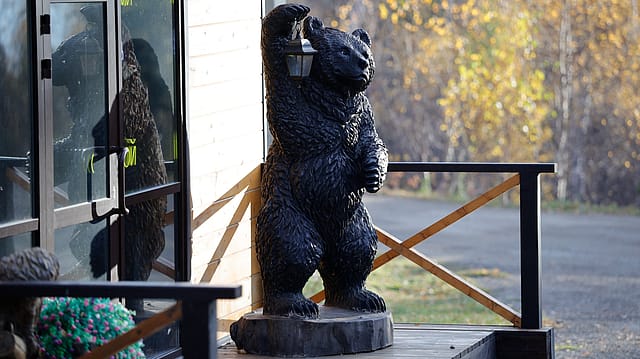
Russia has turned its bear crisis into a percentage.
The country says it has almost 308,000 brown bears. Thirty-six people have been killed in attacks this year. Authorities have received more than 12,000 reports of bears approaching people, and 87 encounters became attacks. One of the latest victims was a security guard killed at a holiday camp on the Kamchatka peninsula.
Moscow’s answer is a new maximum removal rate: regional authorities may kill up to 30 per cent of their estimated brown-bear populations.
The number is dramatic enough to suggest a simple calculation: 30 per cent of 308,000 is 92,400. That arithmetic is misleading because Russia has not ordered a national slaughter of that size.

The Wealth Issue 2026
06 Nov 2026 - Vol 05 | Issue 45
Portraits of Dreamers and Doers under 35
The rule creates a legal ceiling rather than a national instruction to kill that many bears. Existing regional levels vary. Kamchatka has been allocated 14 per cent, while Krasnoyarsk in western Siberia has 19 per cent. The government has not said when the new regime will begin, how long it will remain in force or how many animals it expects hunters and officials to remove.
The distinction prevents exaggeration, but it does not settle the central question. Russia is betting that a larger population reduction will make people safer. Decades of bear-conflict research suggest that the outcome will depend upon which bears are killed, where they are removed and whether rubbish, human food and damaged habitats continue pulling replacements towards the same settlements.
Russia’s official bear population has risen from 130,000 to 308,000
The Ministry of Natural Resources says Russia’s brown-bear population has climbed from approximately 130,000 in 1990 to 307,900 in 2026. Russia contains the world’s largest national population of brown bears, concentrated heavily in Siberia and the Far East.
A larger population increases the opportunity for bears and people to meet. It can also place more young or subordinate animals under pressure to search beyond prime habitat. Yet the national count is less precise than its final three digits suggest.
Russia’s scale makes counting exceptionally difficult. Bears range across remote forests, mountains and tundra. Monitoring has involved track counts, aerial surveys, sample plots, observations at oat fields and questionnaires completed by hunters. Methods have changed across regions and decades.
A scientific review of Russian attacks warned that part of the reported population increase could reflect changes in monitoring. It cited older international estimates substantially below Russian official figures and urged caution when interpreting national totals.[4] A broader review of Asian bear monitoring found that many estimates across the continent relied upon expert opinion, interviews and animal signs. Rigorous methods that identify individual animals through DNA or other mark-recapture techniques remain relatively uncommon.
This does not prove that Russia’s population has failed to grow. It means the 1990 and 2026 numbers may not be perfectly comparable. A culling limit calculated as a percentage of an uncertain regional estimate inherits that uncertainty.
The year’s food failure pushed hungry bears farther
Russia’s 2026 crisis did not emerge from population growth alone.
An early, dry spring reportedly caused berries to ripen and fall sooner in parts of Siberia, leaving less food available during the critical weeks before hibernation. Bears need to accumulate substantial fat reserves before entering their dens. A failed berry, nut or salmon season can send them across wider areas in search of calories.

That helps explain the timing and geography of attacks involving berry pickers, campers, livestock herders and residents. It also helps explain why an animal may cross a road, enter a garden or approach a camp despite normally avoiding people.
Climate belongs in the story, but it should not be used as a universal explanation for every encounter. Research shows that weather and food availability influence when brown bears enter and leave their dens. Warmer conditions can delay den entry, shorten hibernation and lengthen the period in which bears and humans occupy the same landscape. The precise consequences vary by region, food supply, sex and reproductive status.
Russia’s ministry has attributed part of the long-term population increase to shorter, milder winters. The immediate conflict, however, is created by the interaction of climate, natural food cycles and human behaviour. A warm winter does not instruct a bear to visit a landfill. An unsecured landfill makes the journey rewarding.
A rubbish dump can train a bear faster than policy can remove it
The Russian government has allocated more than 80 million roubles to help 13 regions remove conflict bears, particularly animals feeding at dumps or beside roads.
Those animals are often described as synanthropic bears, meaning wild animals that have adapted to food and opportunities created by people. A bear possesses an exceptional sense of smell and can remember a reliable source of high-energy food. Fish waste, carcasses, pet food, discarded meals and open bins can provide more calories for less effort than foraging across a forest.
Repeated success changes behaviour. The bear becomes habituated to human presence or associates houses, vehicles and camps with food. Frightening it away becomes harder. Relocation may transfer the problem or allow the animal to return. In urgent cases involving an aggressive, food-conditioned bear, lethal removal can be necessary to protect human life.
The problem begins when targeted removal and general population reduction are treated as interchangeable strategies.
A global meta-analysis of bear-conflict interventions found that shooting could produce a short-term benefit, but its effectiveness declined over time. Securing or removing garbage reduced damage by between 50 and 90 per cent in the studies reviewed, although success depended upon consistent public behaviour.
Another controlled study found that expanding a bear-hunting season increased the harvest without reducing interactions or incidents in the short term. Natural food availability remained the stronger predictor of conflict.
Removing a dangerous bear can address an immediate threat, but an open landfill allows another animal to discover the same route and repeat the behaviour.
Roads have carried people deeper into bear country
Russia’s attack history has changed with its human geography.
A study covering 338 fatal and non-fatal attacks between 1932 and 2017 found that hunters and outdoor workers dominated incidents during the Soviet period. After 1991, people gathering forest produce, hiking or living inside settlements formed larger shares of the victims. Improved road access allowed more people to enter remote habitat for work, recreation and the commercial collection of berries, mushrooms and pine nuts.
A later analysis found that casualties in Russia were associated with human encroachment. In Siberia, road density and the presence of Siberian pine increased the probability of conflict because people and bears gathered around the same valuable food resource. In European Russia, bear population size showed a clearer relationship with casualties.
The findings resist one national explanation. Density may matter greatly in one region. Roads, logging, forest degradation or seasonal food concentration may dominate elsewhere. The sensible management unit is therefore the conflict landscape, not an undifferentiated Russian bear population.
That is where a single maximum percentage becomes blunt. A remote population with limited contact presents a different public-safety problem from food-conditioned animals visiting a town every night.
Will hunters kill the bears causing the danger?
Only if the policy is designed to identify them.
Conflict behaviour is unevenly distributed. A study in the Carpathians found that a minority of bears repeatedly caused damage, while many animals never developed the same behaviour. Broad hunting can remove bears that avoid humans while missing an individual conditioned to a dump, fish-processing site or tourist camp.
Timing and selection also matter biologically. Removing adult females can affect population growth more sharply than removing males. Killing dominant adults may alter social structure or open territories to younger animals. Hunting pressure can make surviving bears more wary of humans, which could reduce conflict in some settings. Evidence from different bear populations does not produce one universal result.
Russia also faces an implementation gap. Earlier regional hunting quotas were often underfilled. Research using Russian records reported that only about one-third of the national brown-bear quota had been used annually since 2004, even as legal hunting increased.
Raising an administrative ceiling does not create trained hunters, safe response teams or economic incentives to operate across remote territory. The government will still need to decide who pays, which animals qualify, how removals are verified and whether the hunt is focused upon conflict zones.
Japan and Europe have reached for the same weapon
Russia is not alone in converting fear into a cull.
Japan strengthened emergency shooting rules after record bear encounters and casualties. Its response combines population management with warnings about failed nut crops, abandoned fruit trees, pet food, compost and rubbish that attract bears into ageing and depopulating rural communities. Japan recorded 238 people injured by bears in fiscal 2025, its highest total, and has expanded financial support for local response capacity.
Slovakia approved the killing of 350 brown bears following a fatal attack and declared an emergency across most of the country. Its government argued that citizens should not fear entering forests. Conservation groups challenged the scale and legality of the measure, while the European Commission sought assurances that removals would comply with habitat protections.
Romania has also used shooting quotas after fatal encounters. The debate there has centred upon contested population estimates, hunting tourism and delays in implementing measures such as smart bins, electric fences, relocation cages and facilities for holding problem bears.
The pattern is politically understandable. A death demands visible action. A cull produces a number, a deadline and photographs of officials doing something. Waste reform, habitat planning and public education operate slowly and distribute responsibility across ministries, municipalities, businesses and residents.
Public safety requires immediate intervention alongside ecological reform. A national percentage whose connection to local risk remains unproven cannot carry that responsibility alone.
What would a credible Russian strategy contain?
Russia needs rapid-response teams capable of identifying and removing individual bears that attack people, repeatedly enter settlements or lose their fear through human food. That requires clear reporting, trained personnel and authority to act quickly.
It also needs bear-resistant waste systems around towns, camps, mines, fish-processing sites and tourist areas. Feeding bans require enforcement. Forest closures and warning systems can reduce exposure during food-failure years. Roads and commercial harvesting need conflict planning where they concentrate people and bears around the same resources.
Population management may still form part of that strategy. In regions where reliable monitoring demonstrates unusually high density, regulated hunting can place broad limits on growth. The quota must be based upon transparent regional data, account for sex and age, and be evaluated against attacks rather than the number of animals killed.
The useful performance measure is not whether a region fills 30 per cent of its allowance. It is whether fewer people are attacked without destabilising bear populations or moving conflict elsewhere.
The bear crisis is also a human-landscape crisis
Russia’s 36 deaths make inaction impossible. Families living near forests and workers entering them cannot be asked to accept fatal encounters as the price of conservation. Officials have a duty to remove animals presenting an immediate threat.
The same duty requires accuracy about what created the danger.
Russia may have more bears than its landscapes can safely accommodate in some regions. It also has roads carrying people deeper into forests, settlements offering edible rubbish, camps that leave attractants accessible and a changing climate disrupting food and hibernation. The violence occurs where those forces meet.
Moscow’s 30 per cent ceiling can reduce a population, but it cannot secure a bin, restore a berry crop or close an unsafe trail. Russia has made it easier to authorise a shot without yet making the human landscape less inviting to the next hungry bear.