Why America’s Air Traffic System Still Uses Floppy Disks and Auction-Site Spare Parts
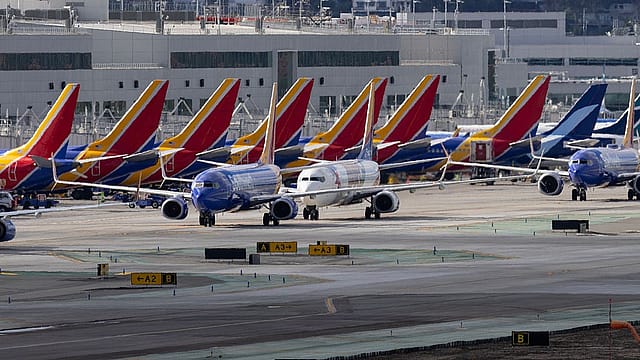
The most unsettling detail from America’s nationwide flight shutdown was not that one group of switches and routers became overloaded. It was that the government already knew how fragile much of the network had become.
The Federal Aviation Administration has classified 51 of its 138 air traffic-control systems as unsustainable and another 54 as potentially unsustainable. Controllers are still receiving critical information through equipment descended from the 1980s, while technicians have struggled to find replacement components for obsolete machinery.
Washington is now promising a new air traffic-control system by the end of 2028. The urgency is real. So is the uncomfortable history: America has attempted versions of this transformation for four decades, spent billions of dollars and repeatedly arrived late with fewer capabilities than promised.
Why did one telecommunications failure stop departures across America?
The November 13 disruption affected communications serving all US Air Route Traffic Control Centers, which manage aircraft flying between airports. Transportation Secretary Sean Duffy said legacy switches and routers became overloaded and began supplying inconsistent radar and communications data.

The Wealth Issue 2026
06 Nov 2026 - Vol 05 | Issue 45
Portraits of Dreamers and Doers under 35
The FAA did not lose every radar image or every radio connection. The inconsistency was sufficient to make normal operations unsafe. Controllers and pilots need reliable, synchronised information about aircraft identity, altitude, position and routing. When the network could no longer guarantee that consistency, the FAA stopped departures while allowing more than 3,500 aircraft already airborne to land or divert under established procedures.
Authorities said they had found no evidence of a cyberattack or rogue artificial intelligence. The investigation was continuing, but the available evidence pointed to an equipment or network failure rather than hostile intrusion.
How old is the technology directing American aircraft?
There is no single age for the system because it is a collection of radars, radios, telecommunications lines, computers, weather displays and control facilities installed and upgraded across several decades.

Some components date to the 1980s. The FAA recently began replacing four information-display systems that still use floppy disks to distribute weather and other essential operational material. Those systems operate across more than 400 facilities. Their replacement, the Enterprise Information Display System, is scheduled to reach 435 sites by the end of 2028.
FAA officials have also acknowledged using decades-old computers and struggling to source parts for obsolete equipment. Some replacement components have been obtained through online auction sites or recreated using 3D printing. This does not mean controllers are casually guiding aircraft with consumer computers. It means specialised systems designed long ago have remained operational after their original supply chains disappeared.
What does the FAA mean when it calls a system “unsustainable”?
It is an operational classification, not a rhetorical description.
After a 2023 failure of the Notice to Air Missions system halted departures nationally, the FAA assessed 138 air traffic-control systems. It classified 51 as unsustainable because of severe shortages of spare parts, inadequate maintenance funding or serious capability problems. Another 54 were considered potentially unsustainable.
Together, the two categories covered 105 systems, or more than three-quarters of those assessed. Only 33 were placed in the two categories without sustainment concerns.
An old system can remain safe when it is carefully maintained and supported by redundancy. The risk rises when components are scarce, technicians must improvise repairs, backup routes share vulnerabilities or replacement programmes remain years away.
Has America not spent billions modernising air traffic control already?
It has.
The FAA introduced the Next Generation Air Transportation System, or NextGen, in 2004. The programme was intended to move aviation from ground-based radar towards satellite navigation, digital communications and more efficient traffic management.
The Government Accountability Office says the FAA spent at least $14 billion on NextGen between fiscal years 2007 and 2022 and expected total spending to reach approximately $22 billion by 2030. The programme’s original completion target was 2025, but that shifted to at least 2030.
A 2025 review by the US Department of Transportation’s inspector general found that NextGen had produced genuine benefits, including more efficient traffic management and reduced delays. However, by December 2024, it had delivered only about 16 per cent of its total expected benefits. The review described the programme as delayed, over budget and less transformational than planned.
Why did NextGen fall short?
The failure was not caused by one contractor or one technological mistake. Official reviews identified recurring weaknesses: unrealistic cost and schedule assumptions, complicated software development, changing requirements, inadequate contractor oversight, insufficient coordination with airlines and slow deployment across thousands of locations.
Modernising air traffic control is unusually difficult because the existing system cannot be switched off while its replacement is installed. New and old equipment must operate together, controllers require training, airlines may need compatible avionics, and every change must be tested without compromising safety.
That complexity explains why the job is hard. It does not explain why known management weaknesses were allowed to persist across successive programmes.
What is the FAA building now?
The replacement effort is called the Brand New Air Traffic Control System. Congress appropriated $12.5 billion in July 2025, including $4.75 billion for telecommunications, $3 billion for radar replacement and $300 million for the new information-display system.
The first phase is intended to modernise communications, surveillance, weather and training systems by December 2028. The FAA’s targets include 5,170 high-speed network connections, 27,625 radios, 462 digital voice switches, 612 radars and upgraded surface surveillance at hundreds of airports.
The agency says 69 per cent of legacy copper wiring has already been replaced, 226 internet-based voice switches installed and the first floppy-disk replacements deployed.
Why is Washington seeking another $50 billion?
The $12.5 billion was described by the FAA as a down payment, not the total cost of rebuilding the network. Following the nationwide shutdown, the Trump administration increased its requested aviation modernisation funding to $50 billion. The demand covers air traffic control, control towers and airport infrastructure, although the precise division and congressional path will matter.
The problem is that the FAA still does not possess a comprehensive, well-documented lifecycle cost for the entire new air traffic-control programme. The GAO found that high-level estimates supplied in June 2026 excluded government costs, most phase-one operating costs and all phase-two costs.
The FAA administrator waived the programme from standard acquisition requirements that would ordinarily demand such an estimate. That allows work to begin faster, but it also makes it harder for Congress to know what the finished system will cost.
What is the significance of the FAA’s 11,389 schedules?
It is evidence that speed has outrun coordination.
The GAO found that the FAA did not have an integrated master schedule for the first phase. It instead had 11,389 individual project schedules. Separate teams could therefore plan installations at the same facility without optimising the timing, increasing the possibility of repeated work, operational disruption, delays and cost overruns.
An integrated schedule would show how telecommunications, radar, software, construction, testing and controller training depend upon one another. Without it, completing thousands of individual jobs does not guarantee that the overall network will work as one system.
Would replacing copper wires and floppy disks prevent another shutdown?
It would remove important points of failure, but hardware replacement alone cannot guarantee resilience.
Fibre can carry more data than copper, yet a modern cable connected to poorly integrated systems can still transmit unreliable information. New switches help only when the network has sufficient redundancy, old and new components communicate correctly, software is tested and backup routes do not share the original vulnerability.
The FAA’s challenge is therefore architectural. It must replace obsolete equipment while creating a national system capable of isolating local failures before they spread. Friday’s outage demonstrated why completing 69 per cent of one workstream does not mean the network is 69 per cent modernised.
Why does this matter to passengers in India?
The United States is one of India’s most important long-haul aviation markets. A nationwide American ground stop can delay an Air India departure in Delhi or Mumbai, disrupt an aircraft’s return journey, displace crews and passengers, and create missed connections for days after US airspace reopens.
International arrivals may also be held at their departure points or managed individually when American capacity is constrained. Air India warned passengers of consequential disruption during the November 13 shutdown and advised them to verify flight status before travelling to airports.
The larger lesson reaches beyond one route. Aviation networks are internationally connected, while much of their critical infrastructure remains nationally funded and managed. A neglected router, communications line or software system in one country can rearrange journeys thousands of kilometres away.
America has the money, technical expertise and operational experience to rebuild its air traffic network. It has also accumulated four decades of delayed schedules, expanding costs and incomplete transformations. The latest shutdown has strengthened the political case for investment. Whether the next funding package produces resilience will depend upon the less dramatic work Washington has repeatedly struggled to complete: realistic costing, coordinated scheduling, contractor accountability and a network designed as one system.