The Globetrotter: A Defiant Iran Spreads the War
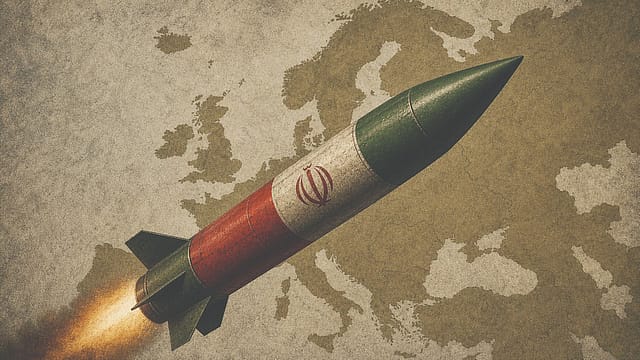
This week, American tankers and Ospreys left RAF Mildenhall after an intelligence warning, the second British base to be thinned in little more than a month, following the bombers withdrawn from Fairford last month. A superpower that shuffles its aircraft on the strength of a whisper is not a superpower at ease. The Iran war’s theatre has quietly widened beyond the Middle East. As MI5 reports dozens of arrests in a year over Iran-linked plots on British soil, France, for its part, blames the Revolutionary Guard for sabotaging the refrigeration systems of 700-odd supermarkets last month, spoiling food on shelves and humbling shoppers. Similar incidents in Sweden, Belgium and Ireland remain unattributed, though few believe in coincidence. Tehran denies nothing it need not. This is asymmetry as strategy. A drone costs less than the missile fired at it; a hacker’s keyboard, less than a hangar’s insurance. While Iran’s depleted forces cannot win a conventional war, nothing suggests it will win this one either. But Tehran can make victory ruinously dear notwithstanding Donald Trump’s claims. Wars end when both sides agree they have. The regime in Tehran hasn’t come round to seeing things that way yet.
Budapest Spring

Late is a poor motto for justice but still serviceable for memory. Thirty-seven years after communism fell, Hungary has put the names of 60,000 secret-police informers before the public. Germany threw open the Stasi archives within two years of reunification, and survived the reckoning. Democratised Hungary’s politics might have taken a sinister turn rather too soon but the objections have merit. The files are patchy, shredded, leaked or hoarded—and coerced informers may be judged as harshly as zealots and opportunists. Also, families will encounter painful truths about their dead. Yet a state that kept secrets about its citizens cannot keep them from those citizens forever.
Death of a Newspaper
A newspaper has been killed in Russia, and without a bullet for a change. Novaya Gazeta, which for over three decades told Russians what their rulers didn’t want them to know, has been starved of premises and money, its websites blocked, licence withdrawn, reporters branded foreign agents. “They chose to strangle us,” said its co-founder Dmitry Muratov. The method was patient, bureaucratic and, in its way, candid about the purpose. The paper’s history is written in the names of its dead. Six of its employees were killed and none is remembered more fiercely than Anna Politkovskaya, who went to Chechnya when others looked away and returned with testimonies of cruelty that the Kremlin wanted buried. She was murdered in her own apartment block in 2006. Her courage was not swagger but the stubborn decency of someone who believed the public were owed the facts once those facts were gathered. That perhaps is the biggest legacy of Novaya Gazeta. It reminds us that a free press is not an ornament of democracy but its working conscience, obliged to confront power precisely when power is most intolerant. Tyrants don’t fear opinion but verifiable truths. Novaya Gazeta was silenced on November 9 but not refuted.