US Blockade Tightens Noose on Iran, $435 Million a Day at Stake
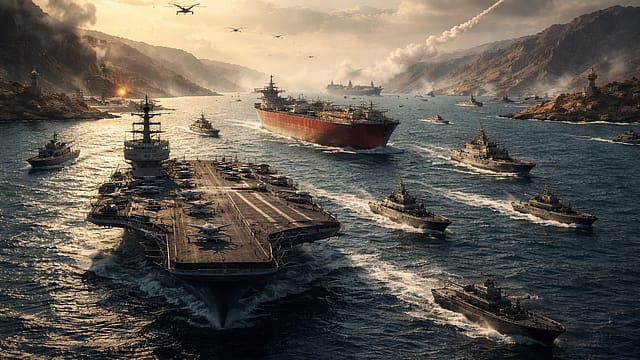
A United States blockade of Iranian ports at the Strait of Hormuz could inflict economic damage of up to $435 million or Rs 4,081 crore per day on Iran, according to a Wall Street Journal report, as tensions between Tehran and Washington continue to escalate.
The blockade, which US President Donald Trump said began on Monday, is expected to disrupt the flow of oil, fertiliser, food and other goods, potentially driving further inflation.
Will Donald Trump’s Iran Blockade Choke the World’s Oil Lifeline at the Strait of Hormuz?
Analysts, however, have cautioned that the scale of Iran's losses will depend on several uncertain factors, including how effective the US blockade proves to be and the extent to which Tehran can reroute oil exports through the Jask terminal, located outside Hormuz waters.

Zeroing In on ECI
09 Oct 2026 - Vol 05 | Issue 41
Constitutional legitimacy versus political opportunism
Short-term losses may be partially cushioned by Iranian oil already in transit. As of late March, Iran had an estimated 154 million barrels of oil floating outside the blockage-affected Gulf, according to Kpler.
"The US quarantine of Iran's ports will cost Iran about $435 million a day in economic damage," Miad Maleki, a former official with the Treasury Department's Office of Foreign Assets Control, told WSJ.
How Much Is Iran Losing Daily Under the US Blockade at the Strait of Hormuz?
The estimated losses include roughly $276 million in lost exports, primarily crude oil and petrochemicals.
Maleki’s calculations are based on Iran exporting 1.5 million barrels of oil per day at a wartime price of about $87 per barrel and assume that more than 90 per cent of these shipments pass through Kharg Island within the Persian Gulf.
White House Deputy Chief of Staff for Policy and Homeland Security Advisor Stephen Miller on Tuesday (US time) described the blockade as a turning point in global power dynamics, warning that Iran risks becoming a "footnote" if it does not alter its course and reach an agreement with Washington.
Speaking to Fox News, Miller said the move underscores American dominance, particularly at sea.
Miller highlighted maritime control as a decisive factor in geopolitical outcomes, pointing to the strength of the US military and navy.
"President Trump is saying we, the United States, have the world's not just most powerful military, most powerful navy. And whoever controls the seas is able to control the outcomes in any foreign policy showdown," the Deputy Chief of Staff said.
He further asserted that the US has placed Iran in an untenable position.
"President Trump has put Iran in a box; he's played the checkmate move. And so now no matter what path Iran chooses, America wins," he added.
(With inputs from ANI)