Trump's Iran Dilemma Explained: Diplomacy, More Airstrikes or a Wider War?
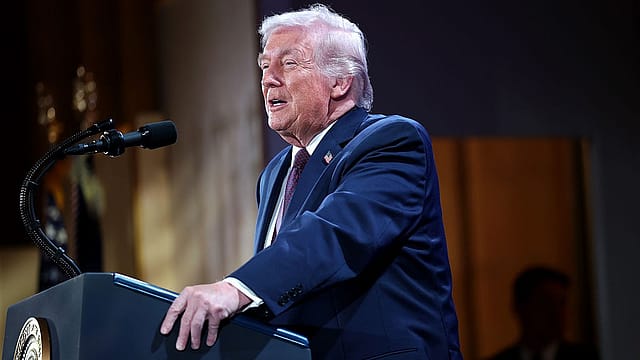
Every war reaches a moment when the next decision matters more than the last missile. For Donald Trump, that moment may have arrived.
According to an Axios report citing US, Israeli and regional officials, the White House is weighing two very different paths: support a 10-day ceasefire that could reopen the Strait of Hormuz and restart diplomacy, or continue military operations alongside Israel if negotiations collapse. Neither Washington nor Tehran has accepted the proposal so far. Military operations continue even as regional mediators work behind the scenes to prevent the conflict from widening.
Here's what is happening.
What decision is President Trump facing?
Trump is reportedly choosing between two competing strategies. One option is to back a 10-day ceasefire proposed by regional mediators, creating space for diplomacy. The other is to continue—or even expand—military operations alongside Israel if the administration concludes that diplomacy is unlikely to succeed. Officials quoted by Axios say no final decision has been made.

Losing Memory
16 Oct 2026 - Vol 05 | Issue 42
The making of a medical and social emergency
What is the proposed 10-day ceasefire?
Regional mediators, including Qatar, Egypt and Pakistan, have reportedly proposed a temporary pause in fighting.
The proposal would:
Halt hostilities for 10 days.
Reopen the Strait of Hormuz to commercial shipping.
Allow the US and Iran to negotiate a longer-term maritime security arrangement.
The idea is to create a brief "cooling-off period" before the conflict escalates further.
Why is the Strait of Hormuz so important?
The Strait of Hormuz is one of the world's most strategically important maritime chokepoints. A significant share of global oil and LNG exports passes through the narrow waterway connecting the Persian Gulf to international markets.
Any disruption can affect:
Global oil prices
Energy supplies
Shipping costs
Financial markets
That is why reopening the route is central to the ceasefire proposal.
If diplomacy is being discussed, why is the US still building up forces?
Because diplomacy and military pressure are happening simultaneously. According to Axios, the US has deployed additional fighter aircraft and aerial refuelling assets to the region. Israel is also reportedly preparing contingency plans for a broader military campaign if negotiations fail. Analysts often describe this approach as negotiating from a position of strength.
Have either the US or Iran accepted the proposal?
No. According to Axios, neither side has agreed to the ceasefire. Both countries continue military operations while trying to improve their negotiating positions before any potential talks.
What caused negotiations to lose momentum?
Axios reports that ceasefire efforts slowed after an Iranian missile strike in Jordan killed American service members. Following the attack, Washington hardened its stance. A senior US official told Axios that the administration intends to continue military strikes until President Trump decides otherwise. Iran, meanwhile, has said it will continue responding to what it calls American aggression.
What could happen next?
Several scenarios remain possible.
Trump could endorse the 10-day ceasefire and reopen negotiations.
The US could launch additional strikes before returning to diplomacy.
Israel could expand military operations if talks collapse.
Fighting could continue without either side accepting the proposal.
For now, the next few days are likely to determine whether the region moves toward de-escalation—or a broader conflict.
(With inputs from ANI)