Tehran Casts Doubt on Islamabad Mediation Amid US-Iran Deadlock
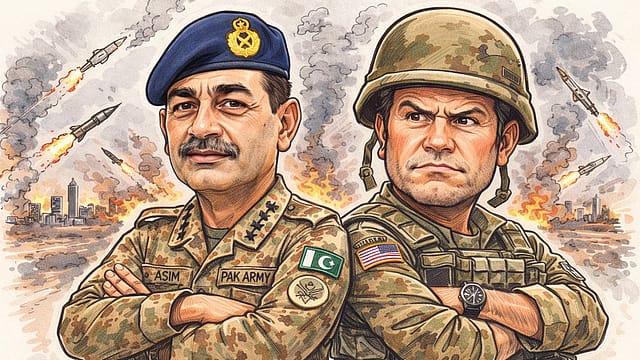
A fresh layer of tension has emerged in the already fragile diplomatic landscape surrounding Iran, as questions are now being raised about Pakistan’s credibility as a mediator.
The latest developments come amid a sudden extension of the ceasefire by US President Donald Trump, even as Tehran signals deep mistrust of the ongoing backchannel efforts.
What is fuelling Iran’s scepticism over Pakistan’s mediation?
Iranian state-linked discourse has cast doubt on Islamabad’s effectiveness as a diplomatic intermediary, suggesting that its efforts have failed to extract any meaningful response from Washington. The criticism, aired by the Student News Network (SNN), underscores a growing belief in Tehran that the communication channel routed through Pakistan has reached an impasse.

The Health and Wellness Issue
25 Sep 2026 - Vol 05 | Issue 39
An SNN analyst sharply articulated this concern, saying, "According to the plan we had, Asim Munir has come to Tehran, received our message, and this message was supposed to be given to the American side, which naturally he must have given. But as far as I know, and we have discussed it at high levels, we have not yet received a response as to whether this message was accepted or not. And I would even say, even if we do receive a response, he (Munir( will go back and sit in Islamabad and the other party will say, 'Well, I don't accept this at all.'"
This statement reflects not just frustration, but a broader lack of trust in the mediation framework itself, with Iranian officials indicating that even a response from the US may not translate into progress.
Why did Trump extend the ceasefire despite earlier threats?
The scepticism from Tehran coincides with a surprising move by Donald Trump to extend the ceasefire with Iran, a decision that appeared to contradict his earlier rhetoric. Just hours before the announcement, Trump had signalled a far more aggressive stance, telling CNBC, "I don't want to do that. We don't have that much time," while hinting that military action could follow if talks collapsed.
However, in a subsequent post on Truth Social, Trump cited the "seriously fractured" nature of the Iranian government and acknowledged a direct "request" from Pakistan’s leadership as key reasons behind the decision to delay escalation.
The abrupt shift highlights the fluidity of US strategy, where pressure tactics and diplomatic concessions appear to be unfolding simultaneously, creating uncertainty for all parties involved.
Is Pakistan trying to position itself as a key diplomatic player?
Pakistan has moved quickly to frame the ceasefire extension as a diplomatic success, with Prime Minister Shehbaz Sharif publicly thanking Trump for accepting the "request" to "extend the ceasefire to allow ongoing diplomatic efforts to take their course".
Sharif further asserted that "with the trust and confidence reposed in, Pakistan shall continue its earnest efforts for negotiated settlement of conflict," while also confirming that a second round of talks would be hosted in Pakistan, albeit without specifying a timeline.
Despite these claims, the broader perception remains that Islamabad is attempting to assert relevance on the global stage, even as tangible outcomes remain elusive. Critics argue that the ceasefire extension may simply be buying time rather than advancing a concrete resolution.
(With inputs from ANI)