Explained: Why Nepal Has Sought Fertiliser Support From India Amid Global Crisis
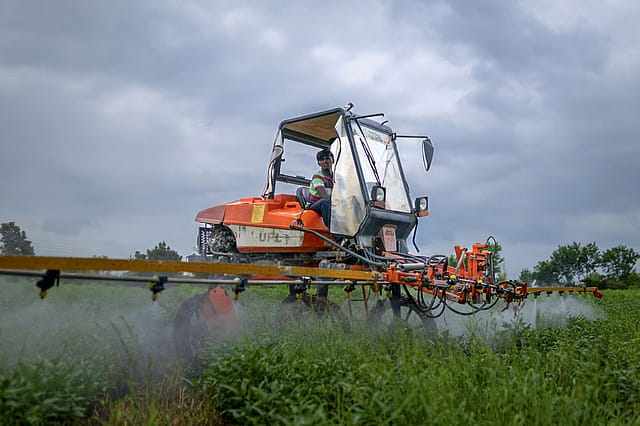
As global supply chains remain disrupted due to the ongoing West Asia crisis, Nepal has turned to India for urgent fertiliser supplies ahead of a crucial agricultural season. New Delhi has confirmed that the request is under active consideration, signalling continued cooperation between the two neighbours.
What has India said about Nepal’s request?
India’s Ministry of External Affairs acknowledged receiving the request and indicated that it is being processed through existing bilateral mechanisms.
External Affairs spokesperson Radhir Jaiswal said, “We have received a request from Nepal for the supply of fertilisers. This is being processed within the existing framework of cooperation.”
The statement underscores that the request is not extraordinary but part of a structured, ongoing partnership between the two countries.
Why does Nepal need fertilisers right now?
The timing is critical because Nepal is approaching its paddy transplantation season, when fertiliser demand peaks. Any delay in supply can directly impact agricultural output and food security.

Losing Memory
16 Oct 2026 - Vol 05 | Issue 42
The making of a medical and social emergency
According to a report by The Kathmandu Post, Nepal has already approved emergency procurement of 80,000 tonnes of fertilisers from India under a government-to-government arrangement. This includes 60,000 tonnes of urea and 20,000 tonnes of Di-Ammonium Phosphate (DAP).
While the country initially sought 150,000 tonnes, the approved quantity is being treated as essential support to sustain the upcoming crop cycle.
How has the global crisis affected Nepal’s fertiliser supply?
The West Asia conflict has triggered supply chain disruptions and pushed up global fertiliser prices, straining Nepal’s procurement system.
A senior official from Nepal’s Ministry of Agriculture and Livestock Development, Ram Krishna Shrestha, explained the urgency of the situation. “We will move ahead with the import process immediately after receiving the Cabinet's formal decision,” he said, adding that the “Agriculture Inputs Company will place purchase orders once all procedures are completed,” the official said.
He also highlighted the risks of relying on traditional procurement methods. “As issuing fresh tenders can take at least 225 days, it risks creating an acute shortage,” Shrestha noted, adding that “we cannot depend entirely on them.”
What are the financial challenges Nepal is facing?
Rising global prices have significantly increased the cost burden on Nepal’s government. Despite allocating Rs 28.82 billion in subsidies, the country has had to scale down its planned fertiliser imports.
Shrestha warned about the limits of state support, saying, “It is beyond the government's capacity to fully subsidise fertiliser at current global prices, as it would require nearly Rs 80 billion.”
This financial strain explains why Kathmandu is seeking faster and more reliable government-level arrangements with India.
How is India supporting its neighbours beyond fertilisers?
India’s assistance to Nepal is part of a broader regional strategy to ensure stability through essential supplies, including energy.
Jaiswal highlighted India’s role as a key energy provider in South Asia. “We have been supplying energy products to countries in the neighbourhood. We have been supplying diesel to Bangladesh through the high-speed diesel friendship pipeline that we have,” he said.
He added that India has been responsive to additional needs from neighbouring countries. “We also got some additional requests from Bangladesh, which we met and we are meeting. We've also been supplying energy products to Bhutan as per the existing regimen, as well as Nepal, as per the commercial agreement and the arrangement that we have presently with them,” the MEA spokesperson said.
India’s outreach extends further across the region. “We have likewise supplied energy products to Sri Lanka, and there are some arrangements that are in the works right now with Mauritius as well,” Jaiswal noted.
What is the status of India-Nepal fertiliser cooperation?
Although the original five-year memorandum of understanding expired on March 31, 2026, both sides are working to extend the arrangement.
Shrestha confirmed that “the G2G framework remains valid through 2026, and we have already sent a draft for extension to the Indian side,” adding that “we have been informed that it is under consideration.”
This suggests that despite formal agreements needing renewal, operational cooperation between the two countries remains active and responsive.
(With inputs from ANI)