Explained: What Xi Jinping’s Gulf Proposal Means As Iran Signals Support
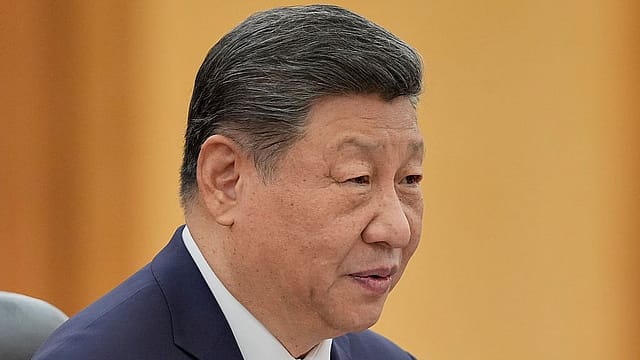
As tensions continue to simmer in West Asia, Xi Jinping has put forward a “four-point proposal” aimed at reshaping security and development in the Gulf. Now, Iran has publicly endorsed the idea—just as Donald Trump prepares for a high-stakes visit to China.
What has Iran said about Xi’s proposal?
Iran’s Ambassador to China, Abdolreza Rahmani Fazli, signalled clear support for Beijing’s initiative, framing it as a pathway toward stability and cooperation in the region.
“The Islamic Republic of Iran has announced its readiness to support the Chinese President's four-point plan aimed at establishing lasting security and shared development in the Persian Gulf region, an issue that was also emphasised during the meeting between the foreign ministers of the two countries,” the post read.
The statement highlights that the proposal was also discussed during talks between Iranian Foreign Minister Abbas Araghchi and Chinese Foreign Minister Wang Yi.
What is Xi Jinping’s four-point proposal?
China’s plan is built around four broad pillars designed to address both security and economic concerns in the Persian Gulf and wider Middle East.
The first point calls for peaceful coexistence through a “common, comprehensive, cooperative, and sustainable” security architecture.
The second stresses respect for national sovereignty, including territorial integrity and the protection of critical infrastructure and institutions.
The third emphasises adherence to international law, warning against a breakdown of global norms into what China described as the “law of the jungle.”

Open Minds 2026
26 Jun 2026 - Vol 05 | Issue 26
The power of ideas and arguments in 50 portraits
The fourth focuses on balancing development with security by encouraging regional cooperation to drive economic growth and long-term stability.
Why is this proposal significant now?
The timing is critical. The endorsement comes just ahead of Donald Trump’s planned visit to Beijing from May 13 to May 15, when he is expected to hold high-level talks with Xi Jinping.
With West Asia facing ongoing instability and competing geopolitical interests, China appears to be positioning itself as a mediator advocating dialogue and multilateral cooperation—an approach that contrasts with more interventionist strategies historically associated with other global powers.
How does this fit into China’s broader strategy?
In recent years, China has steadily expanded its diplomatic footprint in the Gulf region. By promoting frameworks like the four-point proposal, Beijing is signalling its ambition to play a larger role in shaping regional security while also safeguarding its economic interests, particularly energy flows and trade routes.
Iran’s backing adds weight to this effort, suggesting that key regional players may be open to alternative security architectures beyond traditional Western-led models.
(With inputs from ANI)