Fourth Round of Israel-Lebanon Negotiations Begins Despite Ceasefire Violations
The fourth round of high-level talks between Israel and Lebanon began at the US State Department on Tuesday, even as military hostilities in southern Lebanon continue to intensify.
The negotiations are taking place under US mediation and are viewed as a key effort to prevent further deterioration of security conditions along the Israel-Lebanon border. However, ongoing Israeli military operations and growing regional tensions are threatening to undermine diplomatic progress.
Who Is Participating in the Talks?
According to CNN, the latest round of discussions is being led by US Deputy National Security Adviser Mike Needham and US State Department Counsellor Dan Holler.
Israel and Lebanon are represented by their respective ambassadors to the United States.
Officials declined to answer questions from reporters during a brief photo opportunity at the start of the meeting.
What Is the Purpose of the Negotiations?
The talks are aimed at advancing a broader peace framework between Israel and Lebanon following previous ceasefire arrangements.
During talks held on May 15, the United States facilitated two days of what it described as "constructive talks" between the two countries. Both sides agreed to extend the April 16 cessation of hostilities agreement by 45 days to create space for further security discussions.

Open Minds 2026
26 Jun 2026 - Vol 05 | Issue 26
The power of ideas and arguments in 50 portraits
US State Department spokesperson Thomas "Tommy" Pigott said the negotiations had resulted in a framework agreement intended to promote long-term peace and stability along the shared border.
The framework focuses on achieving lasting peace, mutual recognition of sovereignty and territorial integrity, and establishing "genuine security" between the two neighbours.
What Role Is the Pentagon Playing?
Alongside diplomatic negotiations, a parallel security track has been launched at the Pentagon.
The initiative, announced by the United States, involves military delegations from both Israel and Lebanon working to improve communication, coordination and crisis management mechanisms.
According to CNN, working-level discussions between military representatives from both countries had already begun at the Pentagon on Friday.
Why Are the Talks Facing Major Challenges?
The negotiations are unfolding against the backdrop of continued Israeli military operations in southern Lebanon.
Despite the ceasefire arrangement, Israel has continued targeting what it describes as Hezbollah positions in the region. The fighting has reportedly caused significant casualties, damage and territorial changes on the ground.
These developments have raised concerns that military escalation could derail diplomatic efforts.
What Did Netanyahu Say About Beaufort Castle?
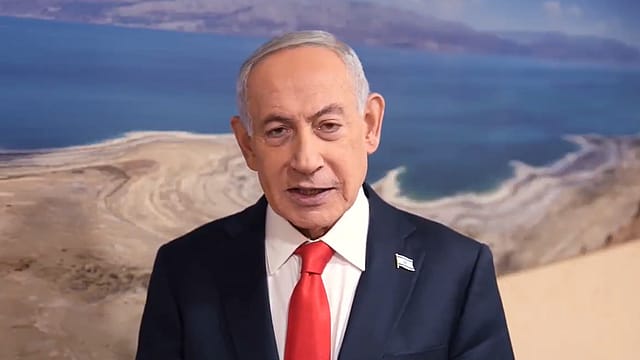
On Sunday, Israeli Prime Minister Benjamin Netanyahu announced that Israeli forces had captured Beaufort Castle in southern Lebanon.
In a televised statement, Netanyahu declared: "Last night, our heroic fighters captured the Beaufort castle. They proudly raised the flag of the State of Israel and the flag of the Golani Brigade there."
He added: "I remind you that 44 years ago, this place was a symbol of a heroic battle by our fighters, but it was also a symbol of deep division among us. Today, we returned to Beaufort differently. We returned united, determined, and stronger than ever."
Netanyahu described the operation as a significant milestone in Israel's military campaign and subsequently instructed the Israel Defense Forces (IDF) to further "expand the incursion" in Lebanon.
How Has Israel Responded to Hezbollah Activity?
On Monday, Netanyahu and Israeli Defence Minister Israel Katz directed Israeli forces to strike targets in Beirut.
Israel said the strikes were a response to what it described as repeated Hezbollah violations of the ceasefire agreement.
The move marked another escalation in tensions despite ongoing diplomatic engagement.
How Has Iran Reacted?
The conflict has also affected wider regional diplomacy, particularly ongoing US-Iran contacts.
Iranian Parliament Speaker MB Ghalibaf, who is leading Iran's negotiation team, warned that continued Israeli attacks could have consequences for diplomatic efforts involving Tehran and Washington.
According to reports, Ghalibaf said that if Israeli attacks continue, Iran will "not only halt the dialogue process" with the United States but will also "stand firmly against them".
His comments have increased concerns that the Israel-Lebanon conflict could spill over into broader regional tensions.
Why Did Trump and Netanyahu Reportedly Clash?
According to Axios, US President Donald Trump and Netanyahu engaged in a heated phone conversation on Monday after Iran threatened to suspend diplomatic engagement.
A US official cited by Axios said Trump blamed Netanyahu for escalating tensions and expressed frustration over what he viewed as an excessive Israeli military response to Hezbollah attacks.
The report states that at one point Trump yelled at Netanyahu: "What the f*** are you doing?"
The reported exchange underscores growing pressure on Washington's efforts to balance support for Israel with broader regional diplomatic objectives.
What Happens Next?
The latest round of talks represents a critical test of whether diplomacy can keep pace with rapidly evolving events on the ground.
While Israel and Lebanon have agreed in principle to pursue long-term peace, sovereignty recognition and border security arrangements, ongoing military operations, Hezbollah-related tensions, Iranian warnings and US concerns about escalation continue to threaten the fragile diplomatic process.
The outcome of the Washington talks could play a significant role in determining whether the region moves toward de-escalation or faces a deeper and more prolonged conflict.
(With inputs from ANI)