Can Dogs Smell Cancer? Bengaluru Firm Combines Canine Scent Detection With AI
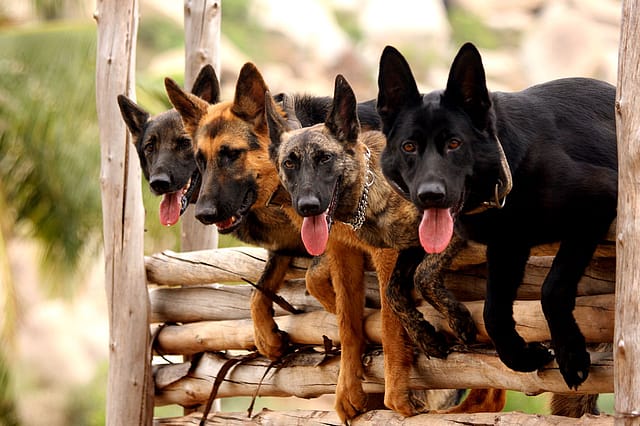
A Bengaluru-based startup is exploring a novel approach to cancer screening by combining the remarkable sense of smell of trained dogs with artificial intelligence. The company, Dognosis, believes this combination could make cancer detection faster, more affordable and more accessible, particularly in settings where conventional screening methods are expensive or difficult to access.
The technology focuses on identifying specific chemical signatures in human breath that may indicate the presence of cancer.
Why can dogs help identify diseases?
Dogs possess an extraordinary sense of smell that enables them to detect subtle changes in chemical compounds. Researchers have long studied whether dogs can identify diseases such as cancer through scent.
Dognosis is harnessing this ability by training dogs to detect volatile organic compounds (VOCs) associated with cancer. These compounds can be present in a person's breath and may change when disease develops.

The Modi Years
02 Oct 2026 - Vol 05 | Issue 40
A Nation Rebuilt
According to oncologist Dr Swaratika Majumdar, the concept offers significant potential for early detection.
"I have been working with diagnosis for the past year now, and it's a very interesting concept because it allows for an early, easy and inexpensive way of detecting cancers," she said.
"There is a 90 per cent sensitivity and specificity, which means that if someone has cancer, the dogs are able to identify it around 90 per cent of the time," she added.
How does the breath-testing process work?
The process begins when participants breathe into specially designed face masks. These masks collect VOCs present in exhaled breath.
Once collected, the samples are transported to the company's laboratory. There, trained dogs evaluate the samples inside a controlled testing environment equipped with sensors and monitoring systems.
Explaining the process, Dognosis CEO Akash Kulgod said: "That mask contains volatile organic compounds or VOCs, which essentially carry signals indicating whether a person has a disease or not. The masks are brought to our lab, where a team of trained dogs evaluates them and identifies these compounds with high accuracy."
What role does artificial intelligence play?
While dogs perform the initial scent detection, artificial intelligence helps transform their responses into measurable scientific data.
Sensors record the dogs' reactions to each sample. AI algorithms then analyse these responses to reduce subjectivity and create a more standardised detection system.
Suba, Head of Research and Development at Dognosis, said maintaining consistency is essential.
"Every sample presented here is presented in exactly the same way so that when the dog responds to it, we can record the outputs precisely. This data is then processed through AI systems trained using algorithms to convert what is usually considered subjective behaviour into objective scientific analysis," she explained.
What have the trials shown so far?
According to the company, Phase-2 trials conducted over the past two years involved nearly 1,500 participants.
Dognosis claims the study demonstrated an accuracy rate of around 90 per cent in detecting cancer through breath samples. While larger validation studies would be required before widespread adoption, the early results have generated interest among researchers and clinicians.
Highlighting the significance of the findings, Srishti, an office associate at Dognosis, said: "This is proof that cancer can be detected early just from breath. It is also proof that technology developed in India can contribute globally to early cancer detection."
How are the dogs trained for this work?
The company has partnered with international trainers to prepare the dogs for disease detection tasks.
Edo, one of the trainers associated with the project, said the work being undertaken in India is unique.
"I came to India because we are doing something very unique here. I think this is among the most special detection works being done with dogs anywhere in the world, and it is possible here in India," he said.
Could this change cancer screening in the future?
India records lakhs of cancer cases every year, with many patients diagnosed only after the disease has progressed to advanced stages. Experts believe technologies that combine biological detection systems with artificial intelligence could help improve early diagnosis rates.
If future studies continue to validate the technology's effectiveness, breath-based cancer screening could emerge as a low-cost, non-invasive tool that complements existing diagnostic methods and enables earlier medical intervention.
(With inputs from ANI)