Iran Rejects Trump's Hormuz Plan, Warns US Warships Could Be Targeted
Iran rejected US President Donald Trump's claim that negotiations could soon lead to the reopening of the Strait of Hormuz, warning that Tehran would not allow any unauthorised shipping route through the strategic waterway and would target US warships if necessary.
The sharp response came from Mohsen Rezaee, senior military adviser to Iran's Supreme Leader Ayatollah Seyyed Mojtaba Khamenei, hours after Trump unveiled what he described as a two-phase roadmap for talks with Tehran, beginning with the reopening of the Strait of Hormuz and followed by negotiations on Iran's nuclear programme.
Rejecting Trump's narrative, Rezaee accused Washington of violating an earlier understanding with Tehran and insisted that Iran alone would determine how vessels transit one of the world's busiest oil shipping lanes.

The Identity Project
11 Sep 2026 - Vol 05 | Issue 37
Amit Shah leads the mission for a national demographic correction
"We will not allow any route other than Iran's designated route to be established in the Strait of Hormuz," Rezaee said, according to Iran's Press TV.
He also alleged that the United States had accepted Iran's arrangements for the Strait under the Islamabad Memorandum of Understanding (MoU) before breaching the agreement and launching military action without first invoking its dispute-resolution mechanism.
According to Rezaee, Iran responded by inflicting "severe blows" on US forces during the subsequent fighting, demonstrating both its missile capabilities and its ability to defend the strategic waterway.
His remarks directly contradicted Trump's assessment that negotiations were progressing rapidly.
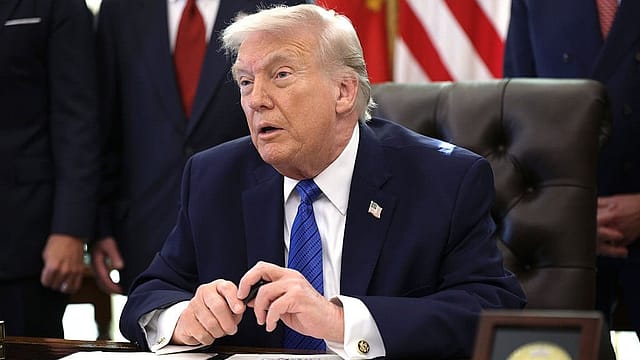
Speaking at the White House, Trump said discussions with Iran had entered their first phase, focused on reopening the Strait of Hormuz, before shifting to what he called the "denuclearisation" of Iran.
"The first phase is the opening of the Strait, the second phase will be the denuclearisation... Iran cannot have a nuclear weapon," Trump said.
Trump also described the current diplomatic engagement as Tehran's "last chance" to reach an agreement, claiming Washington had paused a planned military strike following appeals from Saudi Arabia, the United Arab Emirates, Qatar and Iran to allow diplomacy to proceed.
Tehran, however, continues to reject that account.
Iranian Foreign Ministry spokesperson Esmail Baghaei has denied that Tehran is engaged in direct or indirect negotiations with Washington, maintaining that no bilateral talks are taking place.
The latest exchange underscores the deep divide between the two sides. While Trump has projected optimism about a breakthrough on the Strait of Hormuz and Iran's nuclear programme, Tehran has publicly rejected Washington's version of events and signalled that it remains prepared to defend its control over one of the world's most strategically important maritime corridors.
(With inputs from ANI)