Trump Pauses Iran Strikes, Tehran Mocks Him as 'Fool'; Nuclear Talks Set to Begin Monday
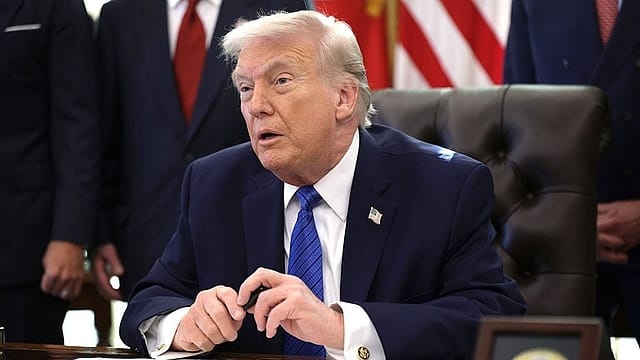
The threat of a fresh US-Iran military confrontation has given way, at least for now, to another round of diplomacy. But while US President Donald Trump has portrayed the pause as the result of a breakthrough in negotiations, Tehran is telling a very different story.
Trump said the United States has put a planned military strike on hold after what he described as progress in backchannel talks involving Iran and key Gulf nations. He also announced that indirect negotiations with Tehran will begin on Monday, saying diplomacy remains his preferred option despite insisting US forces are "locked and loaded."
Speaking to reporters aboard Air Force One, Trump said discussions with Iran would resume through intermediaries.
"We're talking to them in the form of a negotiation. It begins tomorrow afternoon... I'd rather make a deal. I'm not looking to kill people because a lot of people die. We are ready to go whenever we want."

The Identity Project
11 Sep 2026 - Vol 05 | Issue 37
Amit Shah leads the mission for a national demographic correction
Trump said Saudi Arabia, the UAE, Qatar and Iran had all played a role in persuading Washington to shelve what he described as a planned "massive attack." He claimed the discussions had made progress on two key issues: reopening the Strait of Hormuz and addressing Iran's nuclear programme.
The US President had earlier written on Truth Social that he had agreed to suspend military action because "the parameters of a deal have been agreed to," adding that the understanding would include the "Immediate, Complete, and Total OPENING OF THE HORMUZ STRAIT."
Tehran rejects Trump's claims, mocks US retreat
Iran, however, has flatly rejected Trump's version of events.
State and semi-official media carried no confirmation that Tehran had requested a pause in military action or agreed to reopen the Strait of Hormuz. Instead, Iranian outlets portrayed Washington as backing down under pressure.
The semi-official Fars News Agency mocked the US President with the headline:
"Trump the fool has run out of steam."
Mehr News Agency was equally dismissive, claiming Trump had once again retreated from "hollow threats" and was attempting to present the climbdown as a diplomatic favour.
Quoting military officials, Mehr described Trump's statements as "nothing but a new lie" and insisted Iran's armed forces remained on high alert for any military escalation.
Meanwhile, Tasnim News Agency cited reports of dwindling US missile defence stockpiles, suggesting American military constraints, rather than diplomacy, had forced Washington to reconsider an attack.
Talks restart, but mistrust runs deep
Despite the war of words, diplomatic channels appear to be active again.
Regional mediators, including Qatar, Oman and Saudi Arabia, have reportedly intensified efforts to revive negotiations after days of escalating tensions. Israeli media reported that intermediaries are attempting to restore a temporary framework to keep the Strait of Hormuz open while broader nuclear negotiations continue.
Iranian media also reported ongoing discussions with Oman on a possible mechanism to manage maritime traffic through the strategically vital waterway.
Yet both sides remain divided over the terms.
Trump maintains that meaningful progress has been made towards reopening Hormuz and curbing Iran's nuclear ambitions. Tehran insists no such agreement exists and continues to assert sovereign control over the strait.
The diplomatic push follows more than five months of military confrontation between the US, Israel and Iran, a conflict that has repeatedly threatened global energy supplies and pushed oil prices higher.
For now, missiles have been replaced by negotiators.
Whether Monday's talks produce a breakthrough or merely delay another confrontation remains the question hanging over the Middle East.
(With inputs from ANI)