Explained: Why Trump Called Off Planned Strikes on Iran and What Happens Next
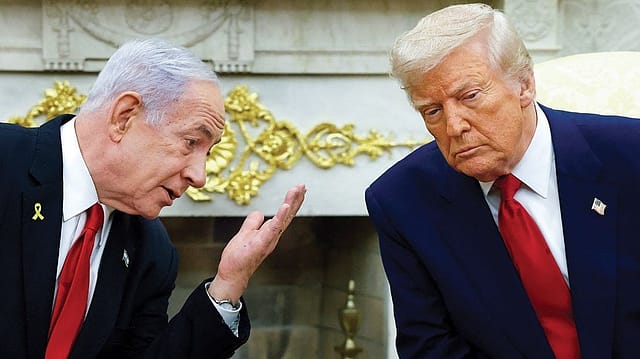
Just hours after warning Iran of possible military action, US President Donald Trump dramatically shifted course. Claiming that a framework for a deal had emerged, Trump announced he was cancelling planned attacks on Iran—for now. The proposed agreement, he said, also has Israel's backing. But with no confirmation from Tehran, the Middle East remains on edge.
What did Trump announce?
President Donald Trump said the United States has decided to cancel a planned military strike on Iran after what he described as an agreement on the "parameters" of a possible deal. In a post on Truth Social, Trump said the US would hold back its military action because Iran and several Middle Eastern countries had urged Washington to give diplomacy another chance.

Zeroing In on ECI
09 Oct 2026 - Vol 05 | Issue 41
Constitutional legitimacy versus political opportunism
Why was the attack called off?
According to Trump, the decision is conditional on Iran moving quickly to finalise a deal. He said the emerging framework rests on two key commitments: the immediate reopening of the Strait of Hormuz to global shipping and an end to what he described as Iran's nuclear threat. Trump stressed that the military option has only been paused—not abandoned.
What conditions has the US laid down?
Trump outlined two central demands. First, Iran must fully reopen the Strait of Hormuz, one of the world's most strategically important shipping lanes through which a significant share of global oil supplies passes. Second, Tehran must agree to verifiable steps to end its nuclear programme, addressing one of Washington's longest-running security concerns.
What role does Israel play?
Trump said Israel has joined the United States in supporting this diplomatic window. That is significant because Israel has consistently advocated a tougher military approach towards Iran and has repeatedly warned that it will not allow Tehran to acquire nuclear weapons.
Has Iran accepted the proposal?
Not yet. At the time of Trump's announcement, there was no official confirmation from Tehran accepting the proposed framework. In fact, only hours earlier, Iran had warned the United States against launching any new attacks, saying it would respond decisively to any military aggression. Iranian Foreign Minister Abbas Araghchi also conveyed to regional leaders that Tehran remained prepared to retaliate if attacked.
Why did Trump change his tone so suddenly?
The announcement came after several days of sharply escalating rhetoric. Trump had recently said he was "losing faith" in negotiations and warned that the US could strike Iran if talks failed. Reports also suggested Washington and Israel were examining military options against Iranian infrastructure. The latest announcement suggests diplomatic efforts may have opened a temporary path away from direct confrontation.
Why is the Strait of Hormuz so important?
The Strait of Hormuz is one of the world's most critical energy chokepoints, connecting the Persian Gulf to global markets. Any disruption to shipping through the narrow waterway can send oil prices soaring, disrupt international trade and trigger wider economic consequences far beyond the Middle East. Keeping the route open is therefore a major strategic objective for the US and its allies.
What happens next?
For now, military action has been suspended—not cancelled permanently. Everything now depends on whether Washington and Tehran can quickly convert Trump's claimed framework into a formal agreement. Until Iran publicly accepts the proposed terms and negotiations produce a binding deal, the threat of renewed military escalation remains very much alive.
(With inputs from ANI)