A “new normal” in India-US ties as the mood sours
Successive prime ministers have fully understood the importance of relations with the United States in terms of America’s role in assisting India’s rise as an economic and military power -- capable of improving the lives of millions of its poorer citizens while also being a stabilizing force in south Asia and the Asia-Pacific. US President Donald Trump’s first term marked a formalization of an important strategic thought with the reference to “Asia Pacific” being replaced by “Indo-Pacific” alongside a commitment to keep the vast maritime zone “free and open” to commerce and trade.
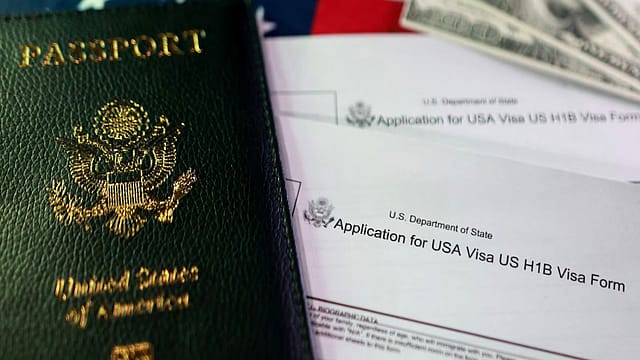
Trump’s second term could not have been more different. The latest hostile act – the decision to suspend certifications that can negatively impact hire of skilled Indians under the H1B visa scheme – and vice president J D Vance’s boorish and uncultured remarks referencing such employees as “foreign indentured workers” might be a tipping point. Keeping in mind India’s sharp response, it might be fair to say that there is now a “new normal” in India-US ties. Relations have turned contested if not adversarial.

Zeroing In on ECI
09 Oct 2026 - Vol 05 | Issue 41
Constitutional legitimacy versus political opportunism
A Downward Turn
The Indian foreign ministry response to the US decision to suspend the Permanent Labour Certification (PERM) process for Tata Consultancy Services (TCS), HCL Technologies, Wipro and Infosys as also American firms Microsoft – specifically referred to by Vance in his “indentured workers” remarks—and Adobe address the insult and the claim. The use of terminology that carries painful historical and colonial legacy connotations is deeply offensive, said external affairs ministry spokesperson Randhir Jaiswal, and pointed out that talent mobility adds value to both Indian and American economies. “While it creates opportunities for Indians, it equally helps US companies with cutting-edge talent, innovation, research, productivity, competitiveness, and job creation, besides creating shareholder wealth in the United States,” he said.
The statement that “The steps announced by the US do not advance the shared ambitions of both countries” is as direct as diplomatese can get in saying the decision to suspend PERM processes is an unfriendly act. Going forward, the Modi government can be expected to be less mindful of US sensibilities on a range of issues where India chose to indulge Washington. The past accommodation was not necessarily a sign of acquiescence but evidence of a pragmatic outlook given the gains of a wide-ranging partnership that covers defence, science, technology, space, health and agriculture besides being a very important trading partner. That might be changing.
Trump’s Declining Fortunes
The PERM action and the accompanying abrasive comments are seen to be directly related to what seems to be an increasingly tough election year for Trump. As the mid-terms approach, opinion polls reflect disappointment and anger over rising inflation that is hurting voters. The decision to purchase diesel from Russia in a stunning turnaround from a policy that aimed to punish nations who bought oil and gas from Moscow is a recognition of public discontent despite Trump’s averments that higher pump rates was a small cost to pay for disabling Iran’s nuclear programme. The Trump camp has understood that such claims are not going to wash.
The Indian policy henceforth is likely to see more internal reforms and more trade alliances with the rest of the world. It has become apparent that US is simply not a reliable partner who will demonstrate due consideration for India’s interests. These interests, of course, have never been a one-way street. India is key regional power
capable of offering an inclusive alternative vision to China’s hegemonic ambitions. It has the military presence to secure maritime routes from the Horn of Africa to the Andaman Sea and Malacca Straits. The advancement of a democratic state is an effective counter to the communist dictatorship that argues that electoral democracy is dispensable.
No Go On Trade Deal
As has been acknowledged by senior figures in the Indian and American establishments, the bilateral trade agreement (BTA) is on ice and may remain that way for a while. Commerce minister Piyush Goyal put it plainly when he said the circumstances have changed since the US supreme court held Trump’s tariffs as illegal and India will sign the BTA only when offered a rate that provides it an advantage over its rivals. Meanwhile, the Modi government is pushing ahead with implementation of trade deals signed with the European Union (EU) and New Zealand while pursuing others with countries like Chile and Mexico.
Trump is coming across as increasingly enfeebled and incoherent. The Russian revelation that neither Trump nor Vladimir Putin were keen to end their recent conversation does not show the US leader in good light. Trump’s meeting with Chinese leader Xi Jinping and his diesel deal with Russia convey the distinct impression that the two autocrats had the better of the encounters. Meanwhile Trump’s ramblings on social media and the running commentary he offers during interactions with the press deepen the impression of a floundering leader. The war on Iran might be his biggest mistake that has led Trump to seek terms of accommodation with Putin and announce an “energy truce” between Russia and Ukraine.
Words and Deeds
The bad blood over the PERM suspensions comes at a time when the US air force F 35s participated in Operation Tarang, an air combat exercise with seven foreign air forces taking part, and American pilots praised the event’s complexity, planning and preparation. Ironically enough, cooperation between US and Indian militaries has grown strongly in the past decade with US commanders willingly acknowledging capabilities India brings to the table. Similarly, cooperation in several other areas including the successful launch of an Indian astronaut demonstrate the potential of
cooperation. But Trump’s falling trajectory – he has become the butt of evening television roasts which never a good sign – have all but upended India-US ties.