India-US drug crackdown: New Delhi meeting targets drug cartels and synthetic drugs
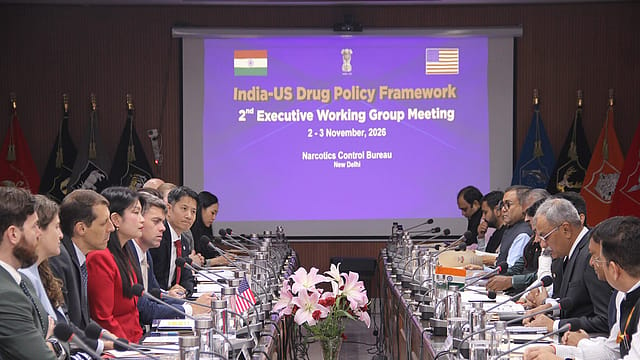
The second India-US Drug Policy Executive Working Group meeting was hosted by the Narcotics Control Bureau (NCB) under the Ministry of Home Affairs on November 2 and 3. The discussions focused on intelligence sharing, coordinated investigations, controlling chemicals used in illegal drug production and preventing the misuse of pharmaceutical supply chains.
India-US drug policy meeting focuses on dismantling entire trafficking networks
The Indian delegation was led by NCB Director General Anurag Garg, while the US team was headed by Debbie Seguin, Acting Deputy Director of the White House Office of National Drug Control Policy (ONDCP).
According to the official release, both sides reviewed the progress made since their first Executive Working Group meeting in Washington DC in January 2026. They also discussed changing trafficking patterns and emerging threats, particularly the diversion of precursor chemicals and the growing trade in synthetic drugs.

The Era of Forever Wars
30 Oct 2026 - Vol 05 | Issue 44
Coping with an explosive Middle East
The emphasis was on moving beyond individual arrests and drug seizures to identifying the people and infrastructure that keep trafficking networks running. This includes financiers, suppliers, intermediaries and those responsible for transportation and distribution.
India's 2026-2029 drug control roadmap puts networks under the scanner
Garg outlined India's Vision Document on Narcotics Control for 2026-2029, developed under the guidance of Prime Minister Narendra Modi and the leadership of Union Home Minister Amit Shah.
The roadmap marks a shift towards intelligence-led, network-centric investigations. Instead of concentrating only on people caught carrying drugs, agencies are expected to pursue the larger criminal ecosystem, including its financial backers and international connections.
The Ministry of Home Affairs' vision document identifies four broad priorities: intelligence-led enforcement, control of precursor chemicals and synthetic drugs, demand and harm reduction, and stronger institutional coordination. It also envisages better use of technology and inter-agency intelligence to track organised trafficking.
The government has framed the wider initiative around the goal of a drug-free India by 2029.
Why synthetic drugs and precursor chemicals are a major concern
A significant part of the India-US discussions centred on precursor chemicals — substances that can have legitimate industrial or pharmaceutical uses but may also be diverted to manufacture illegal drugs.
Controlling these chemicals requires cooperation beyond conventional policing. Pharmaceutical manufacturers, chemical suppliers, online marketplaces and transport companies can all become important points of intervention.
ONDCP Director Sara Carter underlined the importance of the partnership, saying that criminal networks operate like multinational logistics businesses and that governments must work across borders to secure the commercial supply chains they exploit.
US Ambassador to India Sergio Gor also highlighted joint efforts to restrict access to illicit precursor chemicals and disrupt trafficking operations, describing coordination between the two countries' law enforcement agencies as an important part of protecting communities.
Operation MedMax and Operation WIPE: What India and the US discussed
The delegations welcomed operational and regulatory initiatives, including India's Operation MedMax and Operation WIPE.
Operation MedMax exposed a transnational pharmaceutical-drug trafficking network in 2025. According to reports on the NCB investigation, the network used a call centre in Karnataka and business-to-business platforms to facilitate the movement of tramadol and other psychotropic substances to overseas markets.
Operation WIPE, launched by the NCB in April 2026, targets illegal online listings of pharmaceutical drugs regulated under the Narcotic Drugs and Psychotropic Substances Act. The bureau has also worked with online platforms to identify and remove suspicious listings.
India's Voluntary Code of Conduct to prevent the diversion of precursor chemicals was another initiative discussed at the meeting.
What happens next in India-US counter-narcotics cooperation?
Both countries agreed to continue exchanging intelligence, sharing enforcement practices and coordinating responses to emerging drug threats. Demand reduction, prevention and rehabilitation were also part of the discussions, indicating that the partnership is not limited to seizures and criminal investigations.
The next challenge will be turning these commitments into sustained action. With trafficking networks operating across borders and exploiting legitimate trade channels, cooperation between agencies, regulators and private-sector players will be crucial.
For India and the US, the objective is clear: disrupt the supply chains, financial networks and international connections that allow the illegal drug trade to survive.
(With inputs from ANI)