Why Is Russia's Nuclear Icebreaker Lenin Still So Important? And Why Is India Interested in the Arctic Route?
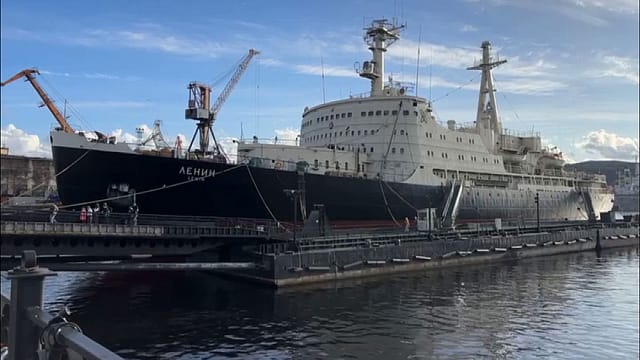
It stopped sailing decades ago. Yet it remains one of the most important ships ever built.
The Lenin, the world's first nuclear-powered surface vessel, transformed Arctic navigation when it entered service in 1959. Today, permanently moored as a museum in Murmansk, it has become a symbol of Russia's long-term ambitions in the Arctic.
Its legacy has taken on fresh relevance as melting Arctic ice opens new shipping lanes and countries race to secure influence in the region. India, too, has begun looking north, seeing the Northern Sea Route as a potential trade corridor linking Asia and Europe.
Here's why the Lenin still matters.
Rise of the Pivotal Power
18 Sep 2026 - Vol 05 | Issue 38
The BRICS declaration is a strategic victory for Modi
What is the Lenin icebreaker?
The Lenin was the world's first civilian nuclear-powered surface ship. Built by the Soviet Union, it entered service in December 1959 and pioneered the use of nuclear propulsion for Arctic navigation. During its three decades in service, the vessel escorted thousands of commercial ships through some of the world's most hostile waters before being retired in 1989. Today, it serves as a floating museum in the Russian port city of Murmansk.
Why was the Lenin such a breakthrough?
Unlike conventional icebreakers, which had to refuel regularly, the Lenin's nuclear reactors allowed it to remain at sea for extended periods, making year-round Arctic operations far more practical. According to Russia's state nuclear operator Rosatom, the ship participated in 26 Arctic navigation seasons, assisted 3,741 vessels, and travelled more than 654,000 nautical miles during its operational life. Its success laid the foundation for Russia's modern fleet of nuclear-powered icebreakers.
What is the Northern Sea Route?
The Northern Sea Route (NSR) stretches along Russia's Arctic coastline, connecting the Atlantic and Pacific oceans through Arctic waters. For ships travelling between Europe and Asia, the route can be considerably shorter than the traditional journey through the Suez Canal, potentially reducing travel time, fuel costs and shipping expenses during navigable months. As climate change gradually reduces Arctic sea ice, the route has become increasingly attractive for global trade.
Why is Russia investing so heavily in it?
Russia considers the Arctic central to its economic and geopolitical strategy. Moscow has invested heavily in ports, logistics infrastructure and the world's largest fleet of nuclear-powered icebreakers to keep the Northern Sea Route operational for much of the year. The goal is to establish the NSR as a major international shipping corridor while strengthening Russia's presence across the Arctic.
Why is India interested in the Northern Sea Route?
India sees the Arctic as both an economic and strategic opportunity. In 2024, India and Russia established a joint working group on the Northern Sea Route to deepen cooperation in shipping, logistics and maritime connectivity. The two countries have since held multiple rounds of discussions on improving transport links and exploring new trade opportunities through the Arctic. For India, the route could eventually diversify global shipping options, improve access to northern Europe and strengthen long-term energy and trade partnerships with Russia.
Does the Arctic route replace the Suez Canal?
Not at present. Although the Northern Sea Route can shorten voyages, it still faces significant challenges, including harsh weather, seasonal ice, limited port infrastructure and high operating costs. Analysts say it is more likely to complement existing global shipping routes rather than replace them in the foreseeable future.
Why does the Lenin still matter today?
The Lenin is much more than a museum piece. It represents the beginning of civilian nuclear-powered navigation and the technological breakthrough that made modern Arctic shipping possible. More importantly, it offers a glimpse into the future of global trade, where the Arctic is emerging as one of the world's newest strategic frontiers. As India and Russia deepen cooperation on the Northern Sea Route, the ship that pioneered Arctic navigation more than 65 years ago has once again found itself at the centre of an evolving geopolitical story.
(With inputs from ANI)