Celine Dion’s Condition Explained: Is a Breakthrough Cure for Stiff Person Syndrome on the Horizon?
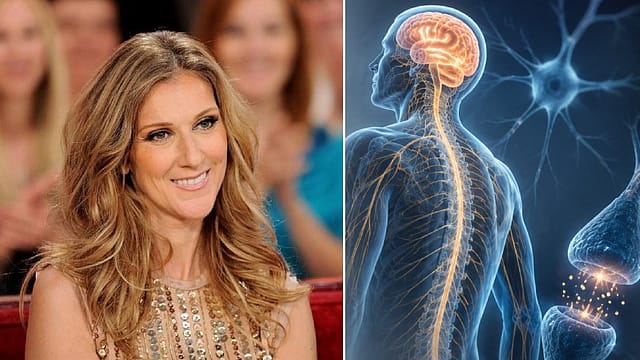
A rare disorder long confined to the margins of medical science is now drawing renewed attention, not just because of its debilitating nature but due to early signs of a possible breakthrough therapy.
Stiff Person Syndrome (SPS), the condition that singer Céline Dion revealed she was living with since 2022, remains a progressive and complex neurological illness, but new research is offering cautious optimism, as per a LadBible report.
Stiff Person Syndrome, or SPS, is a rare autoimmune neurological disorder marked by severe muscle stiffness, rigidity, and painful spasms.

The Modi Years
02 Oct 2026 - Vol 05 | Issue 40
A Nation Rebuilt
The condition primarily affects the trunk, abdomen, and limbs, significantly impairing mobility.
According to the US government’s National Institute of Neurological Disorders and Stroke, patients may also experience heightened sensitivity to noise, touch, and emotional stress, all of which can trigger spasms.
In advanced cases, the disorder can interfere with breathing, swallowing, and speech.
How Does Stiff Person Syndrome Progress and Affect the Body?
Medical experts note that SPS can manifest in varying degrees. For some, it may remain confined to a specific part of the body, while in others it evolves into a widespread condition involving the brain, brainstem, and spinal cord.
The disease is progressive, meaning symptoms worsen over time, making long-term management a challenge.
Amid this backdrop, research efforts have received a boost from financial backing. Two years after going public with her diagnosis, the Céline Dion Foundation committed $2 million towards advancing studies into the condition.
That funding has contributed to what doctors now describe as a potentially transformative development.
Dr Amanda Piquet, who is treating Dion, told WGNTV that the funding has helped lead to the discovery of a “potential therapeutic that can be revolutionary for this disease” centred on CAR T-cell therapy.
How Is CAR T-Cell Therapy Being Adapted to Treat Stiff Person Syndrome?
Traditionally used in cancer treatment, this approach is now being adapted for SPS.
The therapy involves extracting a patient’s T-cells and modifying them in a laboratory to target harmful B-cells.
T cells and B cells are the primary white blood cells (called lymphocytes) that make up the human body's adaptive immune system.
They are responsible for recognizing specific germs (like bacteria and viruses), destroying them, and remembering them for long-term protection.
Explaining the process, Piquet said, “When you get those T-cells back, those T-cells are seek and destroy, so they deeply deplete your misbehaving B-cells and then once they do their job, your B-cells come back nice and healthy and basically reset the immune system, so you hopefully have a long-lasting, disease-free, therapy-free, in the end stiff-person syndrome.”
Findings from an early trial were presented at the 2026 American Academy of Neurology Annual Meeting in April.
The study involved 26 adults diagnosed with SPS. Around four months after undergoing the therapy, all participants showed improvements in walking speed.
Notably, eight out of 12 patients who had relied on walking aids no longer needed them.
Piquet highlighted the scale of improvement, saying, “Sixteen weeks after the therapy, no walker, just walking down the hallway. We saw improvements by 46 percent in patients.” She added, “So just incredible.”
While the research remains at an early stage, the results have been described as promising.