Trump pauses wider Iran strike plans after Pentagon warns of missile shortages: Report
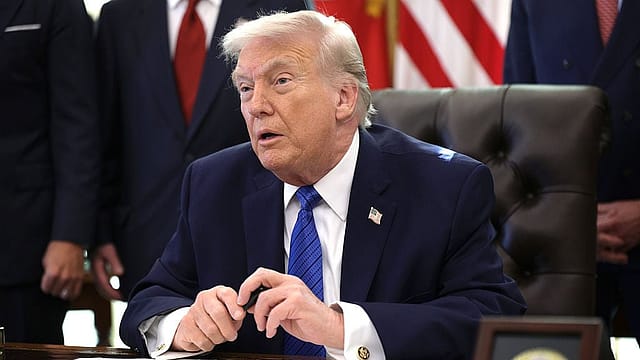
US President Donald Trump has reportedly put on hold plans for a broader military offensive against Iran after senior defence officials warned that expanding the conflict could significantly deplete the Pentagon's air defence missile inventory, increasing risks for American troops and regional allies.
Pentagon warns of interceptor shortages as escalation plans reviewed
According to The New York Times, senior military leaders cautioned that a wider campaign against Iran could dangerously reduce supplies of Patriot antimissile interceptors deployed across the Middle East, potentially exposing US forces, Gulf allies and strategic installations to retaliatory attacks.
The report said internal discussions among senior administration officials focused on shrinking inventories of Patriot interceptors and other air defence systems. Concerns intensified after three US service members were killed in Jordan when an enemy ballistic missile penetrated American defences during a barrage of Iranian drones and missiles, a senior US official told The New York Times.

Zeroing In on ECI
09 Oct 2026 - Vol 05 | Issue 41
Constitutional legitimacy versus political opportunism
General Dan Caine, Chairman of the US Joint Chiefs of Staff, reportedly advised that while large-scale combat operations against Iran remained militarily feasible, they would place severe strain on interceptor supplies allocated to US Central Command.
The report also noted that the Pentagon has deployed additional military personnel, weapons and logistical support to the Middle East in preparation for possible escalation. US forces have reportedly damaged or destroyed railway bridges used by civilians that also serve as transport routes for Iranian military supplies to the southern coast near the Strait of Hormuz.
Military planners also examined options to expand strikes on Iran's critical infrastructure, including energy facilities, transport networks and the heavily fortified underground nuclear facility at Pickaxe Mountain. However, the report said depleted weapon inventories have limited the Pentagon's ability to sustain a prolonged campaign.
According to The New York Times, the Defence Department had already used more than 1,200 Patriot interceptor missiles by late April, each costing more than USD 4 million, leaving inventories at concerning levels. Military officials cited by the newspaper said stockpiles have deteriorated further since then.
White House reiterates diplomatic preference despite military readiness
Addressing the administration's approach, White House Communications Director Steven Cheung said the president remains committed to diplomacy while keeping military options available.
"The president has always been consistent in saying he prefers a diplomatic solution, but he continues to retain all options if Iran continues terrorist activities in the Strait of Hormuz or against allies."
Cheung further added, "it would be wise for Iran to work towards a negotiated deal; otherwise, they know what will happen."
Although Trump publicly declared on Friday that US forces were "locked and loaded" and "ready to go," The New York Times reported that he decided against authorising a broader offensive after a high-level strategy meeting with senior cabinet officials and advisers.
The newspaper said military planners had prepared options for a multi-phase bombing campaign targeting Iranian coastal radar installations, anti-ship missile batteries and naval patrol craft linked to disruptions in the Strait of Hormuz.
Shortly before pausing the operation, Trump told Axios that he was considering "a massive attack" that would be "bigger than ever before."
Sanctions tightened as overnight strikes pause
According to The New York Times, senior administration officials, including Jared Kushner, advocated a lower-risk strategy centred on sustained diplomatic engagement and economic pressure rather than immediate military escalation.
In line with that approach, the US Treasury Department announced fresh sanctions targeting nine companies and four individuals connected to the financial network of sanctioned Iranian businessman Babak Zanjani.
Meanwhile, Iran reported no overnight American bombardment on Saturday, marking the first interruption after 13 consecutive nights of US military strikes. Despite the temporary pause, tensions across the region remain high following the escalation around the Strait of Hormuz.
(With inputs from ANI)