The Globetrotter: The Autumn of Europe’s Discontent
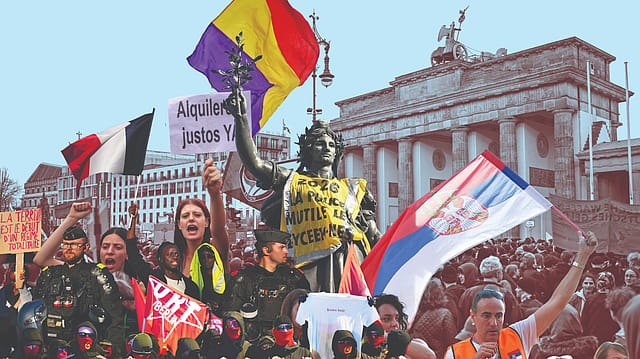
It may be tempting to treat the sixth-former with a placard, the black-clad militant with a firecracker and the opportunist with a crowbar as one and the same. But they only share pavements, not purposes. From Paris to Madrid, Milan to Lisbon, Belgrade to Berlin, young Europeans are on the streets together, and watching one another.
The Genuine Protesters
Their grievances are concrete: crumbling schools, empty teaching posts, rents that outrun any graduate salary, and jobs that AI may soon erase. In Germany, there is also the shadow of renewed conscription. Their demands are modest: repairs, affordable homes, and a future. These kids are not insurrectionists. They are a generation auditing a social contract it was promised would pay out.
Instigators and Beneficiaries
Ultra-left groups have embedded themselves in the marches, most visibly in France, converting grievance into violent spectacle. The looters have drifted in behind them, wanting trainers rather than transformation. Anyone breaking a window is working for the other side and every burning bin is an advertisement for those selling order. Marine Le Pen need only watch. In Germany, shopfronts were boarded up before a single march began. That expectation of disorder serves the hard right.
An Obsolete Welfare Model
Western Europe’s welfare settlement was designed for a different demography and a different economy. It protects pensions and property while the young are left with precarious contracts, costly tuition and unaffordable housing. Governments find money for rearmament but not for roofs on classrooms. The model has not collapsed but it has quietly stopped including those arriving at its door. Where does that leave the youth of immigrant background?
Serbia’s Counterexample
Serbia shows the alternative. Its students sustained a peaceful, disciplined movement for more than two years and helped electorally defeat a long-entrenched leader, Aleksandar Vucic. Their persistence converted public fury into votes. Lesson? A movement that stays disciplined writes its own story. The one that fractures lets the state write it.
Shared Grammar, Not Programme
If there is a connection, it is of a kind. There is no command centre but a lot of imitation. Hashtags and slogans can cross borders in hours. Barcelona’s pupils echoed France’s outraged lycéens, and German organisers urged each other to strike as French youth had. If TikTok and Instagram supply the logistics, a shared sense of being unheard supplies the motive. This is a common grammar, not a common programme.
The Legitimacy Deficit
The deepest problem is not on the pavement but in the parliaments of Europe. When a continent’s young, left or right, peaceful or violent, all conclude that the ballot box will not deliver, the mainstream has a crisis of authority. Tear gas and “you break it, you pay” laws may restore order. But they cannot restore belief. Only governments that listen before the next election will. And even if they listen, they may not be able to fix things.