Peace Offer, Warning Shots and War Games: Why the Korean Peninsula is Heating Up Again
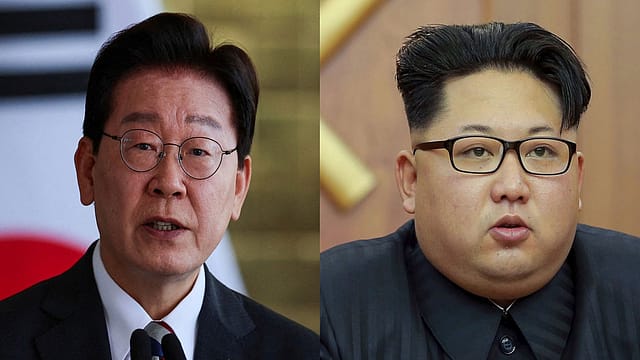
One president offered peace. Soldiers crossed the border. Warning shots rang out. War games were days away.
South Korean President Lee Jae Myung used one of the peninsula’s most symbolic anniversaries to ask North Korea to restart dialogue, formally end the Korean War and replace a fragile armistice with a lasting peace regime.
Pyongyang did not respond. Instead, North Korean state media devoted its coverage to domestic celebrations and Kim Jong Un’s deepening relationship with Russian President Vladimir Putin. The silence came as South Korea confirmed that its troops had fired warning shots after North Korean soldiers briefly crossed the inter-Korean boundary.
Look Who's Talking Regime Change
23 Oct 2026 - Vol 05 | Issue 43
Now, approximately 18,000 South Korean troops are preparing to join the United States in an 11-day military exercise that Pyongyang has condemned as preparation for invasion. Here is why tensions are rising even as Seoul talks about peace.
What exactly has South Korea proposed?
Lee wants the two Koreas to resume direct dialogue and begin replacing the 1953 armistice with a permanent peace arrangement. Speaking on August 15, the 81st anniversary of Korea’s liberation from Japanese colonial rule, Lee said the neighbours needed safeguards against accidental conflict and should pursue “peaceful coexistence and mutual growth”. His proposal also included discussions on curbing North Korea’s nuclear programme. Lee has adopted a more conciliatory approach towards Pyongyang than his impeached predecessor, Yoon Suk Yeol. His government has emphasised tension reduction while retaining denuclearisation as a long-term objective. “The two Koreas need safeguards to prevent conflict,” Lee said, according to Reuters.
Did North Korea reject the offer?
Pyongyang has not formally rejected this particular proposal. It has ignored it. North Korea’s official Korean Central News Agency and the ruling party newspaper Rodong Sinmun carried no mention of Lee’s speech on Sunday morning, according to Yonhap News Agency. That silence is politically significant because North Korea has repeatedly dismissed previous offers from Lee’s government and abandoned the idea that reunification with the South remains a national goal. Kim Jong Un has redefined South Korea as a hostile state rather than a partner in eventual reunification. Under that doctrine, Seoul’s language of inter-Korean reconciliation may no longer have the meaning it once carried in Pyongyang. Silence, therefore, allows Kim to deny Lee the legitimacy of a direct response while keeping his own options open.
Why has the Korean War never officially ended?
The fighting stopped in 1953 with an armistice, not a peace treaty. An armistice suspends military operations. It does not resolve the underlying conflict or formally establish peace. The two Koreas have consequently remained technically at war for more than seven decades. The armistice created the Demilitarized Zone, or DMZ, a roughly 250-kilometre buffer separating North and South Korea. Despite its name, the surrounding frontier is among the most heavily fortified places in the world. Turning the armistice into a peace regime would also require more than a handshake between Seoul and Pyongyang. The original agreement involved North Korea, China and the US-led United Nations Command. South Korea did not sign it. Any durable settlement would therefore need to address the roles of Washington and Beijing, the presence of American troops in South Korea, security guarantees and North Korea’s nuclear arsenal.
What happened at the border?
Multiple North Korean soldiers crossed the Military Demarcation Line in the eastern section of the DMZ sometime last week, according to South Korean military sources. South Korean forces issued warnings and fired warning shots. The North Korean soldiers returned to their side, and no further unusual activity was detected. The soldiers were probably conducting a patrol when they crossed the line, suggesting the breach may not have been deliberate, according to Reuters. It was the first reported MDL violation by North Korean troops this year. Similar incidents occurred in 2024 and 2025, sometimes while North Korean soldiers were laying mines, erecting barriers or carrying out other work near the poorly marked boundary.
If the crossing may have been accidental, why does it matter?
Because a minor mistake at the DMZ can quickly become a military crisis. Soldiers from both countries operate in close proximity, often armed and under orders to respond rapidly to a possible incursion. Poor visibility, dense vegetation and ambiguous markings can make sections of the boundary difficult to identify. The latest incident ended without casualties because the North Korean soldiers withdrew after the warning shots. A delayed retreat, a misunderstood order or return fire could have produced a very different outcome. The timing makes the breach particularly sensitive. It occurred as North Korea was launching missiles, South Korea was offering talks and Seoul and Washington were preparing for major military drills.
What are the Ulchi Freedom Shield exercises?
Ulchi Freedom Shield is an annual US-South Korea exercise designed to test their ability to respond to a North Korean attack and other security emergencies. The 2026 drills will run from August 17 to 27 and involve around 18,000 South Korean troops. They will include live, virtual and computer-simulated training across several military domains. This year’s exercises will also rehearse responses to drones, cyberattacks and disruption of GPS systems, reflecting North Korea’s expanding capabilities and lessons its troops may be gaining while supporting Russia’s war against Ukraine. Washington and Seoul describe the exercise as defensive and essential for maintaining military readiness. The Associated Press reports that the drills have been adapted to address North Korea’s changing battlefield capabilities.
Why does North Korea call the drills an invasion rehearsal?
Pyongyang views the scale, weaponry and operational planning involved as preparation for war and potentially for removing its government. North Korea’s Foreign Ministry has described this year’s exercises as even more provocative than the previous edition. It has also accused the US, South Korea and Japan of developing what it calls a “nuclear alliance”. Pyongyang has vowed to strengthen its nuclear deterrent in response, according to Reuters. North Korea has historically used allied exercises to justify missile launches, artillery drills and other demonstrations of force. The recurring cycle is familiar: Seoul and Washington hold exercises in response to the North Korean threat, while Pyongyang cites those exercises as justification for expanding its arsenal. Each side presents its actions as defensive. Each sees the other’s as preparation for attack.
Has North Korea already responded militarily?
North Korea has conducted two suspected ballistic missile launches in less than a week. On August 11, it launched a missile from the Wonsan area towards the sea between the Korean Peninsula and Japan. The projectile travelled more than 700 kilometres, according to regional officials. It followed another launch from the same area on August 6. The August 11 launch was North Korea’s 11th suspected missile test of 2026, Reuters reported. South Korea, Japan and the US condemned the test. Pyongyang has not said whether the launch was explicitly ordered in response to Ulchi Freedom Shield, but its timing sent an unmistakable signal ahead of the exercise.
Why is North Korea moving closer to Russia?
Russia offers Pyongyang diplomatic protection, economic support, military cooperation and access to battlefield experience. North Korea has supplied Moscow with troops and weapons for its war against Ukraine. In return, Seoul and its allies fear Pyongyang could receive money, energy, military technology or assistance for its missile and satellite programmes. On Liberation Day, Kim Jong Un exchanged messages with Putin and celebrated what he described as a shared history of struggle and friendship. The Russian training ship Pallada also arrived at Wonsan for a goodwill visit. The contrast was striking. While Seoul proposed dialogue, Pyongyang publicly highlighted its relationship with Moscow. North Korea’s involvement in Ukraine represents its most significant participation in an overseas conflict since the Korean War, according to Reuters.
Does Lee’s peace proposal have any realistic chance?
Not immediately. Lee can reduce friction, reopen communication channels and offer humanitarian or economic engagement. He cannot independently deliver many of the concessions North Korea may seek, particularly sanctions relief, security guarantees and changes to the US military presence. Pyongyang may also believe its nuclear arsenal, Russian partnership and pressure tactics provide greater leverage than dialogue with Seoul. That does not make Lee’s outreach meaningless. Restoring military hotlines and creating mechanisms to manage border incidents could reduce the risk of an accidental clash even without a comprehensive peace agreement. The first objective may therefore be crisis control rather than a historic treaty.
What happens next?
The immediate danger period begins with Ulchi Freedom Shield. North Korea could respond with more missile launches, artillery exercises, aggressive rhetoric or military movements near the border. Seoul and Washington will closely watch for signs that Pyongyang is preparing a larger provocation. At the same time, Lee must keep his offer of dialogue alive without appearing weak in the face of missile tests and border breaches. That is the contradiction at the heart of the peninsula. South Korea is asking how to end a war that stopped 73 years ago. North Korea is preparing for the possibility that it could begin again.
(With inputs from ANI)