'Lula’s win is a solid bulwark against the far-right tide': Dr Thiago Pinto Barbosa
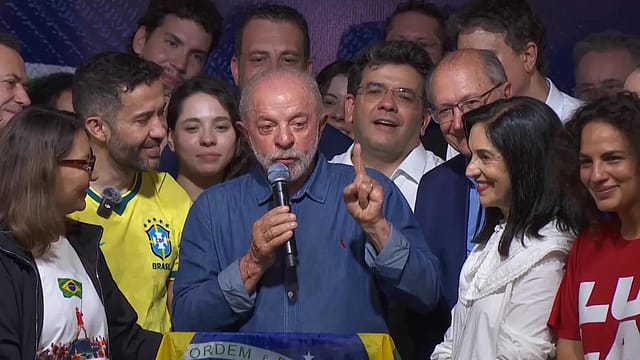
Brazil-born anthropologist Thiago Pinto Barbosa, who is based at Leipzig University, Germany, tells Open about Luiz Inácio Lula da Silva’s historic fourth presidential term in Brazil, won by defeating his far-right rival and Trump loyalist, and what this triumph means for Latin America and the rest of the world. Born in Montes Claros and raised in Belo Horizonte, Brazil, Barbosa is an alumnus of the University of Bayreuth, Germany, where he earned his PhD, as well as Freie Universität Berlin and Universidade Federal de Minas Gerais, Brazil. He is the co-author of ‘Iru: The Remarkable Life of Irawati Karve’ with writer Urmilla Deshpande. He tells Open in an interview that Lula’s achievements in poverty alleviation and the reduction of social inequality are unquestionable. Edited excerpt:
How do you feel about Lula's win in Brazil's presidential elections, in which his right-wing contender, a Trump loyalist, suffered a major setback? How significant is this outcome for Latin America and the rest of the world?
It is important to say that Lula's contender, Flavio Bolsonaro, is not simply a right-wing politician but an ultra-right one. He is the son of former president Jair Bolsonaro, who has been sentenced to 27 years for planning a coup and the murder of Lula after the 2022 elections. Flavio's campaign mobilized eugenicist, populist promises, such as a "chemical castration penalty for paedophiles" [sic], and followed his father's lead on guns and on disinvestment in public health, social welfare, and environmental law enforcement. He also promised Trump preferential treatment for US firms in the concession of mining rights. This is a huge promise, given that Brazil holds the world's largest niobium reserves (roughly 95% of the global total) and the second-largest reserves of rare earth elements and natural graphite, all of which are key to the war and tech industries. The victory of the Workers' Party candidate is significant in many ways. Amid a current wave of far-right presidential wins in South America (Chile, Argentina, Peru, Colombia, Ecuador…), Lula's win is a solid bulwark against that tide. Perhaps most important is what it means for the protection of the environment and the Amazon rainforest. Jair Bolsonaro's government (2019–2022) was intentionally disastrous for the environment, and, like his father, Flavio is a climate change denialist. Lula's last government drastically reduced deforestation. The Amazon is of planetary importance for the climate.

Look Who's Talking Regime Change
23 Oct 2026 - Vol 05 | Issue 43
Lula at this age is no longer the leader he once was. Perhaps his popularity has taken a beating, in relative terms, over the decades. What factors do you think influenced the outcome of this election? What does this result mean for the Global South and the BRICS bloc?
Compared to his first mandates in the 2000s, Lula's current government has seen a decline in popularity, perhaps due to the widespread perception of accumulated food-price inflation (a global problem since the war in Ukraine), which peaked under the previous Bolsonaro government. This may have been the key factor behind such a narrow win (less than 2%). Bolsonaro's campaign was boosted by the support of certain elite groups, to whom he promised austerity and a market-pleasing turn, as well as by large-scale agriculturalists and neo-Pentecostal (evangelical) churches. This made him the most-voted candidate in the first round. It is also unclear how the current media regime may have benefited Bolsonaro; there have been many accusations of unfavourable treatment of Lula's content on Meta-owned platforms such as Instagram. Still, the massive popular mobilization in favour of Lula in the two weeks between the first and second rounds was truly impressive and ultimately decisive. This was the election with the largest turnout in Brazilian history. For the Global South, this means the continuation of an important voice for multilateralism and for non-alignment with Trump's politics. Bolsonaro had said he would question whether Brazil should remain in BRICS, but there is no doubt that Lula's government will continue to consolidate the bloc.
What are the key challenges now for Lula?
Brazilian elections have never been so polarised, and a large share of parliamentary seats went to Bolsonaro's party. The elected president may therefore face governability challenges. Lula will also have to deal with the financial market's frustration over public expenditure, especially if the Brazilian economy fails to maintain its forecast growth rates. As Mexico and Brazil are the last significant strongholds of centre-left politics in Latin America, Lula's diplomacy may also face challenges across the continent. And Brazil's old challenges remain: the environment, Indigenous rights, landlessness, security, and so on.
How do you look back at the turbulent yet magnificent political career of Lula, initially a reluctant politician and family man who transformed himself into one of the most popular political leaders of Latin America, hard-selling socialism after the fall of the Berlin Wall, and who still succeeded after a series of setbacks thanks to his extremely pragmatic ways?
Lula's career is absolutely impressive, from his start in factory trade unionism to his leadership of the national workers' movement in the late 1980s. Maintaining a centre-left orientation while governing a country as unequal as Brazil, where conservative values and traditional elites hold so much power, is no easy task. Lula won this election a few days before his 81st birthday, and these will most probably be his last four years in elected office. His government's achievements in poverty alleviation and the reduction of social inequality are unquestionable. This will be his most remarkable legacy.