UP Polls 2027: Owaisi Heads to Saharanpur as Chandrashekhar Azad Eyes November 26 Show of Strength
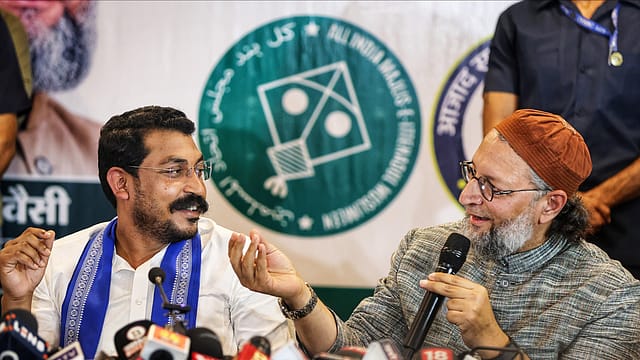
Lunch at Chandrashekhar Azad’s home in Chhutmalpur is the first item on Asaduddin Owaisi’s Saharanpur itinerary on Saturday. Five days later, the two leaders plan to stand together at a rally in Lucknow and ask voters across Uttar Pradesh to back Azad for chief minister. Between those engagements lies the question facing their new alliance: can two parties with pockets of influence in India’s most populous state put up a credible fight across all 403 Assembly seats?
Owaisi, chief of the All India Majlis-e-Ittehadul Muslimeen (AIMIM), is due to hold political discussions with Azad over lunch. Workers of Azad’s party, the Azad Samaj Party-Kanshiram, are expected to receive him in Chhutmalpur. His proposed programme also includes a discussion with the district administration on an issue concerning a mosque and a visit to a madrasa.

The Wealth Issue 2026
06 Nov 2026 - Vol 05 | Issue 45
Portraits of Dreamers and Doers under 35
Saharanpur gives the two parties an early opportunity to work together on familiar ground for Azad. Western Uttar Pradesh has sizeable Dalit and Muslim populations and a long association with the Bahujan movement. A visit involving local party workers, residents and district officials offers a different measure of the partnership from the one on display a week ago, when Owaisi addressed supporters from a stage in Meerut.
From a Lucknow announcement to a western UP campaign
Owaisi and Azad announced the formation of the Samajik Parivartan Morcha in Lucknow on November 12. They settled two questions at the outset. Azad would be the alliance’s candidate for chief minister, and the parties would together contest all 403 constituencies in the 2027 Assembly elections. They left the door open for others to join.
Two days later, at Meerut’s Nauchandi Grounds, Owaisi set the immediate objective of preventing the BJP from returning to power in Uttar Pradesh. He also spoke of taking the fight to the BJP in the 2029 Lok Sabha elections. For an alliance barely two days old at the time, the more revealing part of his speech was directed at parties already campaigning to unseat the state government.
Owaisi invited the Samajwadi Party and the Congress to join the Morcha even as he challenged established opposition parties over their record of representing Muslims and other marginalised communities. He urged voters to back the new front’s own candidates and spoke about unemployment, inflation, farmers’ concerns and constitutional rights.

That invitation leaves Akhilesh Yadav and the Congress with a pointed question. The Morcha is willing to work with them, but it has already named the leader it wants to see in the chief minister’s office. How much room the parties have to negotiate could become clearer once they begin discussing individual seats.
What Owaisi and Azad each bring to the contest
Azad’s nomination gives voters a clear picture of who would lead a Morcha government. For a party seeking Dalit support, putting a Dalit leader forward for the state’s highest office also gives its argument about representation a concrete meaning. Azad is asking voters to judge him as a prospective chief minister, a considerably bigger test than commanding a following in his existing strongholds.
Owaisi has a different stake in the partnership. AIMIM has yet to establish itself as a major Assembly force in Uttar Pradesh. An alliance with Azad gives the party a chance to demonstrate that it can help elect candidates from a partner’s ranks as well as its own. That ability will matter wherever the two parties agree to field a single candidate and ask both sets of supporters to back the choice.
Western Uttar Pradesh is an obvious place to test that proposition. The size of its Dalit and Muslim populations explains the interest in the partnership, but the preferences of both communities vary by constituency. A voter who welcomes the choice of Azad for chief minister may still prefer another party’s local candidate. Equally, a strong Morcha nominee could attract voters who have previously backed different parties. The seat-by-seat decisions will give a better indication of the alliance’s prospects than statewide population figures.
Where Akhilesh Yadav and Mayawati enter the picture
Akhilesh Yadav has built the Samajwadi Party’s PDA strategy around bringing backward classes, Dalits and minorities together. The Morcha is appealing to sections of that same electorate with a distinct offer: voters can put a Dalit leader in contention for chief minister and give parties led by members of marginalised communities a greater say in who represents them.
For Mayawati’s Bahujan Samaj Party, the challenge comes from within a political tradition it helped establish in Uttar Pradesh. Azad invokes the legacy of Kanshi Ram, the BSP founder whose name his own party carries. In a region closely associated with Bahujan politics, that appeal puts the question of leadership before voters with longstanding ties to Mayawati. How many would transfer their support to Azad remains uncertain.
For the BJP, the consequences depend on who contests where. A Morcha candidate who draws Dalit and Muslim support behind a single strong challenger could make a constituency more competitive. In a close seat where the Samajwadi Party or Congress also fields a strong candidate, a division of opposition votes could give the BJP an advantage. Both outcomes are possible within the same election.
Two opposition pitches on Constitution Day
The next public test comes on November 26. Owaisi and Azad plan to hold a Constitution Day rally in Lucknow, where they are expected to outline a common programme. The Samajwadi Party is scheduled to release its election manifesto the same day. Voters will have an opportunity to compare what the two formations offer on jobs, education, reservation and constitutional safeguards, issues on which both seek to speak for many of the same people.
The rally may also offer clues about seat-sharing. Discussions are reportedly under way, with the choice of constituencies expected to depend on local support and the candidates available to each party. The leaders have yet to spell out how many seats each will contest or whether another political organisation will join them.
Those decisions carry practical consequences. Contesting 403 seats means finding 403 credible candidates, coordinating workers across districts and building teams down to the polling booth. In constituencies where one partner has a presence and the other is relatively unknown, the alliance will have to persuade local workers to campaign for a candidate carrying a different party symbol.
Meerut gave Owaisi a platform to declare whom the alliance wanted to defeat. Saharanpur puts him alongside Azad on the latter’s home ground. The sharper test in Lucknow is whether the two can tell a voter outside their strongholds who will speak for her locally, what a Morcha government would do about the issues they raised in Meerut, and why she should choose their candidate in 2027.
With inputs from ANI