Rajiv Gandhi told Olof Palme that he received $7m from Bofors for Congress: Chitra Subramaniam
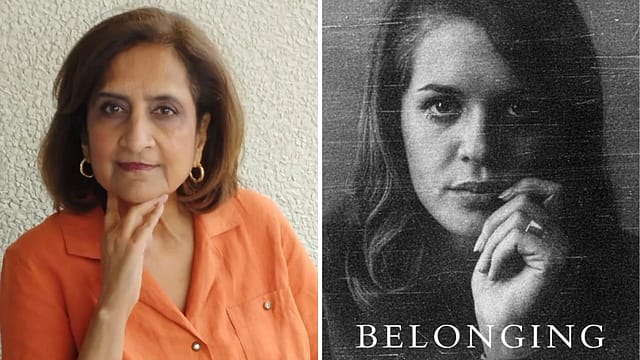
Commenting on Congress leader Sonia Gandhi’s memoir titled Belonging: A Journey of Love, which doesn’t mention the name of her family friend and Italian businessman Ottavio Quattrocchi—whom Swedish defence company AB Bofors had reportedly bribed to secure a controversial India gun deal in March 1986—Geneva-based investigative journalist and author Chitra Subramaniam has said that her main source had revealed to her a secret conversation Rajiv Gandhi had with his Swedish counterpart Olof Palme earlier that year, in which the then Indian prime minister admitted that he had accepted $7 million for the Congress party from Bofors.
Sten Lindström, former Swedish police chief and whistleblower who led the official Bofors probe in his country, disclosed the details of this confidential chat to Subramaniam, who investigated the late 1980s defence scandal that contributed to the fall of the Rajiv Gandhi government in the 1989 general election.
She spoke to Open about “a conversation on a plane (in early 1986) between Prime Minister Rajiv Gandhi and the Swedish Prime Minister Olof Palme”. According to the senior journalist, “Gandhi told Palme (that) he has accepted $7 million from Bofors for the Congress party and (asked whether) Palme can do the same (for his Swedish Social Democratic Party). Palme then replied that he couldn’t take anything for the party but the money could be given to a foundation in the Bergslagen region (Sweden),” Subramaniam states, quoting Lindström.

The Wealth Issue 2026
06 Nov 2026 - Vol 05 | Issue 45
Portraits of Dreamers and Doers under 35
The police chief learnt of this from Martin Ardbo, the late Bofors managing director, who was present on the flight and was close to the two late prime ministers, both of whom were assassinated, Palme in 1986, aged 59, and Gandhi in 1991, aged 46. Ardbo, who negotiated the defence deal with India for Bofors, passed away a wanted man in 2004 with an Interpol red corner notice on him.
Interestingly, says Subramaniam, documentary evidence involving contracts, bank slips and instructions, all of which she had written about in the past, show that Bofors paid $7 million to UK-based company AE Services, which was managed by Ottavio Quattrocchi and his wife Maria. The money transited through Colbar Investments, Wetelsen Overseas as well as accounts in Guernsey and Zurich before being handled by the Quattrocchis.
Speaking to Open from Sweden, Lindström said that he learnt of the conversation between Gandhi and Palme from Ardbo in 2004 shortly before his death. Arbo wanted to know from Lindström whether the Interpol red corner notice was still valid because he wanted to travel outside of Sweden to a Finnish archipelago and didn’t want any trouble. Lindström returned to him a few days later confirming that Ardbo was still a wanted man in India. It was then that the former Bofors executive spoke to Lindström about the exchange between Gandhi and Palme. Again, it was Lindström who shared with Indian investigators the details of the money trail between Bofors and the foundation in the Bergslagen region. “By then, all the money, amounting to 50 million Swedish kronor, had been disbursed for development work in the area,” he said in a phone conversation.
Sonia Gandhi’s autobiography has sold over 2 lakh copies in less than a week of its release on November 10, and it continues to occupy the top slot among bestsellers on Amazon India. What irks Subramaniam, she says, is that “even today, there’s a coterie around them (the Gandhis) in Delhi that is ready to give them a clean chit at the drop of a hat”.
“(AB) Bofors bribed Ottavio Quattrocchi to secure the India deal. This is the political payment that was made after all the numbers from the negotiations were on the table. Quattrocchi was a friend of the Gandhis. There’s irrefutable documentary evidence to prove it – these documents were given to me by former chief Lindström,” Subramaniam asserts, emphasising that “the question to ask is why Bofors would pay Quattrocchi, who was working in the Indian petrochemical industry”.
Decades after charges were framed against him by India, in 2009, the Central Bureau of Investigation (CBI) sought permission from the courts to withdraw the case, stating that his extradition was impossible, following which a Delhi court allowed the plea in March 2011. Quattrocchi passed away two years later in Milan, Italy.
Juggernaut, the publisher of Subramaniam’s book Boforsgate: A Journalist’s Pursuit of Truth, which came out in early 2025, had dropped the mention of the 1986 conversation between Gandhi and Palme from the book.
Subramaniam, who was 29 and pregnant with her first child when she began her work on the scandal involving the Rajiv government and AB Bofors in 1987, had identified Swiss bank account holders to whom Bofors paid the bribe to seal the deal over a French competitor. The five bank accounts that were later frozen by Swiss authorities were those held by Win Chadha (two), Ottavio Quattrocchi (one), and the Hinduja brothers (a company belonging to them had three accounts code-named Tulip, Lotus and Mont Blanc). Subramaniam had said that there was an attempt to implicate Bollywood icon Amitabh Bachchan in the case, although he was later proved innocent. She made this disclosure in Boforsgate.
The journalist, who later worked in public health advocacy with the World Health Organization and as an entrepreneur while continuing to write news reports and books, asks, “My father (R Subramaniam, CEO of a multinational fertiliser company) has been to dinner parties at the Quattrocchis in Delhi. Photographs of his family with that of the Gandhis are prominently displayed. What is Mrs Gandhi hiding by not mentioning him in her book Belonging?”
Subramaniam argues that, thanks to the efforts of a section of influential people in Delhi to protect the Gandhis, she often faced trouble in writing about the conversation between Rajiv Gandhi and Palme in the presence of Ardbo, who was one of Lindström’s sources. Lindström was Subramaniam’s principal source and had shared with her more than 350 documents that she says “formed the basis” of her Bofors investigation. Lindström had repeatedly told her about this conversation between the two prime ministers and reminded her about it even recently, the author insists.
India and Bofors signed a deal in March 1986 for the supply of 410 155 mm Howitzer field guns. Just over a year later, Swedish radio Dagens Eko reported on April 16, 1987, that Bofors had paid kickbacks to Indian and Swedish politicians and officials. Subramaniam soon began chasing the story tirelessly, unearthing the money trail and people involved in the corruption scandal that rocked India. Her sources were primarily Swedish and various other officials disappointed with the probe being scuttled by people in high places in the Scandinavian country. She had used pseudonyms for most of her sources. For Lindström, it was “Sting”. She revealed Lindström’s identity only many decades later. Subramaniam had said earlier that the Indian government of the time had launched a “witch hunt” against her and had threatened her and her family through anonymous phone calls and letters.