EXPLAINED | India Has a Bird Flu Vaccine. Can It Spare Farmers the Next Cull?
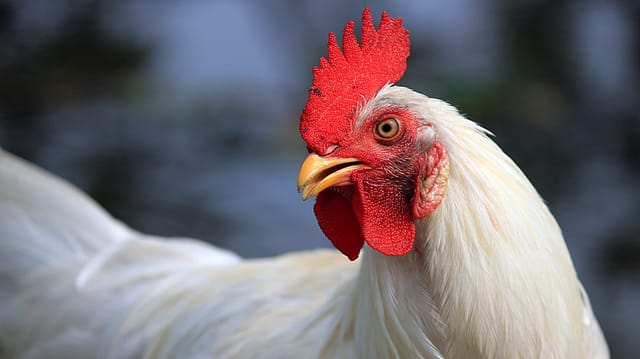
Sheesh Timol was in college the first time the government culled his family’s chickens. There were 40,000 of them. For a while, the family sold buffalo milk to get by. A bank loan eventually got them back into the egg business in Navapur, Maharashtra. They were still paying it off when bird flu came back.
In February 2021, Timol stood at his farm watching the cull and spoke to The Indian Express. He expected to lose 18,000 birds that week. He had 25 people on the payroll. What bothered him was how he would pay them for the next two months. Maharashtra had put a price on a chicken: ₹90. An egg was worth ₹3. The bank, as Timol pointed out, would still want its interest.

The Wealth Issue 2026
06 Nov 2026 - Vol 05 | Issue 45
Portraits of Dreamers and Doers under 35
On November 20, 2026, Union Agriculture Minister Shivraj Singh Chouhan unveiled a vaccine developed by scientists in Bhopal for the disease that twice upended the family business. India now has a homegrown way to protect chickens against a form of H5N1 bird flu. Whether it can protect a farmer from another cull depends on decisions that a vaccine scientist cannot make.
Why can a farmer lose chickens that haven’t tested positive?
Because India’s outbreak rules draw a circle around the farm where infection is confirmed. The national action plan calls for poultry to be culled within one kilometre of the outbreak’s centre. Authorities also restrict poultry movement, destroy contaminated material and continue checking for infection afterwards. A neighbouring farmer can therefore lose a flock without a single bird on that farm having tested positive. The purpose is to contain an outbreak before it gets farther. The cost falls partly on whoever happens to farm inside the circle.

The scale is rarely visible beyond the affected districts. In 2025, across ten states, Indian authorities culled 6.10 lakh birds, destroyed 16.60 lakh eggs and disposed of 30.62 lakh kg of poultry feed. The first figure counts birds killed as part of the response. It is not a count of birds that died of influenza. The other two figures explain why a cheque for each culled hen settles only part of the bill.
What exactly did the scientists in Bhopal achieve?
The ICAR–National Institute of High Security Animal Diseases developed India’s first indigenous vaccine for chickens against a particular lineage of highly pathogenic H5N1. “Highly pathogenic” describes how severely the virus can affect poultry. In a susceptible flock, nearly every infected bird can die. It does not mean a person buying eggs faces a comparable risk.
The distinction between H5N1 and bird flu matters here. Bird flu is the broader term. In 2022, the same Bhopal institute transferred an indigenous chicken vaccine against another subtype, H9N2, to four Indian companies. Calling the new product simply “India’s first bird flu vaccine” writes that earlier achievement out of the record. November’s milestone is the homegrown H5N1 chicken vaccine. Government notices also announced a formal transfer of the technology. They did not set out a nationwide vaccination timetable or a price for farmers.
Why is bird flu back in the news around the world?
Four days before the Bhopal unveiling, the World Organisation for Animal Health issued an alert: reported outbreaks had risen over the preceding three weeks in both poultry and wild birds. That last detail matters. Even a country that protects its commercial flocks still has to track what is happening beyond the farm fence. Migrating birds do not pass through a veterinary checkpoint.
The United States has had to look farther still. After H5N1 turned up in dairy cattle, the US Department of Agriculture established a national milk-testing programme. Testing milk collected in bulk gives authorities a way to identify affected herds. Some American dairy and poultry workers have also contracted the virus. A veterinarian watching chickens alone would miss part of the American outbreak. That is a reason for India to connect animal and human surveillance, not evidence that India’s dairy herds face the same situation.
Why did France start with ducks, and did it work?
After successive outbreaks in a poultry industry in which duck farms had been particularly hard hit, France began vaccinating ducks in October 2023. Researchers later asked a more useful question than how many doses had been given: how many outbreaks would France probably have had without the campaign? Their model estimated that vaccination likely averted 314 to 756 poultry outbreaks in the 2023–24 season. That range is an estimate, not a list of farms known to have been saved.
For India, the most useful French decision was choosing where to begin. France concentrated on ducks because its own outbreak history pointed there. India has a vaccine developed for chickens. The case for using it first in a particular district should depend on that district’s history, the kinds of flocks farmers keep and whether veterinary services can follow up. A national tally of doses would tell us little about whether another Navapur had been prevented.
Can vaccinating chickens protect people too?
There is evidence that it can. In China’s Guangdong province, researchers studying a poultry vaccination programme found it was associated with a 98% reduction in human H7N9 cases. It is a striking result because the beneficiaries included people who had never received a shot: reducing infection in poultry reduced opportunities for people to encounter the virus. But the study concerned H7N9 in Guangdong. It cannot establish that India’s H5N1 vaccine will eliminate human infections.
For the Indian public, the distinction is between ordinary daily life and repeated contact with potentially infected animals. The joint FAO, WHO and WOAH assessment rated the global public-health risk from these H5 viruses low. For people frequently exposed, including some poultry workers and people tending backyard birds, it rated the risk low to moderate, depending on local conditions and precautions. WHO reported in November that it had identified no sustained person-to-person transmission in the recent H5 cases it reviewed. Protecting poultry is a public-health gain; workers handling sick birds still need protection of their own.
Why keep testing a flock after vaccinating it?
Because a farmer and a trading partner need answers to different questions. The farmer wants to know whether the hens will survive. A buyer wants to know whether infection is circulating where those hens were raised. A vaccination certificate records what the flock received. It cannot, on its own, answer the buyer’s question.
That is why WOAH argues that vaccination should not, by itself, be a barrier to trade. The condition is credible surveillance: a country must be able to detect outbreaks in vaccinated flocks as well as unvaccinated ones. For India, the cost of a programme therefore extends beyond buying doses. Someone must pay for the veterinary visits, testing and records that give the farmer’s birds a route back to market.
Would a vaccinated Indian flock be spared the next cull?
The November 20 announcement offers no such guarantee. The published national plan prescribes culling within the outbreak zone. The vaccine notices describe a scientific achievement and a planned technology transfer. They do not announce an exemption for vaccinated flocks, identify the first districts to receive doses or say who will pay for them. Until those decisions are published, a farmer cannot reasonably borrow money on the assumption that vaccination changes the rule.
What would success look like in Navapur?
In 2006, Navapur had more than 70 poultry farms. By the time The Indian Express returned during the 2021 outbreak, only 27 remained. Counting birds at the end of a cull is relatively straightforward. Counting the farmers who never came back takes someone returning to the town 15 years later.
India should measure the vaccine against both numbers: how many outbreaks it prevents, and how many farms can stay in business when an outbreak does occur. That means telling people in advance what protection they can expect, what they must report, and what compensation they will receive if their birds are destroyed anyway. In 2021, Timol could tell a reporter exactly what the government would pay for an egg. What he could not tell his 25 workers was whether there would be wages in two months. A bird flu policy worthy of the breakthrough in Bhopal would give the next farmer an answer.
With inputs from ANI