QUICK TAKE | One App to Find and Pay for EV Charging? Seven Things to Know About Bharat e-Charge
1. What is Unified Bharat e-Charge?
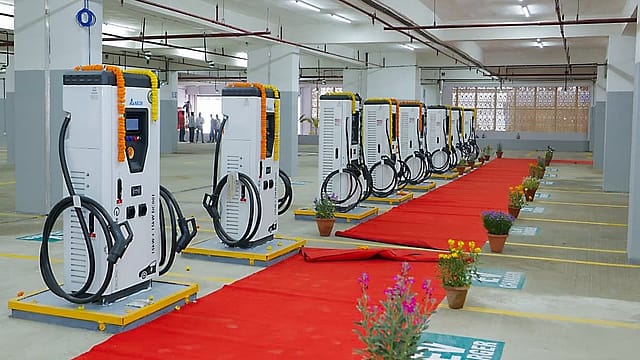
It is a government-backed platform designed to let electric vehicle users find, access and pay for charging across participating networks through one interface. The Ministry of Heavy Industries outlined the initiative in May, pitching easier access to chargers operated by different companies.
2. What problem does it aim to solve?
Public chargers belong to different operators, which can leave drivers navigating separate apps and payment systems. Bharat e-Charge aims to bring participating networks together. For motorists, the intended benefit is a simpler process from locating a charging station to paying for the session.
3. Where does the rollout stand?
The platform is being tested in five states, according to Heavy Industries Additional Secretary Hanif Qureshi. About 12 charging network operators have joined. Speaking in New Delhi on November 20, he said expansion would follow as the network became more robust. He gave no timeline.
4. Who built it, and which vehicles are covered?
NPCI BHIM Services and Bharat Heavy Electricals developed the platform together, Qureshi said. He added that most electric two-wheeler, three-wheeler and four-wheeler manufacturers had been integrated. The supplied announcement does not identify the five pilot states or provide a complete operator list.

The Wealth Issue 2026
06 Nov 2026 - Vol 05 | Issue 45
Portraits of Dreamers and Doers under 35
5. Will it work at every public charger?
Its stated scope covers participating charging networks. Drivers should therefore check whether a particular operator and location are supported. A unified digital platform can simplify access, but a successful charging session still depends on compatible equipment, electricity supply and a functioning charger.
6. Is the government also funding more chargers?
PM E-DRIVE earmarks ₹2,000 crore for public charging infrastructure across India, including cities and highways. Qureshi said approximately 50 corridors for cars and 24 freight corridors had been identified as electrification priorities. These are infrastructure plans alongside the platform’s digital integration work.
7. Can private companies set up charging stations?
Setting up an EV charging station is an unlicensed activity, allowing private businesses to enter the market. Operators must still follow applicable technical and safety requirements. Qureshi said private investment was already coming in, with subsidies available for locations unlikely to attract investment independently.