Nvidia Staff Cheer Jensen Huang’s Return. Hillary Clinton Calls It ‘Supergate’
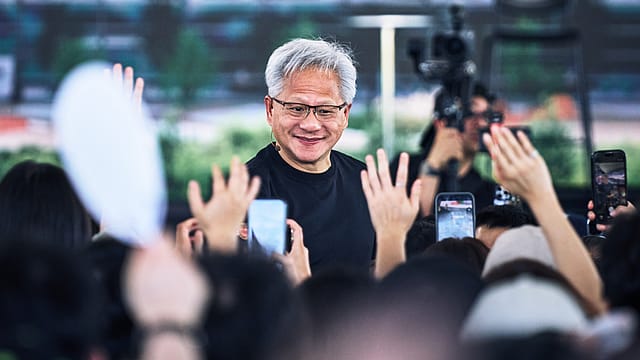
Nvidia employees cheered Jensen Huang as he returned to the chipmaker’s California headquarters after the board voted unanimously to reinstate him as chief executive. Elon Musk shared a video of the crowd on X. “Everyone I know at Nvidia wanted Jensen back, and it shows,” the Tesla chief wrote.
In Washington, Hillary Clinton gave the same comeback a different name. The former US secretary of state called it “Supergate”, alleging that the controversy raised questions about national security, corruption, insider trading and market manipulation. House Speaker-designate Hakeem Jeffries said Congress would investigate Nvidia and the Commerce Department. He also called for tighter controls on the export of American AI technology.

The Wealth Issue 2026
06 Nov 2026 - Vol 05 | Issue 45
Portraits of Dreamers and Doers under 35
President Donald Trump offered his own reason for wanting Huang back at Nvidia. If the US alienated the man behind its most advanced chips, he told CNBC, Chinese President Xi Jinping could offer him a fortune to run a company in China. Trump even had a company in mind: Huawei.
The board vote that brought Huang back
Nvidia announced on Monday that Huang would resume his roles as president and chief executive and return to its board of directors with immediate effect. Directors said they had held a series of discussions with Huang and were satisfied with his candour and his ability to lead the company.
Huang had stepped down on November 13 following reports of extramarital relationships with an Nvidia executive and with Chinese businesswoman Alice Huang. US officials alleged that Alice Huang had worked with Chinese intelligence. That allegation brought a national security dimension to questions about the Nvidia chief’s conduct, given the company’s role in developing advanced American AI chips.
Musk had welcomed the board’s decision even before sharing the footage from headquarters. “The mistake has been corrected,” he wrote on X. Trump congratulated Nvidia on Truth Social, calling the reinstatement an “absolutely GREAT decision”. In his CNBC interview, the president made clear that he had also made his views known to the directors before they brought Huang back.
Trump on the risk of losing Huang: ‘He’s got the Blackwell in his brain’
Trump traced his concern about losing Huang to a conversation with Xi. The Chinese president, he said, held the Nvidia chief in unusually high regard for his understanding of chip technology and where it was heading.
“I came back, I said, ‘You know, this guy could end up paying him a fortune to let him run a company in China,’” Trump told CNBC.
What a rival would gain by hiring Huang, in Trump’s telling, was the expertise behind Nvidia’s Blackwell chips. “Well, he’s got the Blackwell in his brain. It’s his baby,” the president said.
Trump imagined Beijing asking Huang to lead Huawei or another Chinese company. An executive who felt he had been treated badly at home might be willing to listen, he argued. The Huawei job was a hypothetical example Trump raised in the interview. He did not report an approach from the company or suggest that Huang had sought one.
CNBC also asked Trump a more immediate question: had he assured Nvidia’s directors that Huang would not face prosecution? Trump said he had avoided the word “prosecuted” and had told the board that the administration believed Huang was “absolutely fine”.
“I gave them enough assurance,” he said. Trump added that he would not have recommended bringing Huang back if he believed the executive had done something wrong.
Clinton calls it ‘Supergate’. Jeffries wants Congress to investigate
Clinton’s intervention widened the political dispute beyond chip exports and the president’s dealings with the board. In her post on X, she characterised the episode as a national security and corruption scandal and alleged insider trading and market manipulation. The post identified no particular trade or transaction behind those allegations. Her closing line borrowed the language of the AI industry: “If it’s ‘super intelligence,’ call it Supergate.”
Jeffries directed his criticism at both the board and the Trump administration. He called Huang’s reinstatement “indefensible, irresponsible and incomprehensible” and pledged a “swift, thorough and wide-ranging investigation” into what he alleged was business misconduct by Nvidia and abuse of power by Commerce Secretary Howard Lutnick and his department.
“We will not allow America’s national security to be sold out by the Trump Administration for personal financial gain,” Jeffries said. Illinois Governor JB Pritzker also raised concerns about national security following the board’s vote.
The fight over who gets access to US chips
Jeffries wants Congress to use the National Defence Authorisation Act to tighten export controls. He called for “ironclad” provisions to prevent the Chinese Communist Party and other US adversaries from exploiting powerful American AI technology, and urged Republicans to support them.
That demand puts a concrete policy question before lawmakers even after Nvidia has settled who will run the company. Trump’s concern is what China might gain if the US loses the executive who knows Blackwell best. Jeffries wants Congress to determine how the administration has exercised its authority over exports and to write stronger safeguards into law. Nvidia’s directors have given Huang back his job. Their vote leaves those questions for Washington.
With inputs from ANI