Jensen Huang is Back. Do We Owe the Search Firm an Apology?
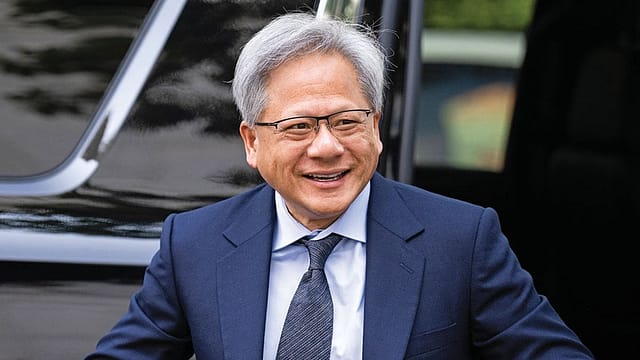
My sympathies are with the search firm. Nvidia had hired one to find its next chief executive. The successful candidate turned out to be Jensen Huang. You do wonder whether he was asked where he saw himself in five years.
The brief allowed for internal and external candidates. Huang managed to qualify as both. On November 12, he resigned from the company he had cofounded. On November 17, he offered to come back. That evening, chairman Harvey Jones opened Nvidia’s quarterly earnings call by saying the board “does not intend to reinstate Jensen as CEO”. On November 23, Jones announced that the directors had voted unanimously to reinstate him. Eleven days to find the next Jensen Huang. Six to get over the idea that it had to be somebody else.
The person I’d most like to hear from is Colette Kress. Nvidia’s longtime finance chief had taken over as interim CEO. On November 17, after the earnings call, she went on CNBC with Jim Cramer. He asked whether Nvidia might be on the hook for some $530 billion in guarantees. Kress put the figure at about $118 billion, then explained what the company had agreed to back. Land, power, buildings. The sort of things an AI chip needs around it before it can perform a miracle. She sounded like a woman who knew where the money was going.

The Wealth Issue 2026
06 Nov 2026 - Vol 05 | Issue 45
Portraits of Dreamers and Doers under 35
Cramer had another question. He had heard the chairman on Huang and found the answer unsatisfactory. Could there still be a role for Jensen? Chief technologist, perhaps? Some sort of ambassador? Kress replied, “The board has determined that they will not reinstate Jensen.” Watch her choice of subject. The board. She was precise about whose decision she was communicating. On Monday, the board sent her back to finance.
Somewhere in those eleven days, an admission of an affair had turned into a referendum on who should run the American AI industry. Huang’s supporters had a campaign, Stand With Jensen. Donald Trump had a view. Investors had views. Cramer was already trying out alternative job titles. Anyone looking for a quiet moment in which to feel embarrassed for the families involved would have had to take it during a commercial break.
There was a serious question beneath the spectacle. US authorities suspected a businesswoman with whom Huang acknowledged an affair of spying for China. Beijing denied the allegation. Nvidia had reason to establish what its chief executive might have exposed and what he had told his directors. On Monday, the board said it had held a series of meetings with Huang, was satisfied about his candour and ability to lead, and had received input from senior levels of the US government. Its conclusion concerned the security risk of returning Huang to office. The allegation about the woman remains a separate matter.
I can understand directors changing their minds after learning something. I have more trouble understanding what possessed them to sound so sure the first time. On November 17, a chairman could perfectly well have told investors that discussions were continuing and Kress was running the company. Instead, Jones volunteered a verdict at the start of an earnings call. Kress then spent part of her evening defending it. Six days later, the directors had the benefit of further conversations. Kress had the benefit of a transcript.
My favourite word in the whole affair is unanimous. According to Jones, the board unanimously accepted Huang’s resignation. According to Nvidia, the board unanimously voted him back in. Directors are entitled to revise their judgement. Still, you have to admire a group that can travel quite that far together without losing anyone on the way.
Huang returns as president, CEO and a director. Kress returns to the numbers. The board has a committee looking into whether foreign intelligence efforts targeted Huang. And there is, happily, some work left for the recruitment industry. Nvidia is looking for a chief compliance officer.
I’d give the search firm that assignment, too. It already knows the board. The more interesting question is whether the board knows what it wants to hear from a chief compliance officer on a Tuesday that it will still want to hear the following Monday.