‘We Have to Protect Our Geniuses’: Trump Defends Jensen Huang’s Return as Nvidia CEO
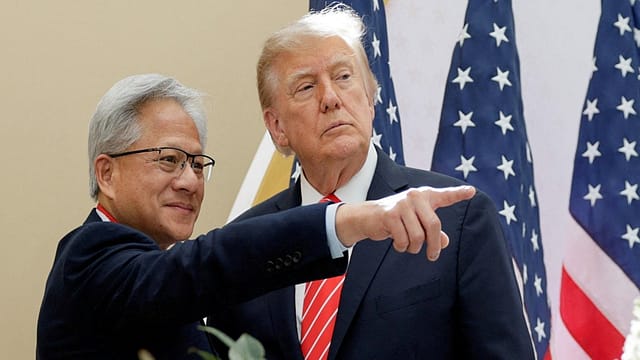
“We have to protect our geniuses, and he’s certainly a genius,” US President Donald Trump told CNBC on Monday after Nvidia reinstated Jensen Huang as chief executive. Trump said he had personally recommended that the board bring Huang back. Asked whether he had assured directors that Huang would escape prosecution, the president chose his words more carefully.
“I didn’t use the word ‘prosecuted’,” Trump said. He had told directors that the administration believed Huang was “absolutely fine”, he added. “I gave them enough assurance.”
Nvidia’s board voted unanimously to restore Huang as president, CEO and a director with immediate effect. He had stepped down on November 13 following reports of extramarital relationships, including one with an Nvidia executive and another with Chinese businesswoman Alice Huang. Allegations about her contacts with Chinese intelligence are among the matters US lawmakers intend to put to the Nvidia chief when he appears before Congress on December 1.

The Wealth Issue 2026
06 Nov 2026 - Vol 05 | Issue 45
Portraits of Dreamers and Doers under 35
Trump’s case for bringing Huang back
Trump said an investigation had found that Huang exercised poor judgement in personal matters. In the president’s assessment, there was no reason to believe his return posed a national security risk. “If I thought that he did something wrong, I wouldn’t be recommending to his board to hire him,” he said.
For Trump, the risk of losing Huang lay in the chips Nvidia had yet to build. He argued that processors become obsolete so quickly that the next generation of designs matters as much to America’s technological lead as anything the company sells today. Huang, he said, has “other chips in his brain that nobody else knows about, including me”.
Trump also recounted a conversation in China in which, he said, President Xi Jinping described Huang as the most brilliant person in the business. On Truth Social, Trump welcomed the board’s vote and called Huang a “Great Patriot and National Treasure”. Elon Musk offered his own verdict on X: “The mistake has been corrected.”
What Congress wants to know about Nvidia’s chips
House Foreign Affairs Committee chairman Brian Mast said Huang and Nvidia general counsel Tim Teter would appear before congressional committees during the week of November 30. The interviews will be recorded, transcribed and conducted under oath. Members of the House Foreign Affairs and Intelligence committees, along with the House select committee on competition with China, are expected to take part.
Lawmakers want answers to two distinct questions about the chips. One is whether anyone diverted advanced Nvidia processors to China and what the company knew about any such shipments. The other is whether Chinese companies could access the same computing power remotely through facilities in countries such as Singapore and Malaysia, even if the chips themselves never entered China.
Mast cited Nvidia’s Blackwell, Rubin and H200 processors in arguing that access to advanced computing could help China develop more capable AI models and strengthen its military. He also questioned Huang’s judgement on export policy. “I don’t think he’s on the right page in understanding the risks of selling these chips into China,” Mast said.
Lawmakers also plan to question Huang about his relationship with Alice Huang. The New York Times, citing people familiar with US intelligence reports, reported that she had been in contact with an official from China’s Ministry of State Security between spring 2025 and autumn 2026. The newspaper also reported alleged indirect links between her family, companies that bought Nvidia chips and Chinese state-owned defence contractors.
Nvidia’s board backs Huang as its inquiry continues
Nvidia board chair Harvey C. Jones said directors were satisfied with Huang’s candour in their discussions and believed his return served the interests of shareholders, employees, partners and customers. Huang said he accepted the responsibility with “the greatest humility and renewed commitment”.
The decision drew criticism from both parties. Republican Congressman Don Bacon alleged that Huang had been compromised and called on Congress to establish who approved high-end chip sales to China. Democratic Congressman Raja Krishnamoorthi called the reinstatement “outrageous” and sought a full public hearing. Democratic Congresswoman Debbie Dingell and Illinois Governor JB Pritzker also said national security questions remained unanswered.
Nvidia’s own investigation remains open. A committee of independent directors has retained outside lawyers to examine the allegations, and the company says Huang has pledged to cooperate. A separate board committee will oversee national security and export compliance. Trump, even as he defended Huang’s return, urged Nvidia to continue examining whether it had complied with US export controls.
With inputs from ANI