Eisenkot Plans Surprise Coalition Announcement As Golan Calls Likud Talks A ‘Sham’
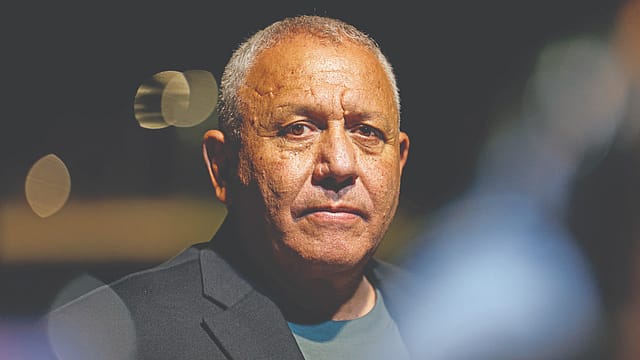
Israeli politician Gadi Eisenkot is considering announcing a new coalition at short notice and pushing for a Knesset vote within 24 to 48 hours in an attempt to prevent political manoeuvres and defections, even as negotiations to form the country’s next government remain deadlocked.
The move comes as Israeli Democrats leader Yair Golan has criticised Eisenkot’s negotiations with Prime Minister Benjamin Netanyahu’s Likud, describing them as a “sham” and urging him to move ahead with forming a government.
“Good morning. It’s time to stop the sham talks with Likud and form a government. All it takes is courage. Let’s do it,” Golan wrote in a post.
According to a report by The Times of Israel, citing public broadcaster Kan, Eisenkot intends to unveil his coalition at an unexpected moment and hold a vote in the Knesset plenum within one or two days. The strategy is aimed at putting pressure on potential allies and leaving little time for opponents to organise counter-moves or persuade lawmakers to defect.

The Wealth Issue 2026
06 Nov 2026 - Vol 05 | Issue 45
Portraits of Dreamers and Doers under 35
EISENKOT EXPLORES MINORITY GOVERNMENT OPTION
Despite limited progress in negotiations with ultra-Orthodox factions, Arab-led parties and Likud, Eisenkot has indicated that he will attempt to form a government regardless.
His calculation, according to the report, is that some parties unwilling to actively support his government may abstain rather than vote against it. This could allow him to take office at the head of a minority government, replacing Netanyahu, even if the administration subsequently collapses and leads to another election.
Eisenkot is, however, facing resistance within his own political camp, with leaders having publicly rejected different coalition arrangements he has explored.
The latest developments follow Eisenkot’s decision to invite Likud representatives for intensive coalition negotiations in a fresh attempt to form a broad-based government. The two parties had held an earlier round of discussions but failed to make progress.
Yashar described the renewed initiative as a sincere effort to establish the widest possible government, saying it would explore all avenues and pursue bold steps to break the deadlock.
DISAGREEMENTS OVER LIKUD AND COALITION PARTNERS
The negotiations have exposed differences over who should be part of a potential unity government. Likud has called on Eisenkot’s bloc to suspend its legislative agenda and end cooperation with Arab parties. Eisenkot, meanwhile, has ruled out a rotation arrangement with Netanyahu, insisting that he would be the sole prime minister in any unity government involving Likud.
The Likud party also insisted during the latest discussions that former prime minister Naftali Bennett’s B’Yachad party be excluded from the negotiations. The Times of Israel, citing Kan, reported that Eisenkot’s Yashar party briefed B’Yachad on the discussions after they concluded.
Golan has said he would not oppose a government involving ultra-Orthodox parties, but has ruled out joining what he called a “fake unity government” that would allow Netanyahu to remain in power.
Netanyahu, for his part, has argued that a national unity government is the only arrangement capable of addressing Israel’s challenges.
In a post on X, he said such a government must include all parties that regard Israel as the state of the Jewish people. He also said his party would work with its Haredi partners to enshrine in law, by mutual agreement, the status of those who study Torah.
THE NUMBERS BEHIND ISRAEL'S COALITION DEADLOCK
President Isaac Herzog formally tasked Eisenkot with forming the next government on November 8. He was given an initial 28-day period, with a possible 14-day extension, to assemble a coalition commanding the support of at least 61 lawmakers in the 120-member Knesset.
The October 27 election left neither major bloc with the numbers required to govern. Netanyahu’s right-wing and ultra-Orthodox alliance secured 53 seats, comprising Likud with 27, Otzma Yehudit with seven, United Torah Judaism with seven, Shas with six and Religious Zionism-Zehut with six.
Eisenkot’s four-party Zionist bloc won 48 seats. Yashar secured 21, B’Yachad 12, the Democrats eight and Yisrael Beytenu seven.
The two Arab-majority parties, the Joint List and Ra'am, won 11 and eight seats respectively. Although they supported Kahana in the 66-52 vote for the Knesset speakership, key figures in Eisenkot’s bloc have ruled out formal coalition arrangements with them.
The arithmetic has left Eisenkot with limited options as he attempts to reach the 61-seat threshold. A surprise announcement and an accelerated parliamentary vote could force lawmakers to make a decision before further negotiations or defections complicate the process.
With inputs from ANI