India Consolidates Position as Asia's Third-Most Powerful Country: Lowy Institute
India has consolidated its position as Asia’s third-most powerful country, with its overall score rising to 40.5 points in 2026, according to the Lowy Institute’s Asia Power Index. The improvement came despite a slight decline in its economic capability score, with stronger diplomatic influence, defence engagement and cultural reach contributing to its performance.
The United States and China retained the first and second positions, respectively. While India’s economic indicators showed mixed results, the report said the country had become more influential across the region during the year.
“While its economy and diplomacy showed mixed results in 2026, India grew more influential in Asia,” the report said.

The Wealth Issue 2026
06 Nov 2026 - Vol 05 | Issue 45
Portraits of Dreamers and Doers under 35
DIPLOMATIC INFLUENCE REMAINS INDIA’S STRONGEST AREA
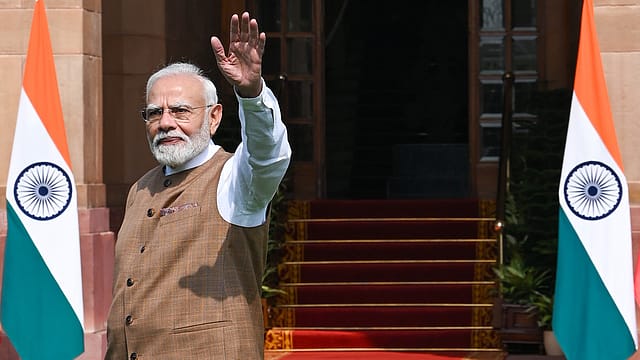
Diplomatic influence continued to be India's strongest measure, with a score of 70.3 points. The report noted a significant improvement in assessments of Prime Minister Narendra Modi’s regional leadership.
PM Modi rose three places to become the second-most effective regional leader, behind Chinese President Xi Jinping.
India also improved its economic relationships, moving up two places to seventh. Greater stability in its regional trade and investment ties helped it outperform several other countries in this category.
Its defence networks score rose to 18.6 points, taking India to ninth place. The improvement was supported by increased regional defence engagement and sales of BrahMos missiles to Southeast Asian countries.
India’s cultural influence score also increased to 43.8 points, reflecting gains in cultural projection, information flows and people exchanges.
ECONOMIC CAPABILITY SCORE DECLINES
India’s economic capability score slipped to 26.4 points, although it retained third place in the category.
The Lowy Institute attributed the decline partly to a weakening rupee and changes in the International Monetary Fund’s methodology for measuring economies. A fall of nearly USD 20 billion in outbound investment also weighed on India's performance.
However, India's future resources score increased to 56.2 points, reflecting an improved economic outlook and the country's longer-term potential.
The report said the gains had helped India narrow the gap between its available resources and the influence it exercises in Asia for the first time since 2023. The improvement in future resources also suggested that the country could sustain its growing regional influence.
CHINA REMAINS AHEAD
Despite India's gains, the power gap with China remains substantial. China's overall power score was 80 per cent higher than India's, underlining the scale of the challenge facing New Delhi as it seeks to expand its influence in the region.
The 2026 Asia Power Index assesses 27 countries and territories using 131 indicators across eight measures of power. These include economic and military capability, resilience, diplomatic influence, economic relationships, defence networks, cultural influence and future resources.
With inputs from ANI