Israel Election Deadlock: Netanyahu Short of Majority, Arab Parties Hold the Key
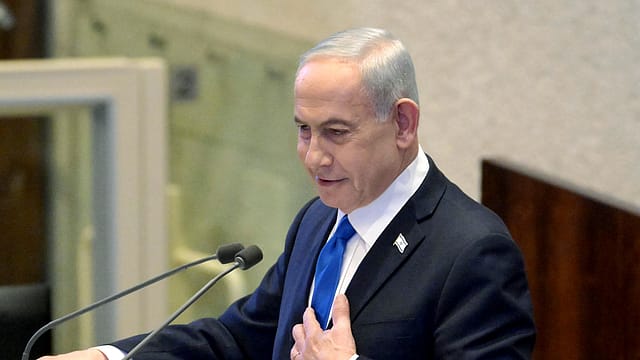
Israel remained without a clear path to a new government, with Prime Minister Benjamin Netanyahu’s bloc ahead of its principal rivals but short of a parliamentary majority, while divisions over working with Arab-led parties complicated efforts to unseat him.
The latest tally reported by The Jerusalem Post early on October 29 projected 53 seats for Netanyahu’s allies, 48 for the Jewish-led opposition bloc and 19 for Arab-led parties. At least 61 seats are needed for a majority in the 120-member Knesset. The count had reached 90.2 per cent, with special “double-envelope” ballots being processed overnight.
The figures leave Netanyahu eight seats short. His opponents collectively have enough seats to outnumber him, but they have yet to turn their shared opposition into an agreement to govern.
Arab parties hold the numbers, but can the opposition work with them?
The central obstacle is the reluctance of key Jewish-led opposition parties to rely on Arab-led parties for a governing majority.

Look Who's Talking Regime Change
23 Oct 2026 - Vol 05 | Issue 43
Gadi Eisenkot, the Yashar leader and principal opposition contender, described the election as a rejection of Netanyahu’s administration. He pledged to pursue political change while calling for a Zionist government committed to military conscription.
“This is the will of the people, who expressed no confidence in the government of October 7 and draft evasion,” Eisenkot wrote on X.
However, his bloc’s projected 48 seats leave it dependent on partners beyond its existing ranks.
Democrats leader Yair Golan has urged opposition parties to work with Arab representatives. He is seeking meetings with fellow leaders to explore government formation, arguing that replacing the administration is necessary to address security challenges and halt its judicial overhaul.
“We are bound by an overarching mission: to bring hope to the people of Israel,” Golan said, according to the supplied reports.
Protesters demand a Jewish-Arab government
The coalition debate has also reached the streets.
Around 300 people gathered across demonstrations at Paris Square in Jerusalem, Mesila Park in Tel Aviv and UNESCO Square in Haifa, calling for a Jewish-Arab government, ANI reported, citing Haaretz.
Participants carried placards supporting inclusive government, including the slogan “Yes to a Jewish-Arab government”.
The demonstrations highlight the choice confronting Netanyahu’s opponents: whether they can overcome disagreements about Arab participation to assemble a viable alternative.
US President Donald Trump claimed his endorsement had improved Netanyahu’s election performance and said he would consider a role in efforts to form a unity government.
“I heard my endorsement made a big difference for Bibi,” Trump told Axios on Wednesday.
Asked about helping establish a Netanyahu-led unity government, he replied: “I will take a look.”
That falls short of announcing an intervention. A US official told The Times of Israel that Washington had not decided whether to become involved and described reports of a preferred coalition arrangement as premature.
Several leading opponents of Netanyahu ruled out joining a government under him during the campaign, creating another obstacle to a unity deal.
Likud’s fraud allegations add to tensions
Coalition uncertainty has been accompanied by allegations from Netanyahu’s Likud party that Arab parties committed electoral fraud.
The Central Elections Committee said it was reviewing complaints as part of its election-integrity procedures. A review does not establish that the allegations are substantiated.
The Associated Press reported that election officials said complaints of irregularities were fewer than in previous elections.
The allegations have intensified an already contentious debate over the role of Arab voters and their elected representatives in determining the next government.
What happens next?
The remaining ballots must be counted before the final distribution of seats is settled. Double-envelope ballots include votes cast by soldiers and others voting outside their assigned polling stations.
President Isaac Herzog will then consult parliamentary factions before selecting a candidate to attempt to form a government. He has urged political leaders to avoid another election. Netanyahu remains caretaker prime minister during the process.
The possible routes include an agreement across existing blocs, an opposition administration supported by Arab parties, or another election if government-formation efforts fail.
For now, Netanyahu has neither secured a governing majority nor been displaced. His opponents have the combined numbers to challenge him, but no settled agreement on how to use them.
With inputs from ANI