EXPLAINED | Can Gadi Eisenkot Unseat Benjamin Netanyahu?
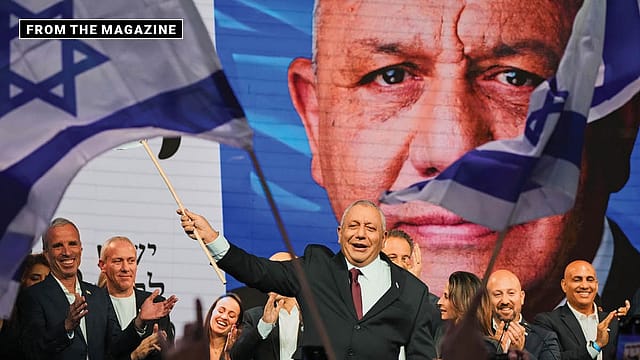
On Saturday, November 7, Israeli President Isaac Herzog picked Gadi Eisenkot to make the first attempt at forming a government after Israel’s election ended in deadlock. Herzog’s office scheduled the formal handover for 5 pm in Jerusalem on Sunday, November 8 (8:30 pm IST). Netanyahu remains prime minister in the meantime.
Eisenkot’s first call was for a “national emergency government”. He knows what one looks like from the inside. After the Hamas-led attacks of October 7, 2023, he joined Netanyahu’s wartime administration. Eight months later, he walked out. Now the former general has to persuade parties that disagree about Gaza, military service and each other to put him in charge.

The Era of Forever Wars
30 Oct 2026 - Vol 05 | Issue 44
Coping with an explosive Middle East
Why did Herzog pick Eisenkot?
More parties asked Herzog to give him the first try. Factions with 67 seats in the Knesset, Israel’s 120-member parliament, recommended Eisenkot. Factions with 46 backed Netanyahu. United Torah Judaism, an ultra-Orthodox party with seven seats, sat out. Herzog said the parties’ vetoes on working with one another made it unclear who could actually form a government.
Netanyahu’s Likud won 27 seats in the October 27 election, more than any single party. But his broader bloc won 53, including United Torah Judaism. Eisenkot’s Yashar won 21 and the four Jewish-led opposition parties together won 48. Ra’am’s eight seats and the Joint List’s 11 took Eisenkot from 48 recommendations to 67. He still has to win a vote in parliament.
Who is Gadi Eisenkot?
The 66-year-old son of Moroccan Jewish immigrants was born in Tiberias and grew up in Eilat, on the Red Sea. He joined the army as an infantryman, rose to command the Golani Brigade and served as Israel’s military chief from 2015 to 2019. If he becomes prime minister, Reuters says he would be Israel’s first from the Mizrahi community, Jews with roots in the Middle East and North Africa.
He entered parliament in 2022 alongside another former army chief, Benny Gantz. He left Gantz’s party in 2025 and launched Yashar that September. A year later, his new party had overtaken every list except Likud.
Why did he walk out on Netanyahu?
Eisenkot believed Israel needed a deal to bring the hostages home alive. While serving as an observer in Netanyahu’s small war cabinet, he said in January 2024 that a military operation could not realistically bring the hostages back alive in the near term. He and Gantz resigned in June. In his resignation letter, Eisenkot blamed political considerations for holding up wartime decisions.
The war had already reached his own family. His son Gal, a 25-year-old soldier, was killed in Gaza in December 2023. Eisenkot told The Times of Israel he returned for a critical cabinet discussion on the third day of the Jewish mourning period. Two of his nephews were also killed fighting in Gaza.
What is the Dahiya doctrine?
It is the military approach that made Eisenkot controversial well before he entered politics. In 2008, as Israel’s northern commander, he said Israel would use “disproportionate force” against Lebanese villages Hezbollah used to fire rockets at Israel. The doctrine takes its name from Dahiya, a southern district of Beirut that Israel bombed heavily in the 2006 war with Hezbollah. Eisenkot’s party presents the approach as a way to deter attacks. A UN fact-finding mission later cited it in criticising the destruction of civilian infrastructure in Gaza.
Would Eisenkot change Israel’s approach to Gaza?
He wants a formal state inquiry into the failures around October 7, something Netanyahu has opposed. He has also condemned violence by Israeli settlers against Palestinians and opposes the government’s plan to build in a stretch of the occupied West Bank known as E1, which would split the territory and cut it off from East Jerusalem.
On two central issues he is closer to Netanyahu. He opposes an independent Palestinian state and says Israeli troops should stay in Gaza until Hamas disarms. He says he would pursue the US-backed postwar plan and is prepared to use military force if necessary to end Hamas’s rule there. These are his stated positions. Any coalition agreement will show what his partners are prepared to sign up to.
What does he mean by an ‘emergency government’?
He wants a broad administration that can take office quickly. The label carries no shortcut through parliament. His conditions include upholding Israel as a Jewish, democratic, liberal and equal state, following the values of its Declaration of Independence, requiring everyone to do military or civilian national service and treating Hamas as a terrorist organisation whose military and governing power in Gaza must be dismantled.
That service pledge has a price. Ultra-Orthodox parties have fought to protect exemptions for men studying at religious schools. Israel’s Supreme Court ruled in 2024 that the government had no legal basis to keep exempting them as a group. A deal with those parties would require both sides to explain what they are willing to give up.
Could Netanyahu’s old allies give Eisenkot the votes?
On paper, yes. Seven seats from United Torah Judaism and six from Shas would take Eisenkot’s bloc from 48 to 61. His ally Avigdor Liberman has signalled that he is willing to compromise on the draft. The leader of United Torah Judaism has said he is open to talks. Shas recommended Netanyahu to Herzog and rejected reports that it might join an Eisenkot government.
Could the Arab parties put him in power?
Yes, if enough lawmakers vote for his government. Ra’am and the Joint List could join a coalition or support it from outside, voting to install it without taking cabinet seats. Ra’am has joined a governing coalition before. It was part of the alliance that ended Netanyahu’s previous stint in office in 2021, when the Knesset approved the government by 60 votes to 59. Sixty-one seats give a bloc an outright majority. A confidence vote can pass with fewer if enough lawmakers abstain or are absent.
Eisenkot said during the campaign that Ra’am in its current form would have no place in his cabinet. He has since set out conditions for prospective partners, and some allies oppose even outside support from Arab parties.
Could he make a deal with Likud?
Eisenkot has ruled out serving with Netanyahu. His party has left the door open to Likud. On Saturday, Netanyahu called for a unity government. Yashar responded by asking Likud members to break with their far-right allies. A deal would mean either Likud breaking with the man who still leads it or Eisenkot dropping a pledge he made to voters.
Why does this matter to India?
Defence and trade are two places to watch for decisions by a new cabinet. India and Israel elevated ties to a special strategic partnership in February, building on a defence cooperation pact signed last year. They completed a second round of trade talks in July. The practical test for New Delhi is how quickly a government in Jerusalem advances those talks and puts the defence commitments into practice.
There is an Indian precedent for the distinction between getting the first chance and getting the votes. In 1996, Atal Bihari Vajpayee was sworn in after the BJP came first, then resigned without securing the Lok Sabha’s confidence. H D Deve Gowda formed the next government with Congress support from outside. In Israel, the vote to install a new government comes before it takes office.
How long does Eisenkot get to make a deal?
He gets 28 days from the formal handover. Herzog can give him up to 14 more. If he fails, Herzog can give another lawmaker 28 days or tell parliament he sees no viable candidate. Parliament can then get 21 days to put forward a candidate backed by at least 61 members. That candidate gets 14 days. If those routes fail, Israel goes back to the polls.
Netanyahu stays in office until a new government takes over. The decisive moment for Eisenkot comes when he can name his ministers, set out their programme and ask the Knesset to vote them in