Why Pramila Jayapal Took On Harmeet Dhillon Over America’s Voter Rolls
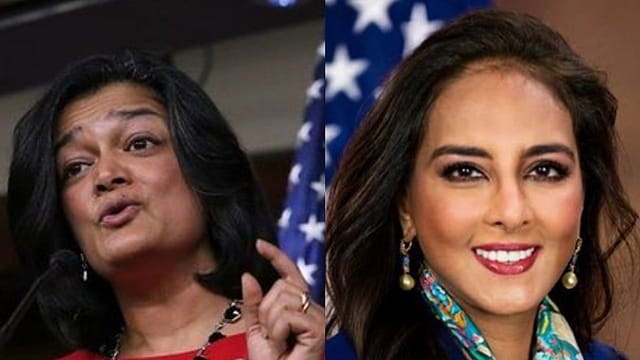
“Enjoy your knitting,” Democratic Congresswoman Pramila Jayapal told Harmeet Dhillon after the Trump administration’s top civil rights lawyer resigned. “Grow up, Pramila,” Dhillon replied, defending knitting as a skill and accusing Jayapal of bullying. The exchange between two Indian-born figures in US politics followed Attorney General Todd Blanche’s November 5 announcement that he had accepted Dhillon’s resignation.
The line worth following was the one before the knitting jab. Jayapal accused Dhillon of pressuring states to strip people of the right to vote. By then a federal judge had already struck down the Justice Department’s voter-data policy. The department had appealed. Here’s how a request for a file could end with an American citizen losing his place on the voter list.

The Era of Forever Wars
30 Oct 2026 - Vol 05 | Issue 44
Coping with an explosive Middle East
What did Dhillon’s team want from the states?
The full records of who was registered to vote. From May 2025, the Justice Department’s Civil Rights Division sought files with voters’ names, home addresses and full dates of birth, along with driver’s licence numbers or the last four digits of Social Security numbers. At least 18 states handed over complete lists, according to the October ruling. The department sued states that refused its demands.
These files held the details people supplied to register. States maintain the lists and are responsible under federal law for keeping them up to date. The dispute was over what Washington could demand from those states and what it could do with the information once it had it.
How could a federal check get a voter removed?
The department shared lists it received with Homeland Security, which ran the data through a system called SAVE. The system checks citizenship and immigration status against government records. The Justice Department would then tell states which voters it considered ineligible. In agreements cited by the judge, Texas, Alaska and South Carolina agreed to remove voters flagged as ineligible within 45 days of being notified. State officials made the deletions.
What went wrong for the Texas voter?
Anthony Nel got his Social Security number before he became an American citizen. Years later, a Social Security employee told him the agency still listed him as a noncitizen. The court said Texas cancelled his voter registration after SAVE failed to confirm his citizenship. A second Texas voter who had become a US citizen also lost their registration, the judge said.
That is the flaw the judge found in the department’s approach. A person’s citizenship can change while the record used to check it stays the same. By the time an old entry makes its way back to an election office, the voter can be the one who has to prove the database wrong.
What was the Justice Department’s case?
It said the records would help it enforce federal election laws and identify people who were ineligible to vote. Its own legal advisers said a 1960 civil rights law gave the department authority to seek statewide lists and share them with Homeland Security. In seeking to revive the policy, the department said the ruling also prevented it from using the data it had collected to look for duplicate registrations.
Why did the judge strike it down?
Judge Sparkle Sooknanan ruled on October 9 that the laws the department cited gave it no power to collect and share full voter rolls under this policy. She also found that the department had violated federal privacy law and failed to consider what its reliance on inaccurate records could do to eligible voters. State officials can still carry out lawful checks and keep their rolls up to date.
Did the midterms cost Dhillon her job?
Dhillon says she had already decided to leave. She told The Guardian she submitted her resignation on October 13 and that White House chief of staff Susie Wiles asked her to stay into November. CBS News, citing two unnamed sources, reported that Trump wanted her fired after her October 18 appearance on 60 Minutes. Dhillon told The Guardian her letter predated the broadcast. Blanche praised her record when he announced her departure after the vote.
How else did Dhillon change the division?
Jayapal also took aim at Dhillon’s record on diversity, equity and inclusion. Dhillon said in her resignation letter that she had fought policies she considered discriminatory. Her division pursued cases over university diversity programmes and dropped proposed police-reform agreements in Minneapolis and Louisville.
It also set up a unit to enforce the Second Amendment, which protects the right to keep and bear arms. In December 2025 the new unit sued Washington, DC, arguing that the city was unlawfully preventing residents from registering firearms including the AR-15.
Who can take a name off the rolls in India?
In India, a constituency’s electoral registration officer can correct or delete entries after checking the facts. Under Section 22 of the Representation of the People Act, 1950, a voter facing deletion because the officer believes they moved away or are otherwise ineligible must get a reasonable chance to be heard. The Election Commission provides Form 7 for objections to names on the roll or requests for deletion. The question the Texas case poses for any such system is simple. When one record says a voter is ineligible, who checks it before the name comes off?
Can the Justice Department revive the policy?
The department filed its appeal on October 16. On November 2, the district judge refused to put her ruling on hold. The appeal is before the US Court of Appeals for the DC Circuit. The appeals court’s October scheduling order lists November 18 as the deadline for the department’s initial filings, including the statement of issues. That filing will show which parts of the ruling the department is asking the appeals court to undo.