The Arithmetic of Change: When Israel’s President Hands over the Mandate on Sunday
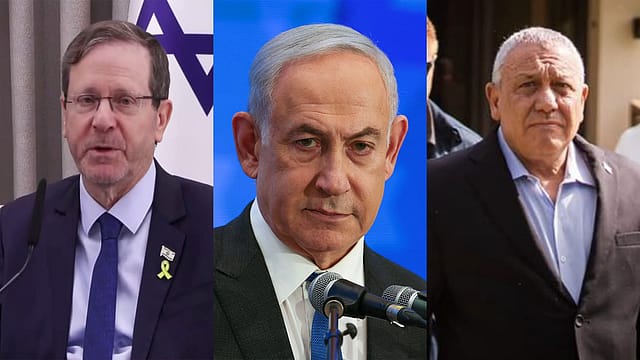
After Israel’s voters denied everyone a mandate on October 27, Benjamin Netanyahu’s bloc was left with 53 seats and Gadi Eisenkot’s 48, while Arab-led parties won a record 19 on a turnout that surged in Arab towns. Those 19 remain the hinge for opening the door to government—at least a government that would mean change. President Isaac Herzog counted 67 recommendations for Eisenkot against 46 for the prime minister. A tally is certainly not a government, but it is nevertheless a verdict.
Eisenkot campaigned on keeping clear of the Arab parties. That promise was made to win votes. Arithmetic has now presented the invoice and done so unambiguously. Avigdor Liberman’s refusal and Naftali Bennett’s misgivings may be honest positions, but they lead to the same old destination: a Netanyahu who survives by default.

The Era of Forever Wars
30 Oct 2026 - Vol 05 | Issue 44
Coping with an explosive Middle East
Eisenkot, the general, should recognise a line that cannot be held.
And there is precedent for this. In 2021, Bennett and Yair Lapid, men who agreed on little, built a coalition that included Mansour Abbas’s Ra’am. Israel, notably, did not tremble. The arrangement lasted barely a year and sceptics still say that proves their case. But it fell to the attrition that afflicts any patchwork assembled against one man, not to any misconduct on the part of the Arab partner. If fragility is the price of every coalition of necessity, it is still no argument for the alternative.
There is an older precedent too. Israel’s Declaration of Independence was written three years after the camps were liberated, by people who knew precisely what a state can do to those it places outside the circle. It promised equal political rights to all inhabitants, whatever their faith. Seventy-eight years on, that pledge deserves to be honoured at the cabinet table, not merely invoked at memorial ceremonies.
Why does Netanyahu fight so hard? Because office is his only shield. His corruption trial has run for six years and his pardon request sits on the desk of the very president now deciding who gets the first try at government. Power is Bibi’s best defence, and that explains the accusation of treason he levels at any Zionist party that talks to Arab colleagues.
Netanyahu’s remaining cards are few but real. He can offer Eisenkot a unity government, which the latter has refused to join under Bibi. He can work on defectors in the opposition bloc, where Liberman’s and Bennett’s refusals leave a lot of doubt about its solidity. He can lean on Shas, which still backs him, and on the Haredi parties, whose loyalty is wavering over the draft. Or he can run out the clock towards fresh elections, which some in his circle won’t regard as a disaster. But a deal that included a pardon for Bibi would be the grubbiest card of all.
Herzog hands over the mandate on Sunday, November 8, and the holder has 28 days, extendable by 14. The likeliest outcome is a minority government. The Arab Joint List says it will support one from outside while Ra’am may join it. Eisenkot had better secure a written agenda covering the budget, the draft, and violent crime plaguing Arab towns. He should publish it openly and negotiate without apology.
Jews and Arabs alike want change, and the Arab electorate’s doubled turnout was a plea for it. Hostility to partnership is real, but a country can outgrow a taboo. The choice is more Netanyahu—or a shot at something better for all.