Trump declares himself ‘Mr. Veto’: How Democrats’ Congress could challenge his presidency
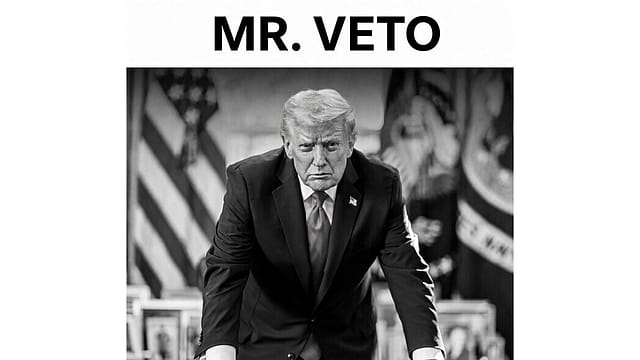
Donald Trump has a new title for himself, and he wants Washington to take notice. Recently the US President posted a black-and-white photograph on Truth Social showing him leaning over a desk, with the words “MR. VETO” emblazoned across the image. The post came days after Democrats secured control of both the House of Representatives and the Senate in the 2026 midterm elections, dealing Republicans a major political setback.
The message is more than a social-media flourish. It points to the constitutional weapon Trump could use when the new Congress begins in January 2027: the presidential veto.
Why Trump is embracing the ‘Mr. Veto’ label
Trump had already signalled his approach before the election results were clear. In an interview with CBS News on November 3, he described the veto as his “ultimate power” and said he was prepared to use it against legislation he opposed.

The Era of Forever Wars
30 Oct 2026 - Vol 05 | Issue 44
Coping with an explosive Middle East
Speaking to Politico the same day, however, he struck a more conciliatory note. “We'll work with the Democrats,” he said, adding that he did not want to spend two years vetoing everything. He also suggested that negotiations could follow a presidential veto.
The contrasting remarks capture the challenge facing Trump during the final two years of his presidency: dealing with a Congress controlled by the opposition while retaining the power to block bills that reach his desk.
What the Democrats’ midterm victory means for Trump
The November 3 elections gave Democrats control of both chambers for the first time during Trump's current presidency. The party secured at least 54 Senate seats and gained at least 30 seats in the House, with some races still awaiting final calls.
The result followed voter frustration over the cost of living, tariffs, the US-Iran war and concerns about corruption, according to Reuters. Democratic leaders, including House Democratic leader Hakeem Jeffries, have promised to focus on affordability and hold the administration accountable.
The new majority will take office in January. It will be able to shape legislation, scrutinise federal spending, summon administration officials for hearings and investigate government decisions. Democrats are also expected to make Jeffries the next House Speaker. Meanwhile, Republican Mike Johnson has said he will not seek the party's leadership post in the House next year, adding to the fallout from the defeat.
How does the US President’s veto power work?
The presidential veto is provided for under Article I, Section 7 of the US Constitution. Once a bill has passed both the House and Senate, it is sent to the President. Trump can sign it into law, return it to Congress with objections or allow it to become law without signing it if he does not act within 10 days, excluding Sundays, while Congress remains available to receive it.
A regular veto is not necessarily the final word. Congress can override it, but the bill must secure a two-thirds majority in both chambers. That is a much higher bar than the simple majority generally needed to pass legislation.
There is also a pocket veto. If Congress adjourns in a way that prevents the President from returning a bill within the 10-day period, the legislation does not become law. Unlike a regular veto, a pocket veto cannot be overridden; lawmakers would have to introduce and pass the measure again.
Can Democrats still challenge Trump despite the veto?
Yes. The veto can block legislation, but it cannot prevent Congress from investigating the administration, holding hearings or using its oversight powers. Democrats can also use their control of committees and the legislative calendar to put pressure on the White House.
The two sides will still have to negotiate on legislation, particularly where Senate rules require broader support. And while Trump can reject bills, Democrats can force public debates over the policies they want to advance.
For now, “Mr. Veto” is a warning of the confrontation ahead. But with Democrats preparing to take charge of Congress, the next two years may be defined not simply by what Trump can block, but by how much both sides are willing to compromise.
(With inputs from ANI)